
Production and Manufacturer History
The McKinnon G-21C was not a new aircraft design but a comprehensive conversion of the Grumman G-21 Goose, executed by the U.S.-based modification firm McKinnon Enterprises. The G-21C was officially approved under U.S. civil Type Certificate 4A24 on November 7, 1958. Production was extremely limited, with only two airframes converted between 1958 and 1959. These two aircraft were allocated construction numbers 1201 and 1202. Following this initial project, McKinnon Enterprises shifted its focus toward other variants, including the G-21D, G-21G, and various turbine conversions.
Design and Technical Specifications
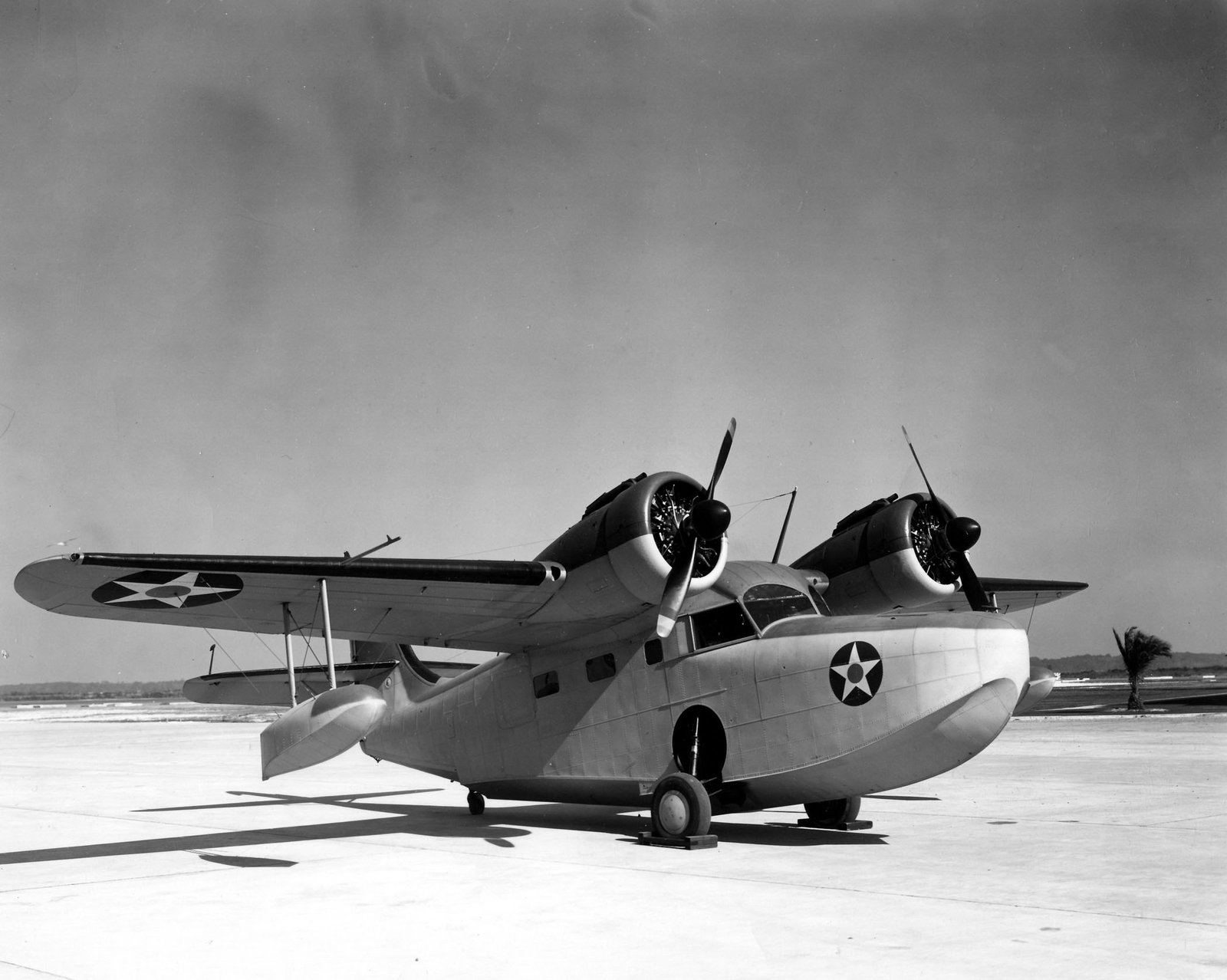
While the baseline G-21 was originally designed by the Grumman Aircraft Engineering Corporation in 1936 as an "amphibian air yacht," the G-21C introduced significant structural and aerodynamic modifications. The most notable change was the replacement of the original two Pratt & Whitney R-985 Wasp Junior radial engines with four Lycoming GSO-480-B2D6 engines. These air-cooled, horizontally-opposed flat-six engines featured geared and supercharged configurations.
In addition to the propulsion overhaul, the G-21C featured an extended bow to enlarge the forward fuselage and the implementation of retractable wingtip floats to reduce drag compared to the original fixed sponsons. These modifications were intended to enhance the performance and operational utility of the aging 1930s airframes. One of the G-21C conversions (c/n 1201) was later modified further into a G-21D (c/n 1251), which included an additional bow extension to accommodate four more passengers.
Service History and Legacy
As a late-1950s civil conversion, the G-21C did not see military service, unlike the original Grumman G-21, which served extensively with the U.S. Navy, U.S. Army Air Forces, and the Royal Canadian Air Force. The G-21C was marketed toward civil operators requiring improved payload and performance for corporate charter or remote-area air services.
Though only two G-21C aircraft were produced, the model is historically significant as the precursor to the more widely known McKinnon G-21G "Super Goose" turboprop conversions. While the original Grumman production run totaled 345 aircraft, only about 30 to 60 remain on civil registries today, with approximately 30 still airworthy. The G-21C serves as a key example of the post-war effort to modernize durable amphibian aircraft for contemporary utility roles.