
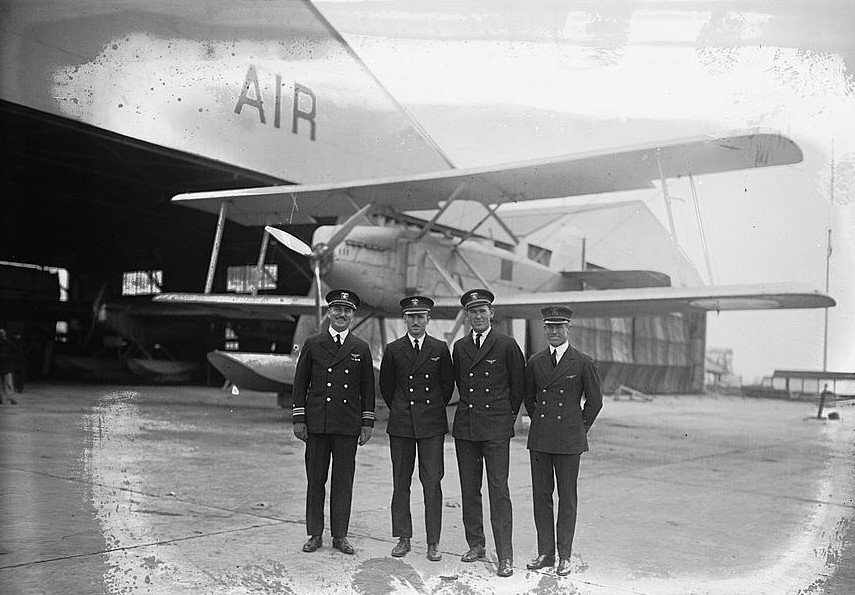
The Curtiss CS was a specialized two-bay biplane patrol bomber developed by the Curtiss Aeroplane & Motor Company for the United States Navy. Designed primarily as a floatplane for maritime reconnaissance and bombing, the aircraft family included the CS-1 and CS-2 variants. While historical records indicate that the Glenn L. Martin Company produced various Curtiss-designed aircraft under contract, there is no verifiable evidence of a landplane variant of the Curtiss CS associated with the ICAO type code GCS produced by Martin.
The relationship between the Glenn L. Martin Company and Curtiss designs is most notably evidenced by the production of the Curtiss SC-1 scout bomber. In 1924, the Martin Company successfully underbid Curtiss for a U.S. Navy contract to manufacture these aircraft. Consequently, Martin produced 360 SC-1 aircraft, a program that significantly improved the company's financial standing during the mid-1920s. These aircraft were manufactured at Martin's facilities in Cleveland, Ohio, prior to the company's 1929 expansion to Middle River, Maryland, where it established the first production facility specifically designed for metal aircraft construction.
Founded on August 16, 1912, by Glenn Luther Martin, the Martin Company evolved into a cornerstone of American military aviation. Beyond its licensed production work, the firm developed iconic aircraft such as the B-10 all-metal monoplane bomber and the B-26 Marauder. During World War II, Martin's Omaha, Nebraska plant produced 1,585 B-26s and 531 Boeing B-29 Superfortresses, including the Silverplate aircraft Enola Gay and Bockscar. The company eventually merged with the American-Marietta Corporation in 1961 to form Martin Marietta, which later merged with the Lockheed Corporation in 1995 to become the modern Lockheed Martin Corporation. While the Curtiss CS floatplanes served the U.S. Navy in the early 1920s, the specific 'GCS' landplane designation remains unsupported by historical documentation.