
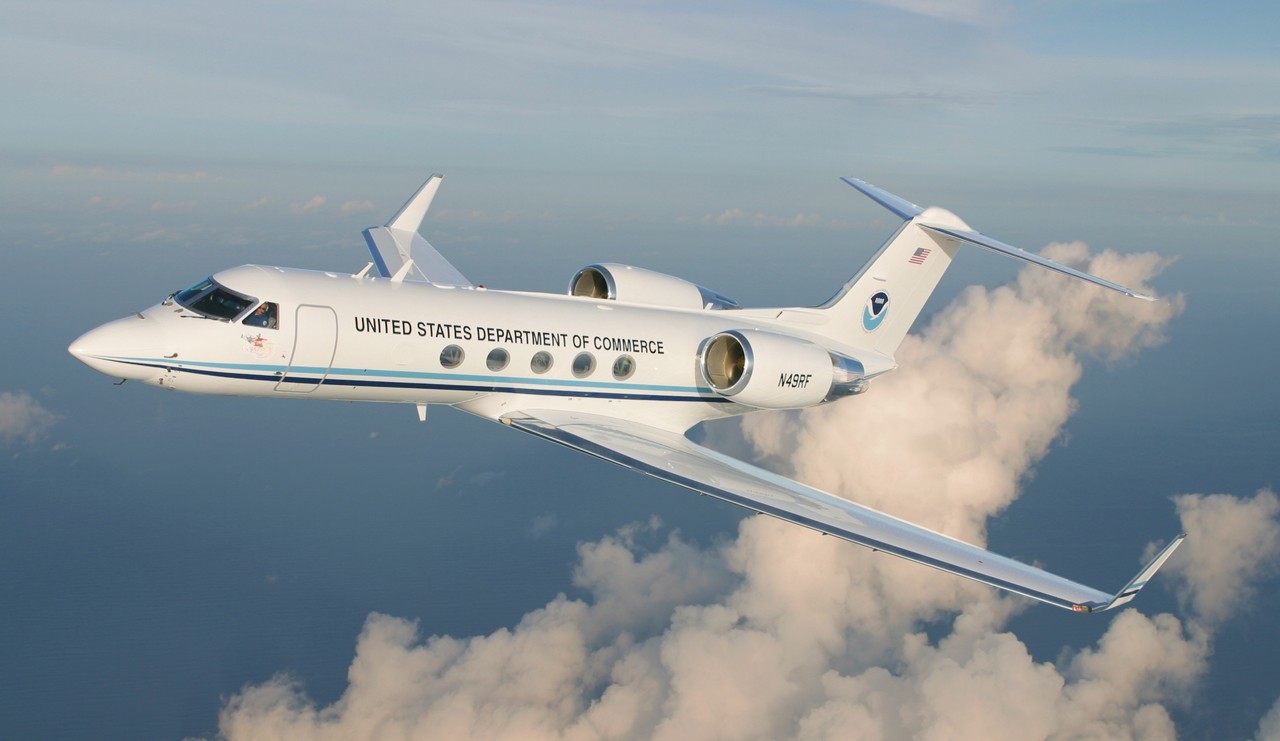
Service History
The GIV SP dominated the ultra-long-range business aviation market throughout the late 1980s and early 1990s, enabling Fortune 500 executives to conduct transoceanic flights without fuel stops. Corporate operators formed the aircraft's primary customer base, alongside fractional ownership companies like NetJets and high-end charter services. The aircraft pioneered nonstop routes such as New York to Tokyo, revolutionizing global executive mobility and establishing new standards for intercontinental private travel.
With over 500 GIV family aircraft produced during its production run, the GIV SP captured significant market share in the large-cabin business jet segment. Government operators also adopted the type for VIP transport missions, recognizing its combination of range, speed, and passenger comfort.
The Manufacturer
Gulfstream Aerospace Corporation originated from Grumman Aircraft Engineering Corporation, which developed the initial Gulfstream line during the 1960s and 1970s before selling the division in 1978. Allen Paulson acquired the company through American Jet Industries, renaming it Gulfstream Aerospace Corporation in 1982. The company's ownership changed hands multiple times: Chrysler Corporation purchased it for $637 million on June 20, 1985, before selling it back to Paulson and Forstmann Little in 1989.
General Dynamics acquired Gulfstream for $5.3 billion in a stock swap announced May 18, 1999, maintaining the company as a wholly owned subsidiary. Today, Gulfstream Aerospace continues operations from its Savannah, Georgia headquarters, where it expanded manufacturing capabilities significantly after the General Dynamics acquisition. The facility has produced numerous business jet models, including the G650 and other modern ultra-long-range aircraft.
Engine & Technical Details
Two Rolls-Royce Tay Mk 611-8 high-bypass turbofan engines power the GIV SP, each generating 12,420 pounds of thrust. Rolls-Royce developed the Tay series in 1984, producing over 7,000 engines across various models for both business jets and regional airliners like the Fokker 100. The engines earned ETOPS certification for their exceptional reliability and incorporated advanced wide-chord fan technology for improved fuel efficiency.
The aircraft requires a two-pilot crew, with provisions for one to two flight attendants depending on passenger configuration. Design innovations included a supercritical wing optimized for high-speed performance and advanced avionics systems that set new standards for business aviation in the 1980s. The engineering team, led by company chairman Allen E. Paulson, built upon the successful GII and GIII lineage while targeting improved efficiency and extended range capabilities.
Pilot Perspective
Pilots praised the GIV SP for its exceptional high-altitude performance, with a service ceiling of 51,000 feet and an impressive initial climb rate of 3,200 feet per minute. The aircraft's maximum speed of Mach 0.85 (513 knots) made it one of the fastest business jets of its era, while the supercritical wing design provided stable handling characteristics at high speeds.
The cockpit featured advanced avionics for the 1980s, though later variants would incorporate more sophisticated flight management systems. With a typical cruise speed enabling efficient long-range operations, pilots could complete intercontinental flights while maintaining passenger comfort in the spacious cabin measuring 85 feet 5 inches in overall length.
Production & Legacy
Gulfstream manufactured the GIV family, including SP variants, primarily from 1985 to 1992 at its Savannah facility. The base GIV first entered service in 1987, with SP variants following shortly after certification. Production exceeded 500 aircraft across all GIV variants, establishing Gulfstream's reputation in the ultra-long-range market segment.
Approximately 200 GIV and GIV-SP aircraft remain active today, valued for their reliability and performance in the pre-owned market. The aircraft's success influenced competitors like Bombardier to develop the Global Express series, creating the modern ultra-long-range business jet category. The GIV SP's legacy extends beyond aviation, serving as a status symbol for corporate elites and appearing in various films and business documentaries.
The aircraft solidified Savannah's position as a major business jet manufacturing hub and bridged the gap between 1970s business aviation designs and modern ultra-long-range models like the G650. Its impact on aviation history lies in proving market demand for intercontinental business travel capabilities, establishing design principles that continue to influence contemporary business jet development.