
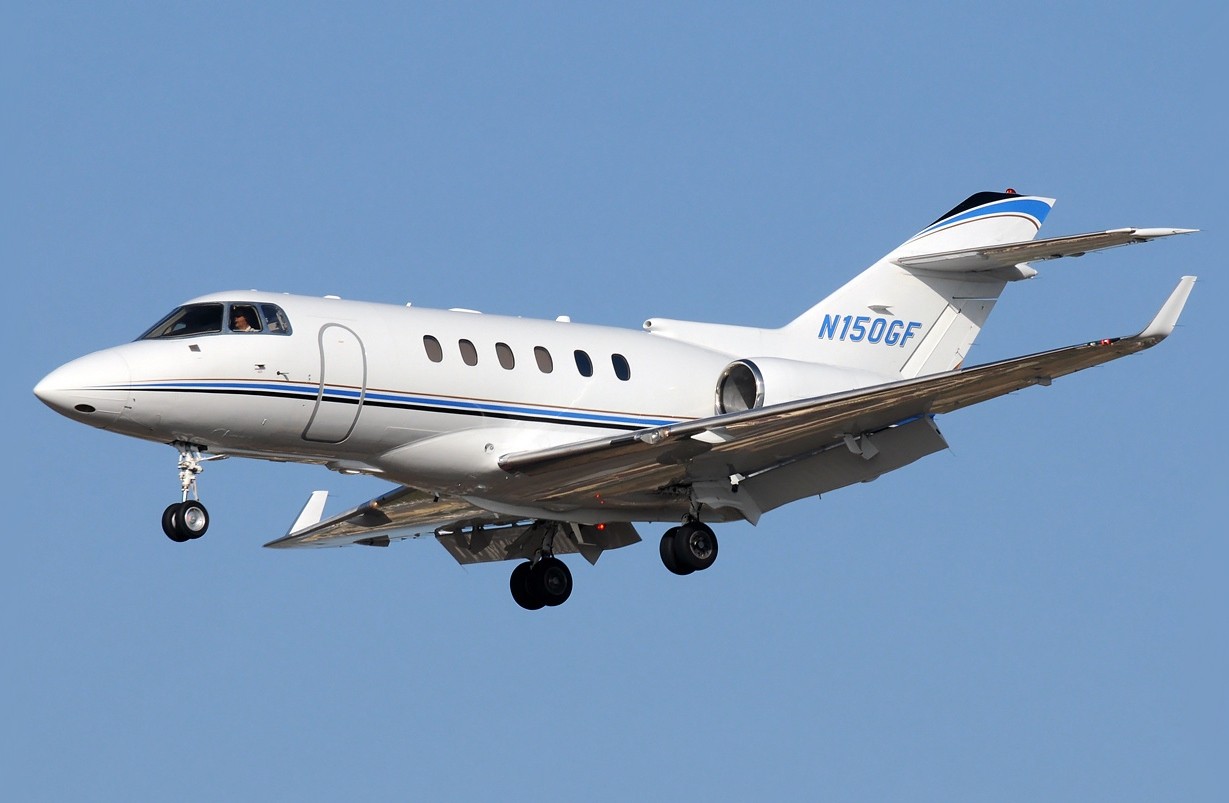
Corporate Aviation Excellence
The Hawker 900XP emerged during a pivotal period in business aviation, when corporate flight departments demanded greater range and performance from mid-size jets. With approximately 70 units produced between 2007 and 2012, the 900XP captured a specialized segment of the market before Hawker Beechcraft's financial collapse ended production of all Hawker jets.
Powered by twin Honeywell TFE731-50R turbofan engines, each delivering 4,660 pounds of thrust, the 900XP achieved a maximum cruise speed of 514 knots and could climb at 3,415 feet per minute. These engines, mounted in underwing nacelles, provided the aircraft with exceptional hot-and-high performance capabilities that distinguished it from competitors. The TFE731 series had proven its reliability across more than 17,000 engines produced since 1972, accumulating over 100 million flight hours in service.
Design Evolution
The 900XP's engineering team at Hawker Beechcraft developed the aircraft as a direct successor to the 800XP, incorporating significant improvements in range, avionics, and passenger comfort. The aircraft featured a stretched fuselage to accommodate up to nine passengers in a typical executive layout, while maintaining the proven aerodynamic characteristics of its predecessor. Advanced winglets enhanced fuel efficiency and contributed to the aircraft's impressive 2,825-nautical-mile range, representing a 10 percent increase over the 800XP.
The cockpit incorporated Rockwell Collins Pro Line 21 avionics, providing pilots with advanced flight management capabilities and enhanced situational awareness. This glass cockpit technology, combined with dual-channel FADEC engine controls, reduced pilot workload while improving operational safety and efficiency.
Manufacturing Heritage
Hawker Beechcraft Corporation, formed in early 2007 through a $3.3 billion acquisition by Onex Partners and Goldman Sachs, inherited a rich aviation legacy spanning decades. The company's roots traced back to Beech Aircraft Corporation, founded in 1932, and the Hawker jet division acquired from British Aerospace in 1993. This merger created one of general aviation's most comprehensive manufacturers, combining Beechcraft's propeller aircraft expertise with Hawker's business jet technology.
Production of the 900XP took place at the company's Wichita, Kansas facilities, where skilled technicians assembled each aircraft to exacting standards. The timing coincided with Beechcraft's 75th anniversary, marking a period of ambitious expansion that would ultimately prove unsustainable during the 2008 financial crisis.
Operational Performance
In service, the 900XP demonstrated exceptional versatility for corporate flight departments and charter operators. Its transcontinental range enabled nonstop flights across the United States and short international routes, while the aircraft's 51,000-foot service ceiling allowed operations above most commercial traffic and adverse weather. The combination of speed, range, and passenger comfort made it particularly attractive for time-sensitive business travel.
Typical crew requirements called for two pilots, though the aircraft's advanced systems and proven reliability simplified training and currency requirements. Charter operators appreciated the 900XP's ability to access shorter runways while maintaining full passenger and baggage capacity, expanding operational flexibility compared to larger business jets.
Financial Challenges and Production End
The 2008 financial crisis devastated the business jet market, creating insurmountable challenges for Hawker Beechcraft. Despite the 900XP's technical merits and positive market reception, declining sales across all product lines forced the company into Chapter 11 bankruptcy on May 3, 2012. A planned $1.79 billion sale to Superior Aviation Beijing collapsed in October 2012, leading to the immediate cessation of all Hawker jet production.
The bankruptcy marked the end of an era for the Hawker brand, which had been synonymous with business aviation excellence for decades. When the company emerged from bankruptcy on February 19, 2013, it operated as Beechcraft Corporation, focusing exclusively on turboprop and piston aircraft production.
Legacy and Current Status
Textron Aviation, formed after Textron's 2014 acquisition of Beechcraft Corporation for $1.4 billion, continues to provide parts and service support for the 900XP fleet. Approximately 50-60 aircraft remain active in civil registries worldwide, testament to the type's durability and continued operational value.
The 900XP's significance extends beyond its production numbers, representing the culmination of decades of business jet development and the final chapter of Hawker's storied history in American manufacturing. Its innovative features, including advanced avionics and efficient engines, influenced industry standards that continue to shape modern business aircraft design. For operators fortunate enough to own these rare aircraft, the 900XP provides a unique combination of performance, comfort, and exclusivity in the competitive world of corporate aviation.