
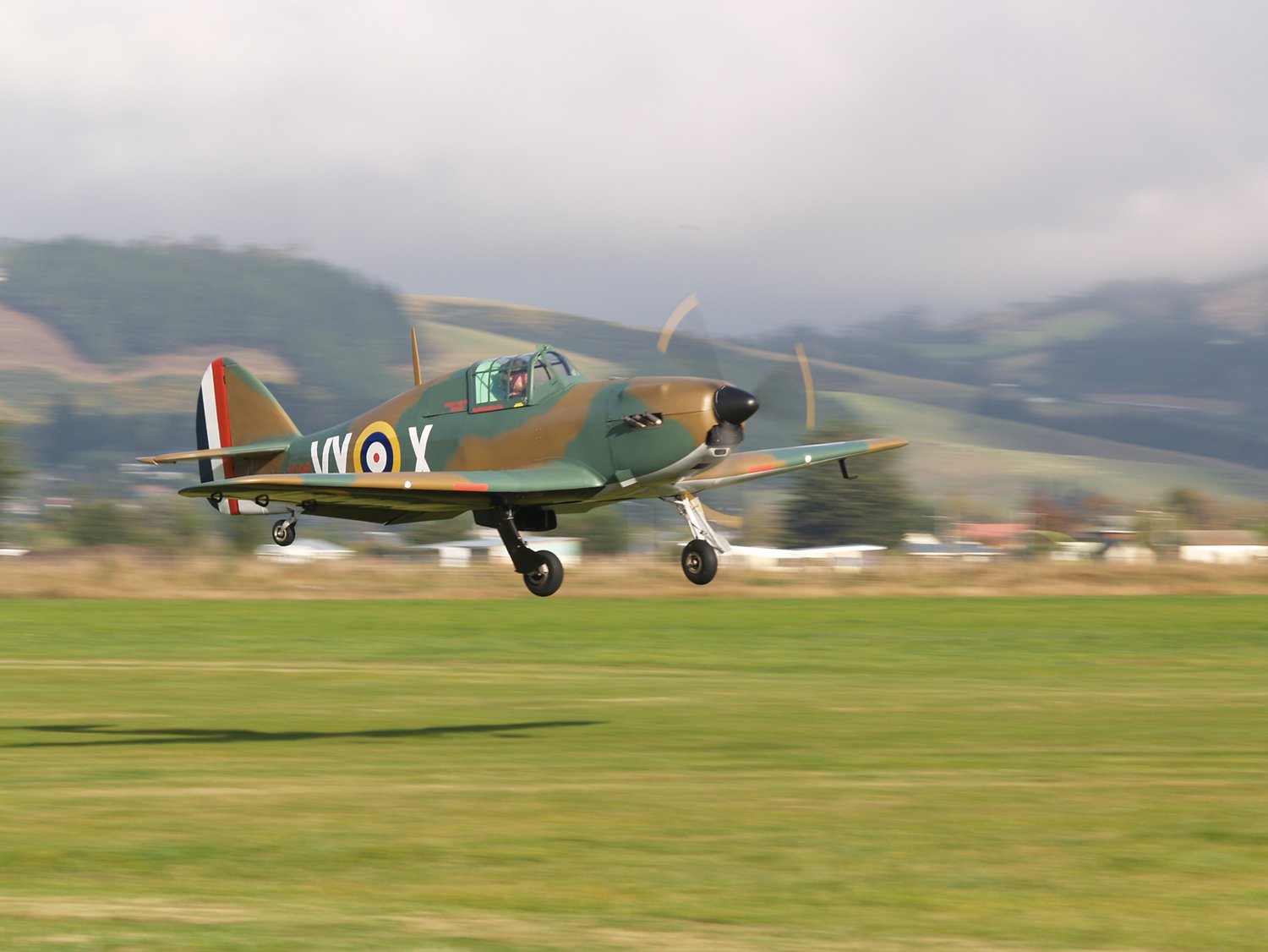
The Sindlinger HH-1 Hawker Hurricane is a specialized amateur-built aircraft designed by Fred Sindlinger in the United States. Conceived as a 5/8-scale replica of the iconic World War II Hawker Hurricane, the HH-1 was intended to allow private enthusiasts to construct and fly a faithful representation of the historic fighter without the immense cost and complexity associated with full-scale military aircraft. The prototype was constructed between 1969 and 1972, eventually completing its first flight in January 1972.
Designed specifically for amateur construction, the HH-1 features a low-wing, cantilever monoplane configuration. Its airframe is built entirely of wood and is finished with fabric covering on both the fuselage and the wings. To maintain the aesthetic and functional spirit of the original fighter, the design incorporates manually retractable main landing gear and a fixed tailwheel. This combination of a traditional wood-and-fabric build with retractable gear was distinctive among the homebuilt replicas of the late 1960s and 1970s.
Technical specifications for the HH-1 include a wingspan of 25 feet, a length of 19 feet 8 inches, and a height of 5 feet 10 inches. The aircraft has a wing area of 102 square feet, an empty weight of 1,005 lb, and a gross weight of 1,375 lb. In terms of power, the aircraft was designed to accommodate a Lycoming engine with up to 210 hp. The prototype and typical specifications list the Lycoming O-320, a four-cylinder, air-cooled, horizontally-opposed piston engine producing 150 hp. This powerplant enables a maximum speed of 200 mph and a cruise speed of approximately 165 mph, with a rate of climb of 1,200 feet per minute.
Because the HH-1 was offered as a kit or plans-built design rather than being produced by a central factory, there is no documented industrial production run or total number of aircraft completed. However, the existence of several individually registered examples, such as the Canadian-registered C-GWPN, confirms that multiple builders have successfully completed the project. The aircraft serves exclusively in a private, recreational capacity, and there is no record of the HH-1 ever seeing military service. Its legacy persists as a viable example of how high-performance warbird replicas can be achieved through amateur construction using common aviation engines.