
What "Experimental Amateur-Built" Means
Experimental Amateur-Built (E-AB) is a subcategory of the FAA's broader Experimental airworthiness classification, established under 14 CFR § 21.191(g). It covers aircraft "the major portion of which has been fabricated and assembled by persons who undertook the construction project solely for their own education or recreation." In practice this means an ordinary person — not a certificated manufacturer — builds the airplane in a garage, hangar, or workshop, and the resulting machine does not conform to any FAA type certificate. The word Experimental is something of a misnomer: most homebuilts are based on thoroughly proven designs that have flown hundreds or thousands of times. The label simply signals that the aircraft was certificated outside the factory type-certificate system and is managed under a specialized set of operating limitations and inspections.
The "51% Rule"
The defining requirement is the major portion standard, universally known as the "51 percent rule." To qualify for an amateur-built airworthiness certificate, the builder (or builders) must perform more than half of the fabrication and assembly tasks themselves, and must do so for education or recreation rather than for commercial production. The FAA maintains a checklist of construction tasks and evaluates kits against it to confirm that enough work is left for the amateur to legitimately earn the certificate. Once built, the aircraft is inspected and then flown through a structured flight-test period — typically 25 to 40 hours in a designated area — before it may carry passengers. Guidance in Advisory Circular AC 20-27 and FAA Order 8130.2 spells out the documentation, inspection, and testing process in detail.
Kits, Plans, and One-Off Originals
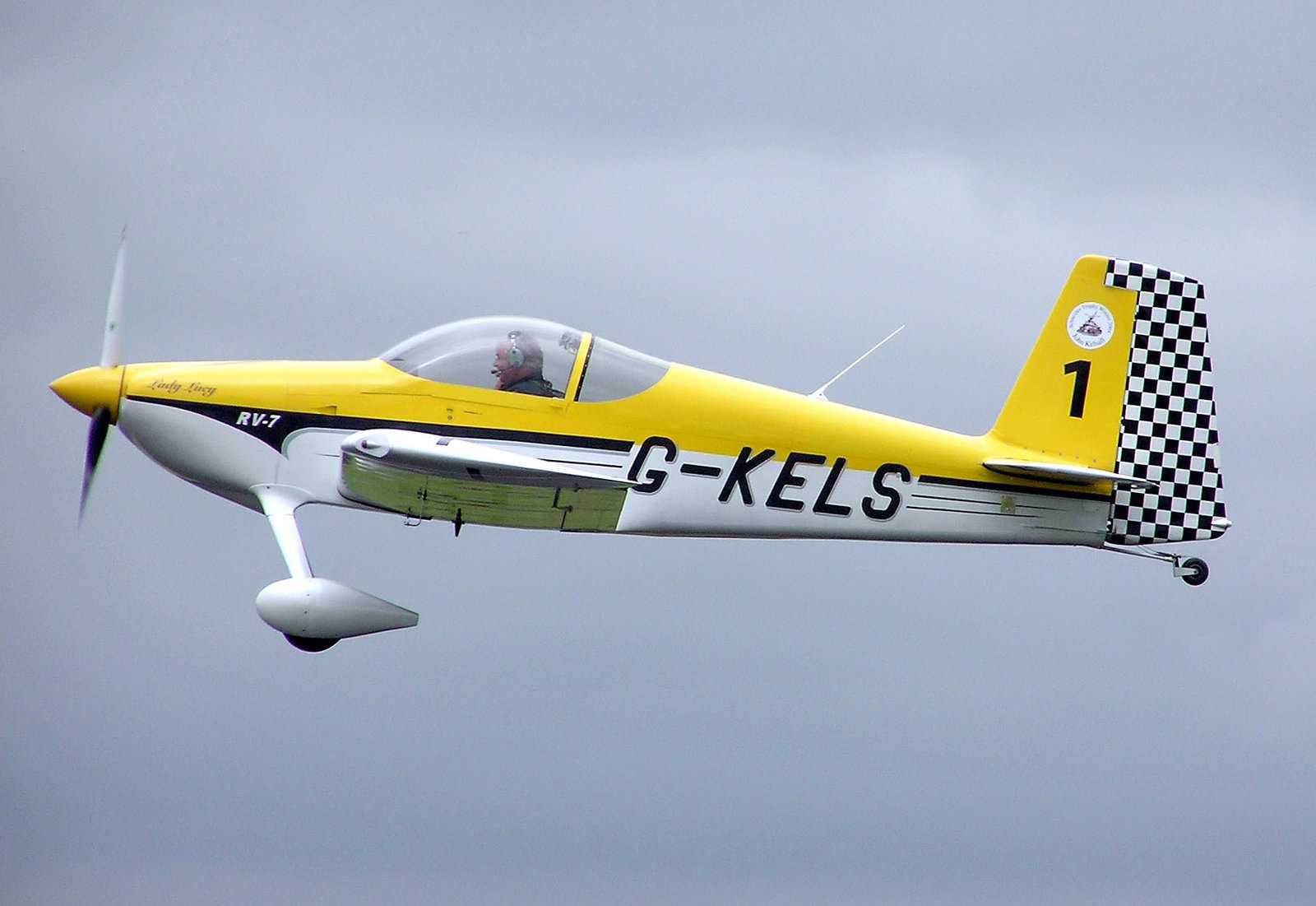
Homebuilts reach the flight line by several very different paths. Kit aircraft are the most common today: a manufacturer supplies pre-formed parts, and the builder rivets, bonds, wires, and assembles them. Popular kit families include the all-aluminum Van's RV series, along with Zenith, Sonex, Kitfox, and many others. Plans-built aircraft go a step further — the builder buys only drawings and fabricates parts from raw material such as aluminum sheet, welded steel tube, wood, or composite. At the far end are original one-off designs, aircraft conceived, engineered, and constructed by a single builder with no commercial kit or widely circulated plans behind them. These true one-offs are, quite literally, the only aircraft of their kind in the world.
A Fleet Where No Two Are Alike
The result is one of the most diverse fleets in all of aviation. Even within a single popular type, builders choose their own engines, avionics, paint schemes, and modifications, so no two finished airplanes are identical. According to the Experimental Aircraft Association (EAA), more than 33,000 amateur-built aircraft are currently registered with the FAA — and the Van's RV series alone accounts for roughly a third of the U.S. experimental fleet, with over 11,000 RVs flying worldwide. Despite their non-standard origins, studies have found the safety record of amateur-built aircraft to be broadly comparable to that of factory-built general-aviation airplanes, while offering builders a fraction of the cost and an unmatched depth of hands-on knowledge about the machine they fly.
Famous Designs and Designers
The homebuilt movement has produced some of aviation's most celebrated names. Richard "Van" VanGrunsven founded Van's Aircraft in 1973 and created the RV series that became the most-built line of homebuilts in history. Burt Rutan revolutionized amateur design with his canard, composite creations — the VariEze and Long-EZ — whose influence reached all the way to record-setting research aircraft. Steve Wittman, an air-racing legend, gave homebuilders the rugged Tailwind. Anchoring the whole culture is the Experimental Aircraft Association, founded in 1953, whose annual AirVenture gathering at Oshkosh, Wisconsin, is the largest aviation event in the world and the spiritual home of the homebuilt community.
Why They Share This Category Instead of a Type Code
Standardized aircraft — a Cessna 172 or Boeing 737 — carry an ICAO type designator because thousands of identical, type-certificated examples exist. Amateur-built aircraft generally do not: each is unique, holds no type certificate, and may be a genuine one-of-a-kind. As a result, most homebuilts have no formal ICAO type designator, and in international flight-plan systems they are represented by the generic placeholder ZZZZ (aircraft type not otherwise assigned), with the specific design noted separately. AviatorDB groups these owner-built, one-off aircraft under this single Homebuilt / One-Off category page so that a registration linking to an experimental aircraft lands on a useful, accurate explanation of what it is — rather than being forced to match a standardized type that does not exist.