
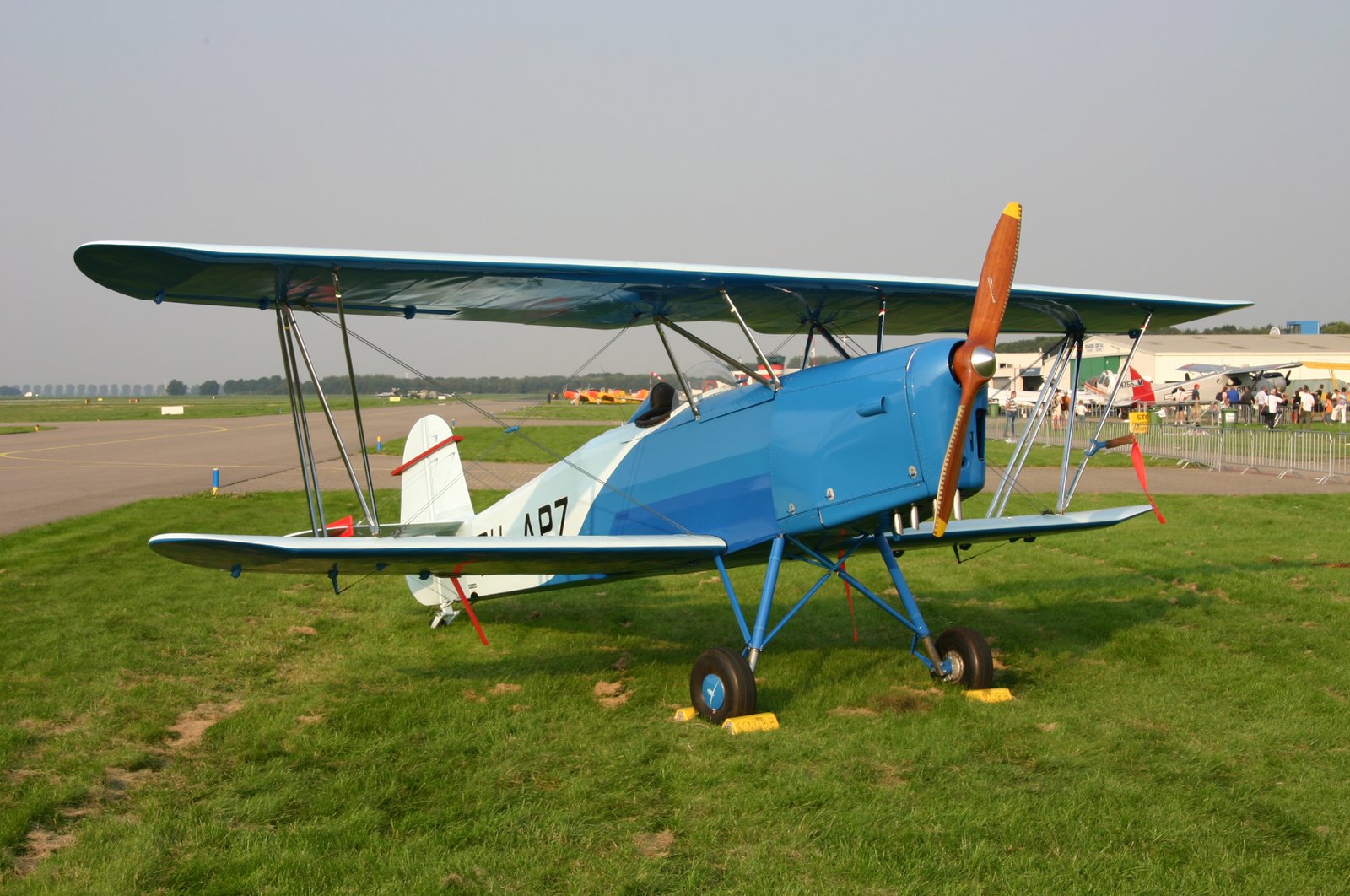
The Lambach HL-2 Replica is a faithful reproduction of the HL.II, a unique single-seat aerobatic biplane designed by Dutch engineer and pilot Hugo Lambach. The original aircraft was conceived to provide Dutch pilots with a domestically produced machine for annual aerobatic competitions held at Waalhaven in Rotterdam. To realize this project, Lambach established the Lambach Aviation Works in The Hague, utilizing the buildings of the "Starlift" elevator factory as a workshop. Production of the original HL.II began in January 1937 and took five and a half months to complete, with the maiden flight occurring on May 2, 1937.
Technically, the HL.II featured a mixed construction consisting of a fabric-covered welded steel-tube fuselage and wooden wings with two spars. It was powered by a 130 hp (97 kW) de Havilland Gipsy Major four-cylinder inverted air-cooled inline piston engine driving a two-bladed fixed-pitch propeller. This configuration allowed for a maximum speed of 215 km/h and a never-exceed speed (Vne) of 250 km/h. The aircraft was notably certified for g-limits of +6 / −3, reflecting its dedicated aerobatic purpose, although it struggled to outperform contemporary German competition aircraft.
The original HL.II had a brief operational life and was destroyed by German bombs at Ypenburg airfield on May 10, 1940, during the invasion of the Netherlands. Following this loss, Lambach Aviation Works closed within the year. In the 1990s, a modern effort to preserve this legacy began. A team of students from the Technical University of Delft (TU Delft), in association with a modern heritage entity known as Lambach Aircraft, spent approximately five years constructing a flying replica (c/n 20002). This replica first flew on September 18, 1995, at Gilze-Rijen Air Base, piloted by Charles Bertels.
While the 1995 replica was later reported to have faced grounding due to fatigue cracks in the wing roots, it remains the most documented reproduction of the type. The aircraft is recognized by ICAO under the designator HL2 as a light single-engine landplane. With a maximum takeoff weight of 620 kg and a wingspan of 8.00 m, the HL-2 Replica continues to serve as an educational and commemorative tool for Dutch aviation history.