
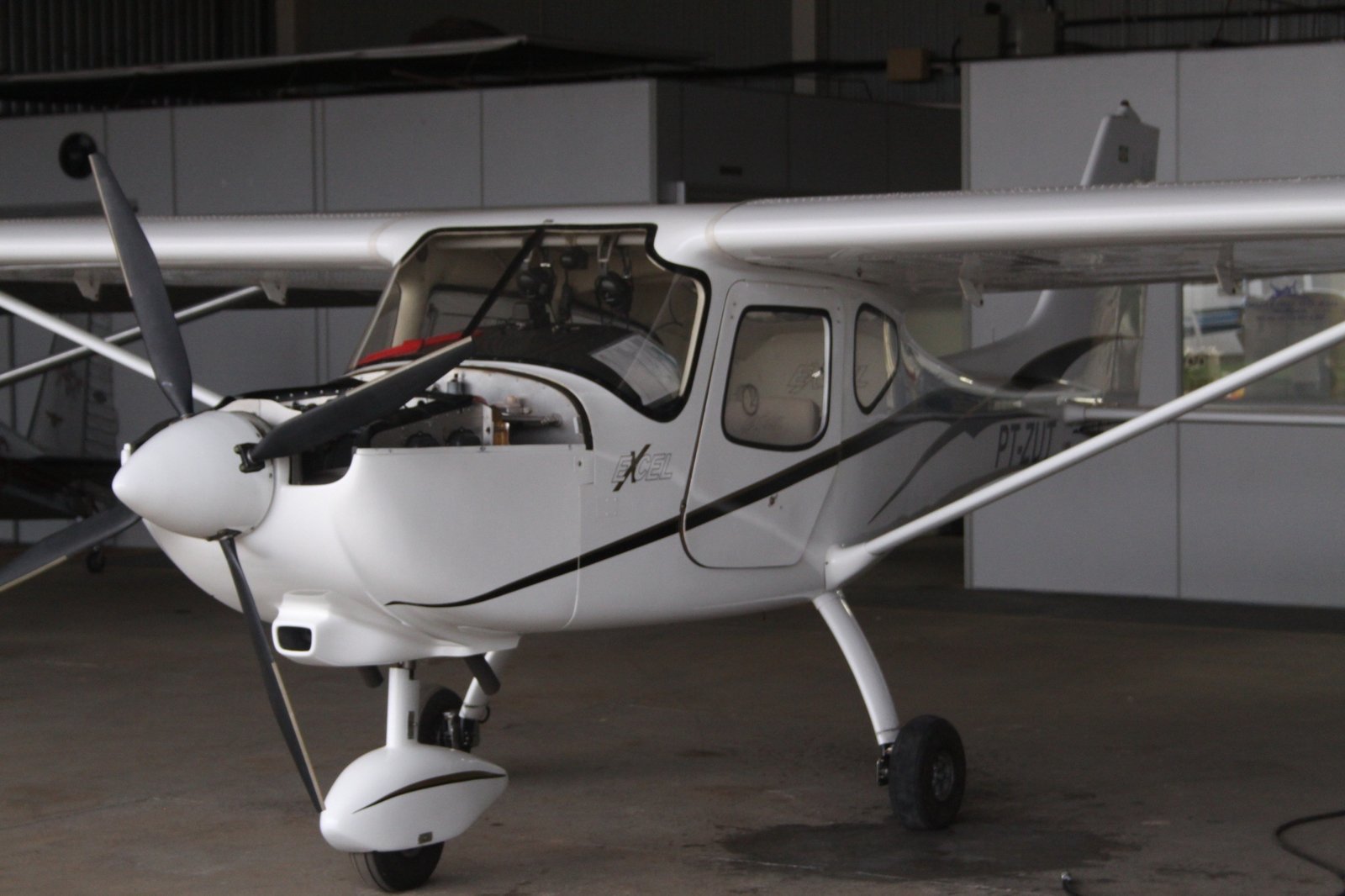
The INPAER Excel is a light-sport aircraft developed by the Brazilian manufacturer INPAER (Indústria Paulista de Aeronaves). Founded in 2002, INPAER specialized in the production of factory-built and kit aircraft tailored for the ultralight and light-sport aviation markets. The Excel is one of several models produced by the company, alongside others such as the Explorer and the Conquest series. While the exact production window is not formally documented in public records, the aircraft is identified as an active type in 21st-century ICAO Doc 8643 databases, and the company's activity is centered in the state of São Paulo, specifically within the Campinas region.
Technically, the Excel is classified under the ICAO type designator INEC. It is categorized as an L1P aircraft, which denotes a single-engine piston-powered aeroplane. The aircraft is designed as a landplane and falls into the "Light" wake turbulence category. Its physical dimensions include a wingspan of 9.6 meters and a total length of 6.5 meters. One of the more notable technical aspects of the Excel is its maximum take-off weight (MTOW) of 1,000 kg. This weight puts the Excel at the higher end of the light-sport and ultralight weight spectrum, particularly when compared to European microlights that often remain below 600 kg, potentially allowing for increased payload and more robust construction.
In terms of operational use, the Excel serves the general aviation and sport flying sectors. In Brazil, these aircraft are typically registered under the PR- or PU- prefixes, which are reserved for experimental and microlight/LSA categories. While specific operator lists and scheduled routes are not documented—as the aircraft is unsuitable for commercial passenger or cargo transport—its size and weight are typical of two-seat aircraft used for private recreation and flight training. There is no recorded evidence of the Excel being adopted for military service or participating in any armed conflicts.
Despite the lack of documented performance figures such as cruise speed or service ceiling, the Excel's legacy is defined by its formal recognition in international aviation coding. The assignment of the INEC designator indicates a level of production and operational presence sufficient to warrant official ICAO classification, distinguishing it from many low-volume homebuilt ultralights.