
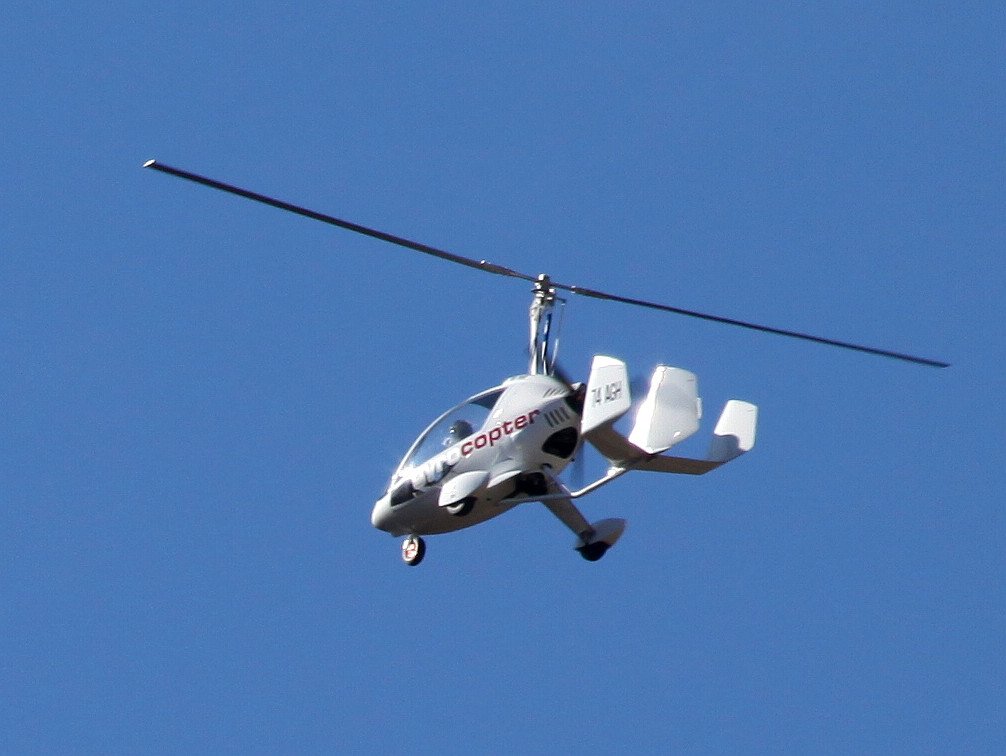
The DTA J-RO is a modern autogyro developed by DTA sarl (also known as Delta Trikes Aviation), a specialist manufacturer based in Montélimar, France. The aircraft serves as a transition for the company from its established history in ultralight trikes into the sport gyrocopter sector. While a precise production start date is not documented, evidence of the aircraft's existence dates back to at least November 2007, when a specific airframe was manufactured. Production continued through 2017 and remained active into the early-to-mid 2020s, as the model continues to be listed in the manufacturer's current product range.
Designed as a two-seat tandem aircraft, the J-RO features an open-cockpit layout with an aerodynamically shaped fairing and optional windscreen elements to enhance pilot and passenger comfort during leisure flights. The aircraft utilizes a tractor configuration, where the engine and propeller are mounted at the front, while a single main rotor provides lift through autorotation. DTA emphasizes a robust construction and functional design, leveraging the company's background in high-quality ultralight manufacturing.
Technical specifications vary based on the chosen powerplant, with the aircraft typically utilizing Rotax four-cylinder, four-stroke piston engines. The J-RO is offered with either the Rotax 912 S, producing 100 hp, or the turbocharged Rotax 914, which provides 115 hp (86 kW). Performance figures for the Rotax 914 variant include a maximum speed of 180 km/h and cruise speeds ranging between 120 and 160 km/h. The aircraft is noted for its short-takeoff and landing capabilities, with a quoted landing roll of only 20 to 30 meters. Other performance metrics include a service ceiling between 10,000 and 14,000 feet and a climb rate of 500 to 1,000 ft/min.
In civil service, the J-RO is operated primarily for recreational general aviation, training, and local touring. While total production numbers are not publicly disclosed, registration data suggests a low-volume, semi-custom production run. The aircraft has seen use in several countries, including Sweden, and is marketed to private owners and flight schools. There is no documented military service or wartime application for the type. Today, the J-RO remains a significant example of French light aviation, providing a robust alternative in the European sport rotorcraft market.