
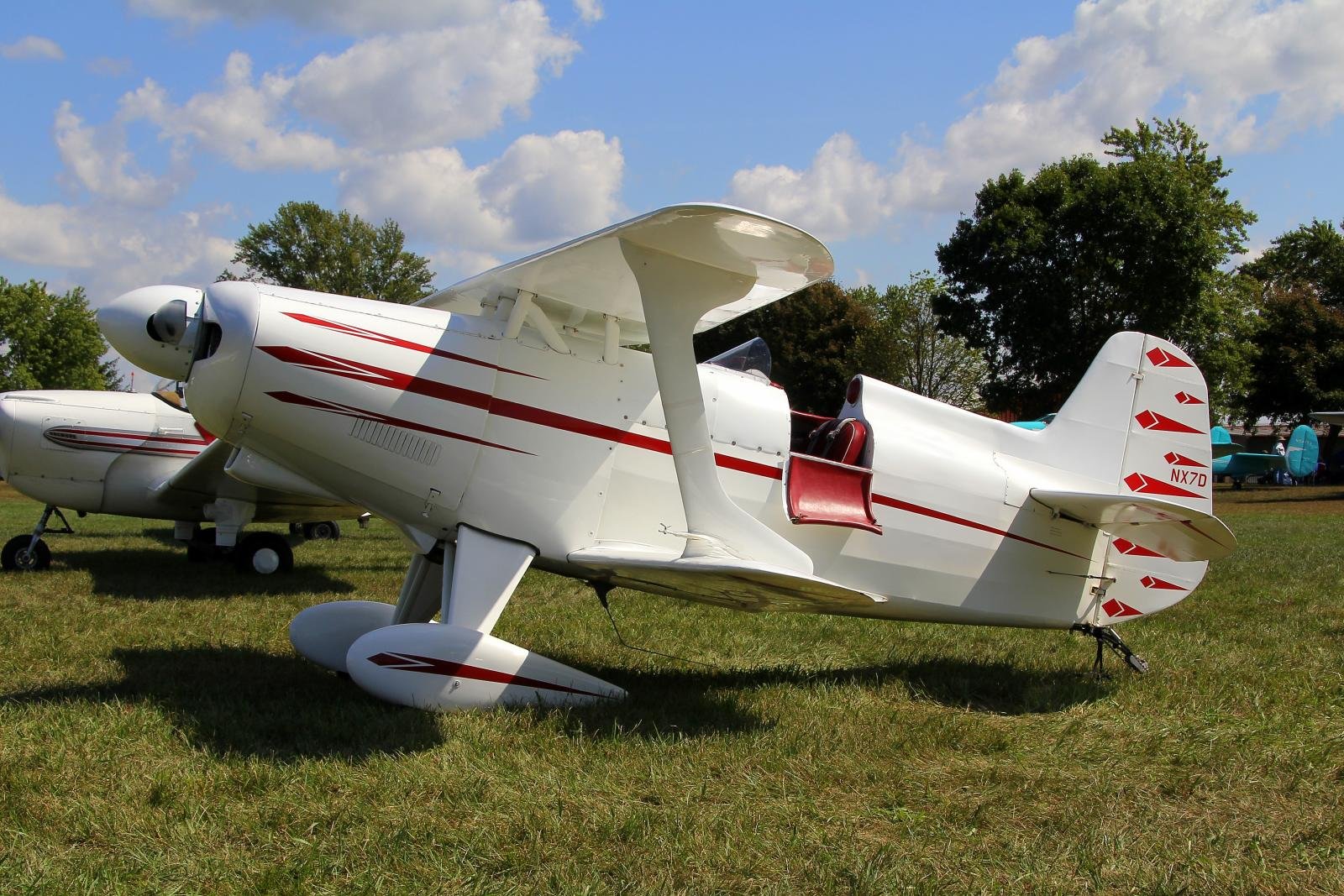
The Payne Knight Twister is a compact, single-seat aerobatic sport biplane that holds a significant place in aviation history as one of the earliest successful homebuilt designs. The aircraft was designed by Vernon W. Payne Sr. in 1928, with the prototype being constructed and first flown in 1932 in the United States. Unlike traditional aircraft, the Knight Twister was never produced by a factory; instead, it was developed as a plans-built aircraft, allowing amateur builders to construct their own versions in private workshops across the United States and Canada.
By August 1945, Payne was advertising sets of shop drawings in publications such as Flying magazine, offering various wing and engine configurations. This approach helped popularize the homebuilt movement in the post-war era. One notable example, named "Nobody Loves Me" and built by Leon Beliaeff in Québec, is recognized as one of the first amateur-built aircraft registered in Canada after World War II. While an exact production total is unavailable, it is estimated that approximately 75 airframes have been built over the decades. The distribution of these plans was later handled by Steen Aero Lab, which continues to offer the design as the oldest in its catalog.
Technically, the Knight Twister is characterized by its diminutive size, featuring a length of 14 feet and an upper wingspan of 15 feet. The standard configuration utilizes a single 90 hp Continental C-90 four-cylinder, horizontally opposed, air-cooled piston engine. This setup allows for a maximum speed of 160 mph and a rate of climb of 900 ft/min. The aircraft has a gross weight of 960 lb and a wing area of 60 square feet.
In civil service, the Knight Twister earned a reputation as a formidable air racer. In 1964, Clyde Parsons won the Sport Biplane Championship at the Reno Air Races in the "Parsons Twister," achieving a speed of 144.7 mph. Further success came in the 1970s with Don Fairbanks, who flew a variant known as the Knight Twister "Imperial." Fairbanks won the 1971 Silver Biplane Race at Reno and established a sport biplane class world record of 178 mph. Due to its racing pedigree, Fairbanks' aircraft has been displayed at the Motorsports Hall of Fame of America in Novi, Michigan, and at Sporty’s Pilot Shop in Ohio.