
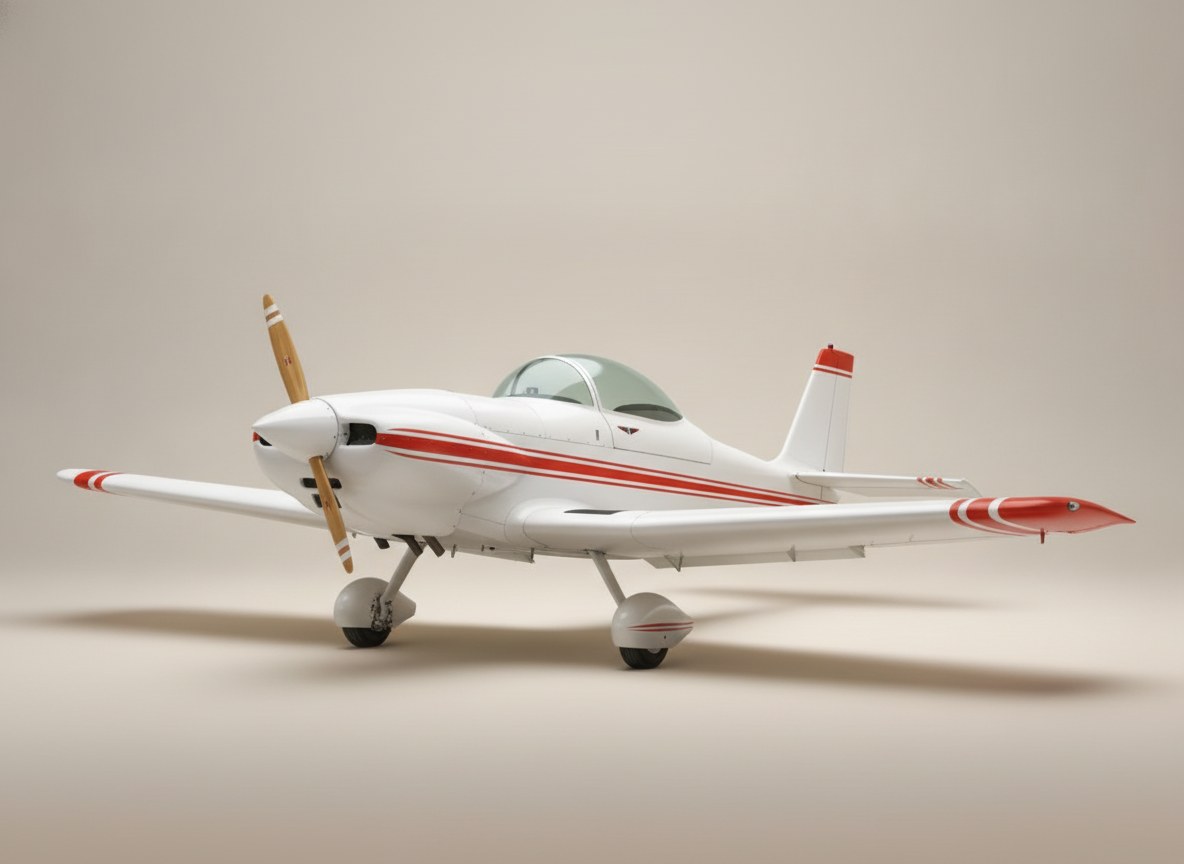
Revolutionary Composite Design
The KR-1 emerged from the partnership of Ken Rand and Stu Robinson, both Douglas Aircraft flight systems engineers who began prototype construction in 1968. Rand, standing just 5 feet 5 inches tall, conceived the innovative composite wing design, while Robinson, an aeronautical engineer trained at Northrop University, provided more conservative engineering guidance. Their collaboration produced an aircraft that would fundamentally change homebuilt aviation by proving that amateur builders could successfully work with advanced materials.
Ken Rand's prototype N1436 achieved first flight in February 1972, marking a watershed moment for composite aircraft construction. The design earned immediate recognition at EAA Oshkosh 1972, where it received the "Best Aircraft Application of Materials" award. This acknowledgment validated the revolutionary approach of using Styrofoam cores sandwiched between Dynel fabric layers, a construction method that reduced weight by 150 pounds compared to conventional designs like the Taylor Monoplane that inspired it.
Market Success and Builder Community
Rand Robinson Engineering launched plan sales around 1972 at $15 per set, targeting amateur builders seeking modern composite construction techniques. The response exceeded all expectations, with over 5,000 KR-1 plans sold worldwide by March 1975. Sales momentum continued through the following decades, reaching nearly 6,000 plans by 1996. This commercial success established the foundation for the even more popular KR-2 two-seat variant, which would eventually sell 9,200 sets of plans.
The decentralized manufacturing approach meant individual homebuilders across the United States constructed their own aircraft rather than purchasing factory-built examples. While exact completion numbers remain unknown due to this homebuilt nature, estimates suggest dozens of KR-1s achieved flight status. The design's influence extended far beyond actual completions, as thousands of builders gained experience with composite techniques that would benefit the broader experimental aircraft community.
Engineering Innovation
The KR-1's structural design represented a dramatic departure from traditional wood-and-fabric homebuilts. The 17-foot wingspan incorporated a 5-foot-5-inch center section with spar carry-throughs that supported both the pilot seat and retractable landing gear. This innovative approach eliminated the need for separate gear mounting structures, reducing complexity and weight. The fuselage utilized conventional plywood and spruce box construction, providing a familiar building technique for the aft section while concentrating advanced materials in the wing.
Retractable landing gear distinguished the KR-1 from most homebuilt designs of the early 1970s. The taildragger configuration with tailskid rather than tailwheel further reduced weight and complexity. These design choices, combined with the efficient airfoil and smooth composite surfaces, enabled the diminutive aircraft to achieve remarkable performance numbers despite its small size and lightweight construction.
Powerplant and Performance
Converted Volkswagen automotive engines powered virtually all KR-1 aircraft, with the original prototype using a 1200cc unit producing 36 horsepower. Most builders opted for larger displacement conversions, typically 1834cc Revmaster units generating 60 horsepower at 3200 rpm. The most powerful installations reached 75 horsepower, enabling maximum speeds of 200 mph and cruise speeds of 180 mph.
Fuel efficiency impressed pilots accustomed to traditional aircraft engines, with the KR-1 achieving 32 miles per gallon while burning automotive gasoline. Standard fuel capacity included 10 gallons in the fuselage plus wing tanks ranging from 2 to 28 gallons depending on builder preferences. With maximum fuel, the aircraft could achieve nine hours of endurance at economical cruise settings, providing remarkable range for such a small aircraft.
Legacy and Preservation
The KR-1's impact on homebuilt aviation extended far beyond its modest production numbers. By demonstrating that amateur builders could successfully work with composite materials, it opened the door for countless future designs incorporating similar techniques. The aircraft celebrated its 50th anniversary in 2022, with aviation historians recognizing its pivotal role in advancing composite construction methods throughout the experimental aircraft community.
Today, at least one KR-1 remains active on the FAA registry. Aircraft N53KR, built by Theodore L. Harwood and certified in 2006, maintains airworthiness with registration valid through 2028. The Planes of Fame Air Museum displays a static 1980 KR-1 example, preserving the design for future generations to study. While Rand Robinson Engineering ceased operations decades ago, the KR-1's influence continues through the hundreds of composite homebuilt designs that followed its pioneering example.