
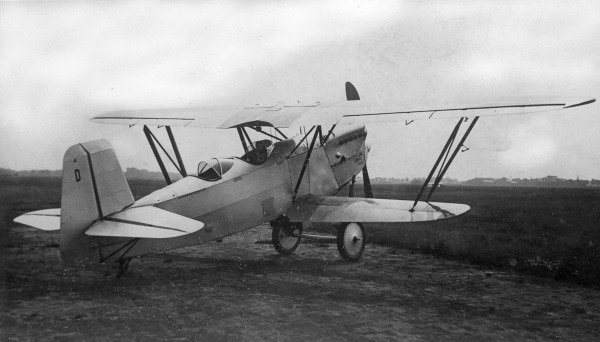
The Albatros L 76 Aeolus was a German military reconnaissance and training aircraft developed by Albatros Flugzeugwerke. Built in 1927, the aircraft was produced in very limited numbers and saw minimal operational use. Due to the obscurity of the type, many specific details regarding its production span and the exact number of airframes manufactured remain undocumented in available technical records.
Designed as a two-seat military aircraft, the L 76 was characterized by a mixed-construction airframe that was modern for the late 1920s. It featured a welded-steel fuselage covered in fabric, paired with wooden dual-spar wings. These wings were constructed with plywood skins and supported by N-type struts. This specific structural configuration was a defining characteristic of the Aeolus and was later mirrored in its derivative, the Albatros L 77v.
While the L 76 itself lacks detailed documented performance specifications and engine data in available records, its significance is primarily found in its role as the basis for the L 77v reconnaissance fighter. The L 77v adopted the same welded-steel and plywood-wing construction as the L 76 and was powered by a 450 kW (600 hp) BMW VI 5.5 water-cooled V12 engine. The derivative aircraft were produced under license by Ernst Heinkel Flugzeugwerke in 1928, with four examples built.
Operationally, the L 76 was intended for reconnaissance and training roles within the German military aviation framework of the era. While no specific units or combat deployments are recorded for the L 76, its successor, the L 77v, was involved in clandestine military development. Three L 77v aircraft were used for armament trials at Lipetsk in the Soviet Union and later at the Staaken Erprobungsstelle (Test Centre) in Germany between December 1929 and October 1931. The L 76 thus represents a critical stepping stone in inter-war German aviation, bridging the gap between early wooden biplanes and later all-metal designs during a period of restricted military development.