
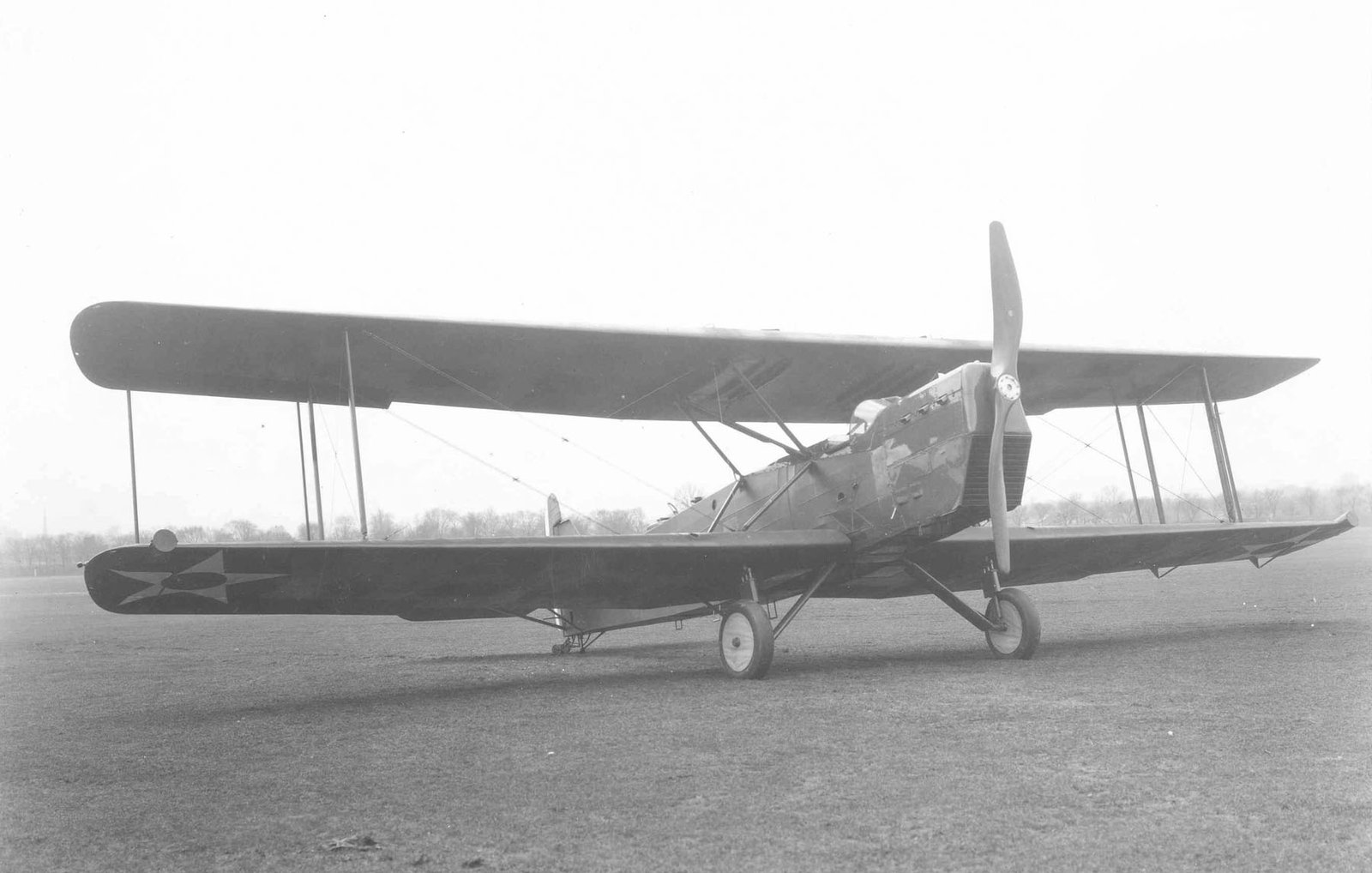
The Huff-Daland LB-1 was a light bomber developed by the Huff-Daland Aero Corporation, an American aircraft manufacturer founded by Thomas Huff and Elliot Daland. The company began its operations in 1920 as the Ogdensburg Aeroway Corp in Ogdensburg, New York, before transitioning to the Huff-Daland Aero Corp name. By 1925, the firm became the Huff-Daland Aero Company, establishing its primary headquarters in Bristol, Pennsylvania. During the mid-1920s, the company focused on producing biplane configurations intended for use as trainers, observation aircraft, and light bombers to fulfill contracts for the U.S. Army and Navy.
Despite its listing in some historical indices as a distinct model, technical documentation for the LB-1 is extremely sparse. There are no surviving records regarding its specific lead designer, first flight date, or precise production numbers. While the company is well-known for the Petrel biplane—which served as the structural basis for the Huff-Daland Duster—the specific design innovations or technical specifications of the LB-1 bomber have not been preserved in standard aviation archives. Consequently, details regarding its engine manufacturer, power output, and maximum performance metrics remain unknown.
Beyond its military aspirations, the legacy of the Huff-Daland Aero Corporation is most prominently tied to the birth of aerial crop dusting. Between 1923 and 1924, the company developed the first aircraft specifically designed for agricultural use, the Huff-Daland Duster, which flew for the first time on July 28, 1924, piloted by Harold Harris. This led to the incorporation of Huff-Daland Dusters on March 2, 1925. In 1928, C.E. Woolman acquired the crop-dusting subsidiary and renamed it Delta Air Service. This entity eventually evolved into Delta Air Lines, which continues to recognize Huff-Daland Dusters as its corporate ancestor. While the aircraft manufacturing arm of the company is now defunct, its operational lineage survives through one of the world's largest airlines.