
Production and Manufacturer History
Designed and manufactured by the American conglomerate Ling-Temco-Vought (LTV), the A-7 Corsair II was developed as a replacement for the Douglas A-4 Skyhawk to meet the U.S. Navy's VAL (Heavier-than-air, Attack, Light) requirement. Production of the aircraft began in 1965 and continued through 1984, with over 1,500 examples built during this period.
Design and Development
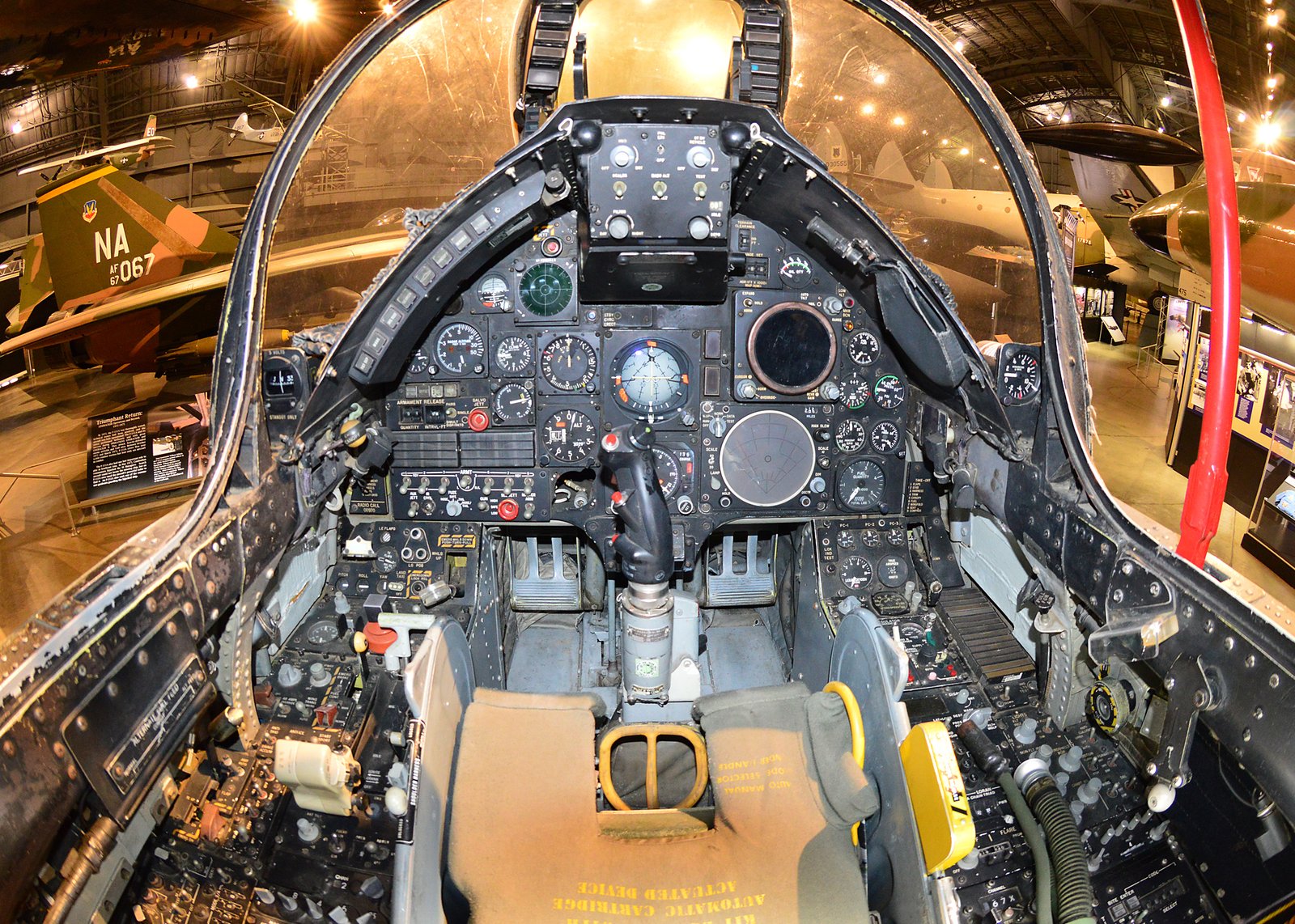
Derived from the larger Vought F-8 Crusader, the A-7 was engineered as a single-seat, subsonic light attack aircraft. The prototype, designated the YA-7, made its maiden flight in late September 1965, with sources citing the date as either September 26 or 27. A defining characteristic of the design was its immense payload capacity; the aircraft could carry up to 15,000 pounds of ordnance, earning it the nickname "the Navy's 'bomb truck'." To ensure precise delivery of these payloads, LTV integrated advanced navigation and weapons systems into the airframe.
Military Service
The A-7 entered operational service with the U.S. Navy on February 1, 1967. It was quickly deployed to the Vietnam War, where it flew combat missions over Vietnam, Cambodia, and Thailand. The U.S. Air Force later adopted a "denavalized" land-based version, the A-7D. The aircraft's operational history is extensive, including participation in the 1983 invasion of Grenada (Operation Urgent Fury), raids on Syrian ammunition depots in Lebanon in December 1983, and Operation El Dorado Canyon in Libya in 1986. It also saw action during the 1989 invasion of Panama (Operation Just Cause). During Operation Desert Storm in 1991, U.S. Navy A-7Es flew between 700 and 725 missions without a single loss to enemy action.
Global Operators and Retirement
Beyond the United States, the A-7 served with the air forces of Portugal, Thailand, and Greece. The U.S. Navy retired the type in 1991, while the Air National Guard phased out its fleet by 1993 in favor of the F-16 Fighting Falcon. Portugal retired its aircraft in 1999, and the Hellenic Air Force became the final operator, retiring its last A-7s in 2014.
Legacy and Preservation
Over its service life, the Corsair II flew more than 120,000 combat sorties. It also played a supporting role in the development of the Lockheed F-117 Nighthawk stealth aircraft. Today, several notable examples are preserved in museums, including a Vietnam-era A-7A at the Planes of Fame Air Museum, a combat-veteran A-7E at the Tillamook Air Museum, and a YA-7F supersonic prototype at the Hill Aerospace Museum.