
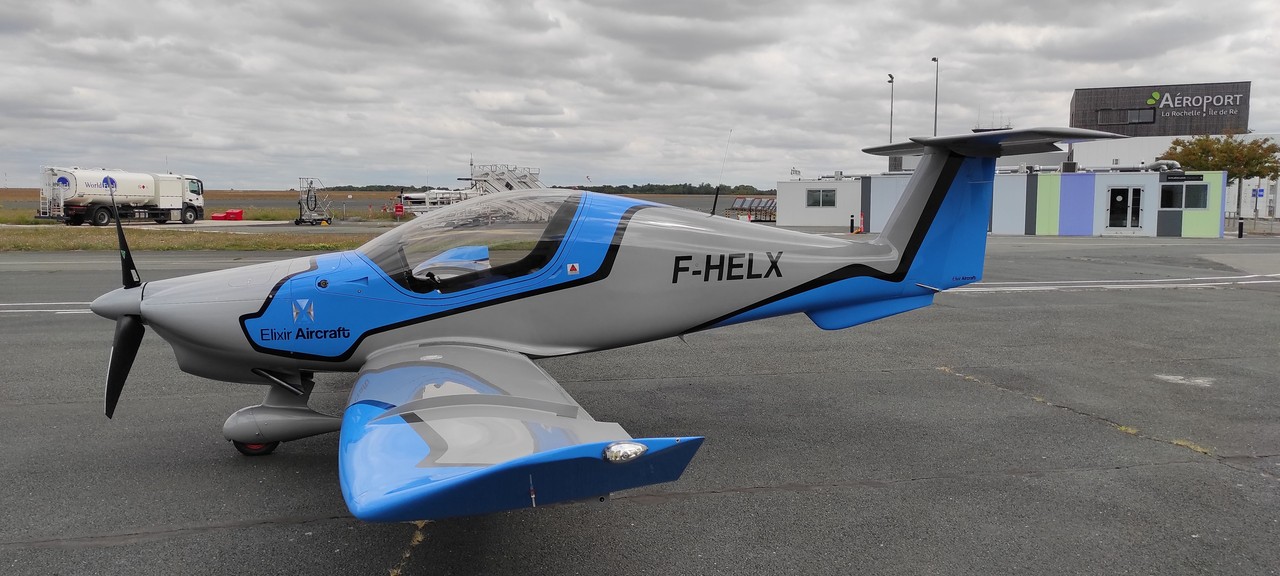
Revolutionizing Flight Training
The Elixir emerged during a critical period for general aviation training, addressing the aging fleet problem that plagued flight schools worldwide. While 130,000 light aircraft were manufactured between 1960 and 1980, only 70,000 were built in the following four decades, leaving training operators dependent on increasingly expensive-to-maintain legacy aircraft like the Cessna 152. The Elixir's innovative approach promised operating cost savings of approximately $50 per hour compared to traditional trainers.
The Manufacturer's Maritime Origins
Elixir Aircraft was founded in 2015 by three engineers working from a garage in La Rochelle, France, a city renowned for its sailing heritage. The founders recognized that competitive sailing's advanced composite manufacturing techniques could revolutionize light aircraft construction. Their breakthrough "Carbon Oneshot" process, using autoclaves to create one-piece carbon fiber components, had never before been applied to aircraft manufacturing.
By 2024, the company had grown from its humble garage origins to employ over 150 people across three French facilities, with plans to expand to 400 employees including a new U.S. assembly plant. The French government demonstrated confidence in the venture by providing a €13 million subsidy in June 2023, followed by €40 million in development financing in early 2024.
Development and Certification
Development began in 2015, with the aircraft announced at the Paris Air Show that same year. The prototype was publicly unveiled at the 2017 Paris Air Show before making its maiden flight on 31 August 2017 from La Rochelle Airport. The 40-minute initial flight reached 5,000 feet, validating the unconventional T-tail design and carbon fiber construction.
Extensive flight testing continued from March 2018, culminating in EASA CS-23 certification on 20 March 2020. The achievement of European certification marked a significant milestone for the startup, validating both their innovative manufacturing approach and flight-critical systems integration. FAA Part 23 certification followed in 2025, announced at EAA AirVenture, opening the crucial American training market.
Technical Innovation
The Elixir's most significant innovation lies in its carbon fiber construction methodology borrowed from sailing. The Carbon Oneshot process creates the entire airframe, wings, and control surfaces as seamlessly integrated components, reducing parts count and potential failure points. This approach contrasts sharply with traditional aluminum construction requiring thousands of riveted parts and complex assembly procedures.
The base variant employs a 100-horsepower Rotax 912iS fuel-injected engine driving a three-blade MT propeller. The 912iS, part of Rotax's most successful engine family with over 40,000 units produced since 1994, provides the reliability essential for training operations. A more powerful variant utilizes the turbocharged 140-horsepower Rotax 915iS with a four-blade propeller, though this configuration reduces maximum range to 473 nautical miles due to higher fuel consumption.
Safety features include a ballistic recovery parachute system and modern glass cockpit avionics configured specifically for VFR operations. The side-by-side seating arrangement facilitates instruction while the 104-liter fuel capacity provides sufficient endurance for extended training flights.
Market Penetration
The Elixir quickly attracted attention from major flight training organizations. France's ENAC flight school placed an order for 30 aircraft, while Airbus Flight Academy also selected the type for their training fleet. In the United States, one flight school ordered 35 aircraft, demonstrating international confidence in the design.
By February 2025, 28 aircraft had been delivered from over 60 manufactured, with production ramping to one aircraft per week by late 2024. The company reported over 250 letters of intent alongside 50 firm orders, creating a substantial production backlog. To serve over 200 U.S. orders, Elixir opened a reassembly facility at Sarasota Bradenton Airport, Florida, in 2025.
Production Expansion
Initial manufacturing began at Périgny near La Rochelle, with Elixir maintaining tight control over carbon fiber component production through in-house facilities established in 2021. The company's expansion plans include a new 15,000 square meter facility in La Rochelle scheduled for 2026, designed to accommodate increasing demand while maintaining quality standards.
The American facility represents more than simple market access—it demonstrates the scalability of the Carbon Oneshot manufacturing process across different locations while maintaining consistent quality standards essential for certified aircraft production.
Legacy and Impact
While production numbers remain modest compared to historical training aircraft, the Elixir's significance lies in demonstrating viable alternatives to traditional aluminum construction in certified aircraft. The successful application of sailing technology to aviation manufacturing has opened new possibilities for composite aircraft design and production efficiency.
The aircraft's role in modernizing flight training fleets addresses a critical industry need as legacy trainers age beyond economical operation. With over 60 airframes built by mid-2025 and expanding international sales, the Elixir represents the emergence of a new generation of purpose-built training aircraft designed for 21st-century operational requirements.