
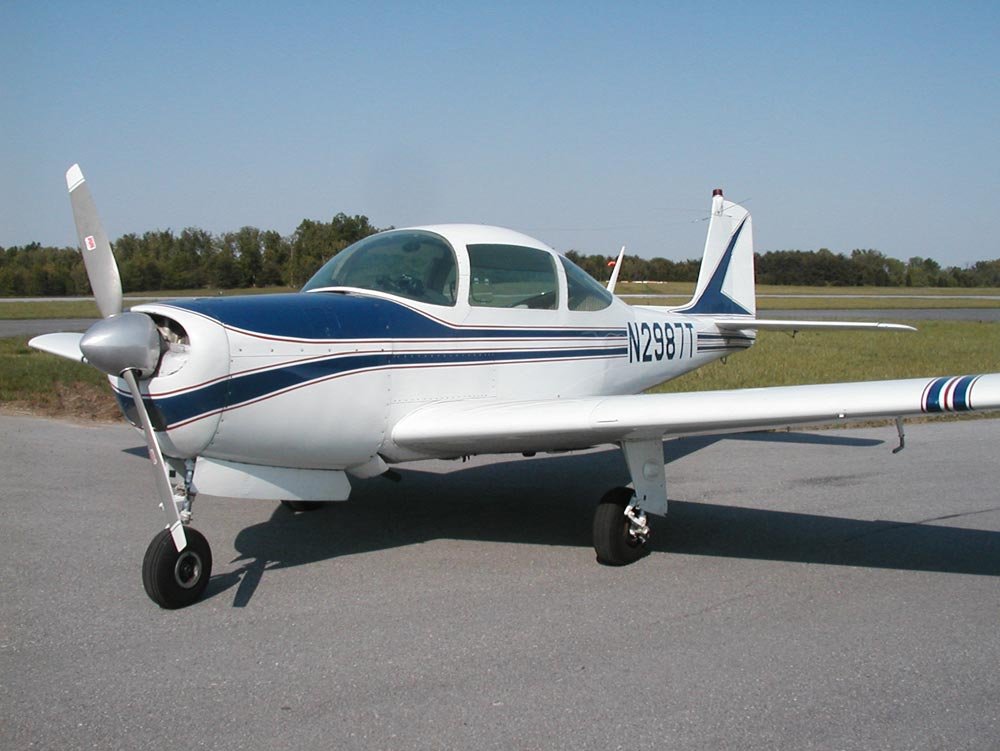
The Designer's Vision
Al Meyers conceived the 200 as his third and most ambitious aircraft design, evolving from his earlier Meyers 145 two-seat taildragger. The 145 had achieved 145 mph performance, but Meyers envisioned a four-seat aircraft that would set new standards for single-engine performance and craftsmanship. The prototype took its maiden flight in 1953, though certification delays prevented commercial production until 1959 when the aircraft finally received its type certificate.
Manufacturing Excellence and Economics
Meyers Aircraft Company in Michigan hand-built each aircraft with meticulous attention to detail, employing minimal factory tooling and a small production staff. This artisanal approach produced exceptional aircraft but created economic challenges that would ultimately doom the program. Between 1959 and 1965, Meyers produced approximately 49 aircraft across four variants: 11 Model 200A aircraft from 1959-1960, 17 Model 200B aircraft in 1961, nine Model 200C aircraft in 1963, and eight Model 200D aircraft in 1965.
Aero Commander Era
In 1965, North American Rockwell's Aero Commander Division purchased the type certificate and tooling, relocating production to Albany, Georgia. Aero Commander manufactured 75 additional Model 200D aircraft between 1966 and 1968, bringing total production to approximately 124-135 aircraft. However, the company's accountants discovered a devastating reality: they had spent $4 million to produce $3 million worth of aircraft. Production ceased permanently in 1968, and the design rights were sold to Interceptor Corporation.
Technical Evolution
The aircraft evolved significantly through its production run. The original prototype used a carbureted Continental O-470-M engine producing 225 horsepower. The 200A introduced fuel injection with the Continental IO-470-D engine rated at 260 horsepower, establishing a 3,000-pound gross weight and 70-gallon fuel capacity. The 200B offered flexible fuel options from 40 to 80 gallons with an improved instrument panel, while the 200C featured a higher cabin roof and larger windshield for enhanced visibility.
The final Meyers variant, the 200D, represented the design's pinnacle with flush riveting and the powerful Continental IO-520-A engine producing 285 horsepower. This configuration achieved cruise speeds of 183 knots, stall speeds as low as 47 knots, and climb rates of 1,150 feet per minute. The aircraft's empty weight reached 1,940 pounds while maintaining the 3,000-pound gross weight limit.
Performance and Records
The Meyers 200 established several long-standing class speed records during the 1960s, with pilot Peter Gluckman setting a class around-the-world speed record. The aircraft's retractable main landing gear and steerable tailwheel configuration, combined with its low-wing design, provided exceptional performance that often exceeded aircraft costing significantly more.
Market Challenges
Despite its superior performance and build quality, the Meyers 200 faced insurmountable market challenges. Each aircraft required extensive hand-building, with industry estimates suggesting 2,000-2,500 man-hours per aircraft, though Aero Commander initially calculated 10,000 hours. This complexity made the Meyers 200 considerably more expensive than competitors like the Piper Comanche 250 and Beech Debonair, while approaching the price of the Beechcraft V-tail Bonanza despite offering less load-carrying capability.
Attempted Revival
Interceptor Corporation acquired the design rights around 1971 and certified a turboprop version designated the Interceptor 400. Only two examples were built, with one surviving remarkable adversity including a ditching off California and a crash on short final approach, only to be destroyed later in a hangar fire. Several subsequent attempts to resurrect both piston and turboprop versions failed to achieve commercial success.
Current Status
Today, approximately 100-102 Meyers 200 aircraft remain registered in the United States, with fewer than 100 still actively flying. The aircraft's reputation for exceptional build quality and performance has endured among vintage aircraft enthusiasts, though parts availability remains challenging due to the limited production run. The Meyers 200 stands as a testament to uncompromising design and craftsmanship that, paradoxically, prevented its commercial success in an increasingly cost-conscious market.