
Service History
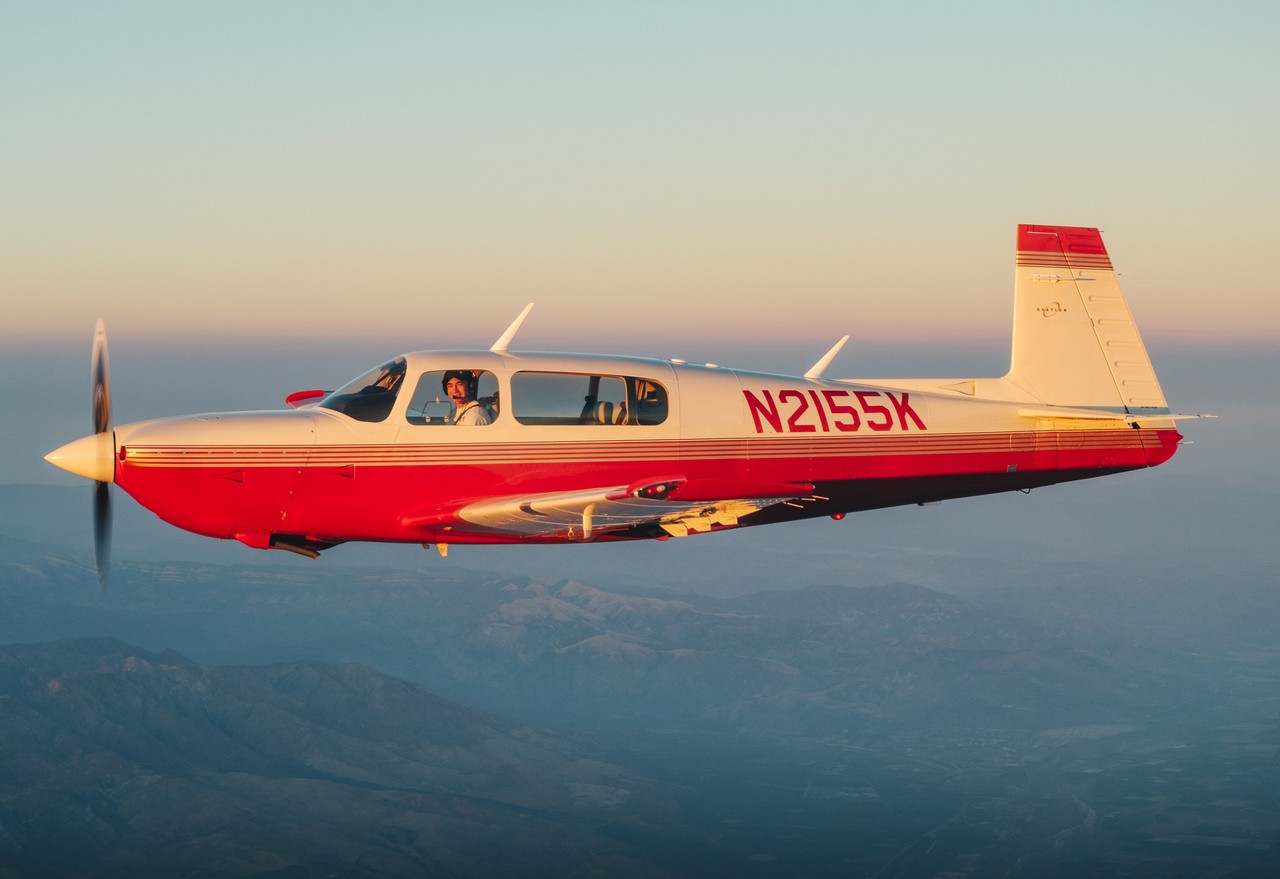
The Mooney M-20 dominated the high-performance general aviation market for decades, establishing new standards for speed and efficiency in single-engine aircraft. Peak production exceeded 750 units annually, with the M20C Ranger variant alone accounting for more than one-third of all pre-M20J production between 1962 and 1978. Approximately 4,000 pre-201 models formed the backbone of the fleet, with pilots choosing Mooneys specifically for their unmatched combination of speed and fuel economy in personal transportation.
The Manufacturer
Mooney Aircraft Company was founded in 1948 by brothers Al and Gentry Mooney after relocating from California to Kerrville, Texas, in 1954 following disappointing sales of their single-seat M18 Mite. The company's history reflects the volatile nature of general aviation manufacturing, with bankruptcy in 1969 and plant closure under Butler Aviation in 1971. Republic Steel Corporation acquired the shuttered facility on October 4, 1974, reopening production on January 1, 1975. Through multiple ownership changes spanning the recessions of the late 1980s and post-2008 period, the company suspended new aircraft production in April 2010 due to unsold inventory backlogs. Today, operating as Mooney International Corporation, the company continues limited production of long-body variants while seeking new investors.
Engine & Technical Details
Early M-20 models utilized reliable Lycoming piston engines, beginning with the 150-horsepower O-320-A in the original M20 from 1955 to 1958. The M20A and M20B variants adopted the 180-horsepower Lycoming O-360-A1A, while later pre-201 models featured the 200-horsepower IO-360-A1A. Continental engines powered several variants, including the carbureted 180-horsepower unit in the M20G (1968-1970) and the turbocharged TSIO-360-GB in the M20K 231, which achieved speeds up to 252 miles per hour in its 1986 intercooled configuration.
Al Mooney's design innovations included a constant-speed propeller system and laminar-flow airfoil that minimized drag while maximizing efficiency. The original wooden wing and tail construction, combined with a welded-steel fuselage, was upgraded to all-metal construction beginning with the M20B in 1961, addressing structural concerns that had plagued early wooden variants.
Pilot Perspective
Pilots consistently praised the M-20 series for delivering genuine 200-mile-per-hour cruise speeds while maintaining exceptional fuel efficiency compared to competing aircraft. The low-wing configuration and advanced aerodynamics provided stable, predictable handling characteristics that made the aircraft suitable for both experienced pilots and those transitioning from slower trainers. The four-seat cabin accommodated a pilot plus three passengers, making it ideal for business travel and family transportation.
The turbocharged M20K variants extended the aircraft's capability to high-altitude operations, with improved cooling systems addressing earlier temperature management issues. Performance specifications varied across the 17 total variants, but representative models consistently delivered cruise speeds between 200 and 252 miles per hour, establishing the M-20 family as the benchmark for fast, efficient personal aircraft.
Production & Legacy
Production began modestly with 10 units in 1955, increasing to 51 in 1956 and 231 in 1957 as word spread about the aircraft's exceptional performance. The M-20's success stemmed from Al Mooney's focus on speed and efficiency at a time when most general aviation aircraft prioritized simple, low-cost construction over performance.
With over 11,000 aircraft built across all variants, the M-20 series represents one of the most enduring designs in general aviation history. Many aircraft remain active today, particularly the metal-wing variants produced after 1961, though early wooden models required attention for structural aging issues. The design's influence extended throughout the industry, proving that sophisticated aerodynamics and construction techniques could succeed in the personal aircraft market.
Three basic fuselage lengths were developed over the production run, with short and medium-body variants eventually discontinued in favor of long-body models that continued production through 2019. While new production remains limited, the large existing fleet ensures the M-20's continued presence in general aviation for decades to come, cementing Al Mooney's legacy as a designer who prioritized performance above conventional wisdom.