
Service History
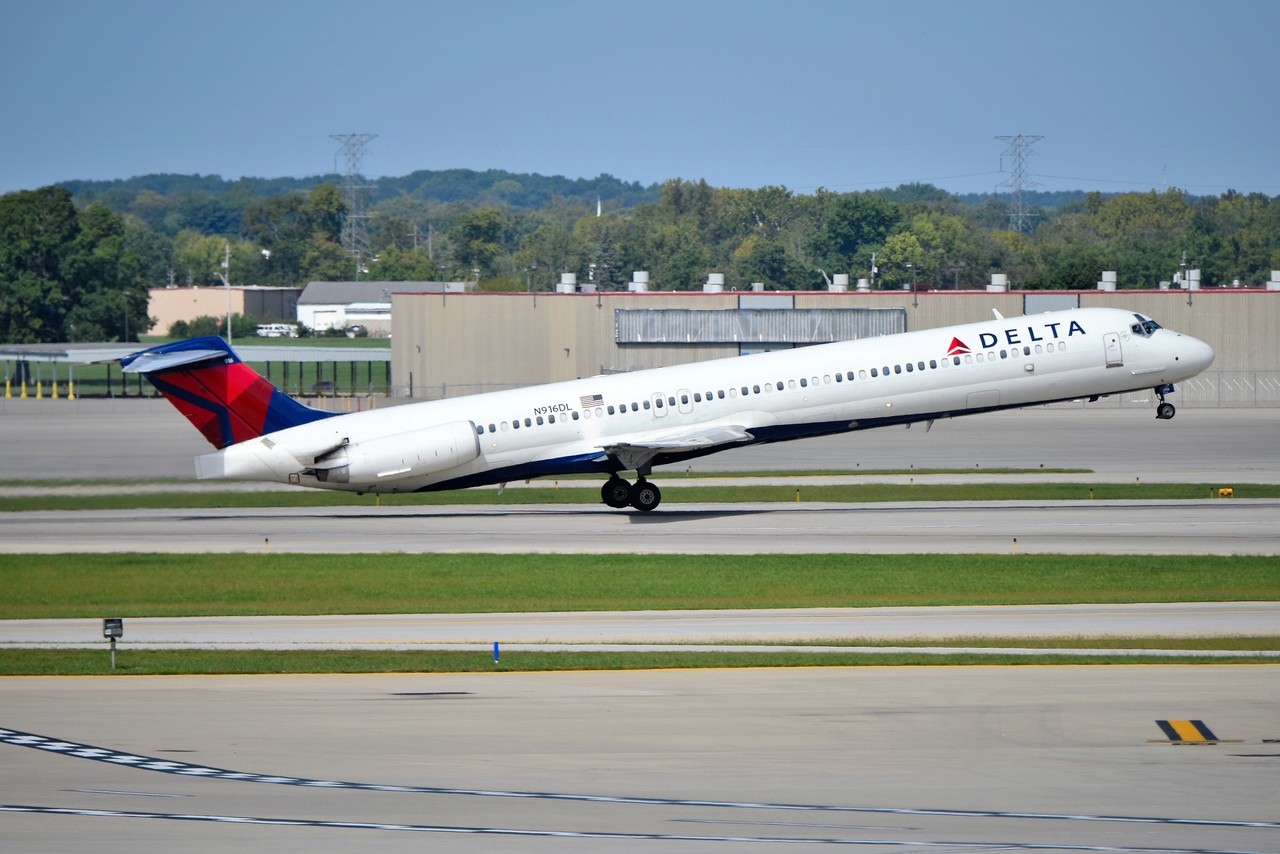
The MD-88 dominated American domestic aviation throughout the 1990s and 2000s, with Delta Air Lines serving as both launch customer and primary operator. Delta ordered 30 aircraft in January 1986, eventually operating a fleet that peaked at 185 MD-88s—the largest concentration of the type worldwide. By the mid-1990s, Delta's MD-88 fleet was generating approximately 900 daily flights across their domestic network, connecting major hubs like Atlanta to secondary cities including Austin, Birmingham, Cincinnati, and Houston.
The aircraft's efficiency in short-to-medium haul markets made it indispensable for point-to-point operations. Airlines appreciated its ability to serve airports with challenging conditions, thanks to robust Pratt & Whitney JT8D-200 engines that performed reliably in hot and high-altitude environments. Delta operated their MD-88s for over three decades, finally retiring the last examples in 2020, marking the end of an era for rear-engine narrow-body aircraft in American commercial aviation.
The Manufacturer
McDonnell Douglas Corporation emerged from the 1967 merger of two aviation giants: McDonnell Aircraft, founded in 1939 and renowned for military fighters like the F-4 Phantom, and Douglas Aircraft, established in 1920 as a pioneer of commercial aviation with the legendary DC series. This union created one of America's most significant aerospace manufacturers, competing directly with Boeing and Lockheed in both commercial and military markets.
The company's independence lasted exactly 30 years, from 1967 until Boeing acquired McDonnell Douglas in August 1997. During this period, McDonnell Douglas struggled to match Boeing's commercial success while maintaining strong military contracts. The MD-88 represented one of their final commercial aircraft developments before the merger effectively ended McDonnell Douglas as an independent entity, with Boeing absorbing their operations into Boeing Commercial Airplanes.
Engine & Technical Innovation
Powering the MD-88 were two Pratt & Whitney JT8D-200 series turbofan engines, each generating 21,000 pounds of thrust. These engines, manufactured by Pratt & Whitney from 1963 to 1987, represented mature technology with over 42,000 units produced across all variants. The JT8D series became synonymous with reliability in short-haul operations, though their rear-mounted configuration made them notably louder for passengers seated aft.
The MD-88's most significant advancement was its glass cockpit featuring digital cathode ray tube displays—a revolutionary upgrade from the analog instruments of earlier MD-80 variants. This modernization reduced crew workload and improved situational awareness, typically requiring only two pilots compared to three-person crews on older aircraft. The cockpit upgrade positioned the MD-88 as a bridge between traditional analog aircraft and the fully digital systems that would dominate the next generation of airliners.
Pilot Perspective
Delta pilots affectionately nicknamed the MD-88 and its siblings "Mad Dogs," reflecting both the aircraft's spirited performance characteristics and the MD designation. The rear-engine configuration provided passengers with unobstructed wing views and a relatively quiet forward cabin, though it created a distinctive nose-high attitude during ground operations that became iconic at airports nationwide.
Performance specifications included a maximum cruise speed of 472 knots (543 mph), service ceiling of 37,000 feet, and impressive climb rate of 2,700 feet per minute. With a maximum takeoff weight of 160,000 pounds and fuel capacity of 7,000 gallons, the MD-88 could operate efficiently on routes up to 2,550 nautical miles, making it ideal for transcontinental flights while remaining economical on shorter segments.
Production & Legacy
McDonnell Douglas produced exactly 1,171 MD-88 aircraft during its seven-year production run from 1987 to 1994. The type achieved FAA certification on December 8, 1987, just four months after first flight—a testament to its evolutionary development from the proven MD-80 series. Besides Delta's massive fleet, other operators included Spain's Aviaco, which received aircraft like EC-FJE in 1991 and operated them until 2008 following the merger with Iberia.
The MD-88's legacy extends beyond pure commercial success to its role in advancing digital cockpit technology and efficient short-haul operations. Notable incidents, including Delta Flight 1288's engine failure at Pensacola in May 1996 and Flight 1086's runway excursion at LaGuardia in March 2015, contributed to improved safety procedures and training protocols. By February 2020, approximately 47 MD-88s remained in service worldwide, though the COVID-19 pandemic accelerated final retirements.
Today, most retired MD-88s have been scrapped at facilities like Arkansas International Airport in Blytheville, though some components have found new life as collectibles and museum displays. The aircraft represents the final chapter of Douglas Aircraft's commercial aviation heritage, bridging the gap between the pioneering piston-engine DC series and the modern jet age before Boeing's acquisition ended McDonnell Douglas's independent existence.