
Design Philosophy and Development
The MJ-55 Biso emerged from Marcel Jurca's decades-long pursuit of creating exceptional wooden homebuilt aircraft inspired by World War II fighters. The Romanian-born French designer, who had flown Henschel Hs 129 aircraft during the war, began developing sport aircraft in the early 1950s and continued until his death on October 19, 2001. The Biso represented an innovative approach to aerobatic aircraft design, combining proven components from two of his earlier designs to create a purpose-built aerobatic trainer.
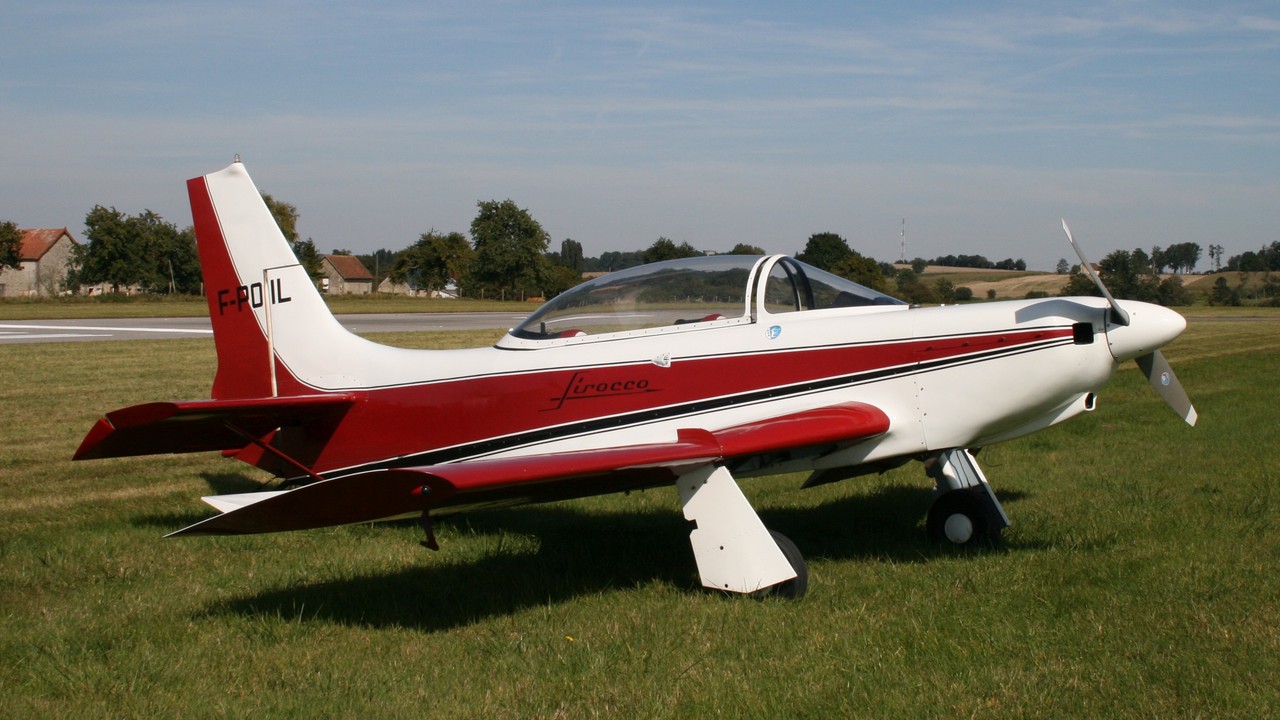
Jurca's design philosophy centered on wooden construction techniques that amateur builders could master while achieving professional-level performance. The MJ-55 utilized the established fuselage structure of his successful MJ-5 Sirocco series but incorporated the clipped wings from the MJ-7 Gnatsum, featuring NACA 21012 airfoil sections without flaps. This combination was specifically engineered to deliver superior roll rates and enhanced aerobatic capabilities compared to either parent design.
The Designer's Legacy
Marcel Jurca operated as an independent aircraft designer throughout most of his career, marketing his creations exclusively as construction plans rather than factory-built aircraft. His brief attempt at commercial production came in 1965 when he established Constructions Aéronautiques Lorraines Francois-Jurca & Cie in Nancy, France, to manufacture the MJ-5 Sirocco. However, this venture proved unsuccessful and quickly folded, reinforcing Jurca's return to the plans-built market.
The designer's work gained international recognition through distribution agreements with companies like Falconar Aviation, which sold his plans throughout Canada and the United States. His designs drew heavily from classical fighter aircraft aesthetics, particularly the Messerschmitt Bf 109 and Supermarine Spitfire, translated into wooden homebuilt format. By the time of his death, over 150 Jurca aircraft had been registered worldwide, with the MJ-5 series leading production at more than 70-80 examples.
Construction and Flight Testing
The sole MJ-55 Biso was constructed by a Canadian homebuilder, with the building process completed around 1983. The aircraft received registration C-GVAG in Ontario under the constructor designation JLS-1, reflecting Canadian amateur-built aircraft regulations. However, the path from completion to first flight proved lengthy, with the aircraft not taking to the air until 1998—a 15-year gap that was not uncommon in homebuilt aviation where builders often worked part-time over extended periods.
The aircraft's construction followed Jurca's traditional wooden building methods, utilizing techniques that had proven successful across his entire design range. The airframe featured fixed aluminum blade landing gear and a smaller tail unit optimized for the aerobatic role. Power came from a proven 134 kW (180 hp) Textron Lycoming engine, most likely from the O-360 series that had been in continuous production since 1955.
Technical Innovation
The MJ-55's hybrid design approach represented significant innovation within the homebuilt community of the late 1990s. By combining the Gnatsum's high-performance wing design with the proven Sirocco fuselage, Jurca created an aircraft optimized specifically for aerobatic training and sport flying. The clipped wing configuration delivered exceptional roll rates while maintaining controllable handling characteristics essential for training applications.
The aircraft's tandem seating arrangement accommodated both instructor and student in an optimal configuration for aerobatic training. With an estimated maximum takeoff weight of 680 kg (1,499 lb) and empty weight around 430 kg (948 lb), the Biso offered excellent power-to-weight ratio for sustained aerobatic sequences. The wing area of approximately 10 square meters (107.6 sq ft) with a 4.90:1 aspect ratio provided the ideal balance between roll rate and structural strength for aerobatic maneuvering.
Tragic End and Limited Legacy
The promising MJ-55 Biso program came to an abrupt end in 2000 when the sole prototype crashed, reportedly due to construction errors related to adhesive bonding in the wooden structure. This incident highlighted the critical importance of proper construction techniques in amateur-built aircraft, where builder workmanship directly impacts flight safety. The loss meant that only two years of flight testing data were accumulated, limiting understanding of the design's full potential.
Following Jurca's death in 2001, his legacy continued through the Jurca Air Force - Comité Marcel Jurca, established in 1989 to preserve and continue his design work. This organization maintains active operations as of 2020, ensuring that Jurca's extensive catalog of sport aircraft designs remains available to the homebuilding community. However, no additional MJ-55 examples are known to have been constructed, making it one of the rarest designs in the Jurca portfolio.
Historical Significance
While the MJ-55 Biso's brief operational life limits its direct impact on aviation, it represents an important milestone in homebuilt aerobatic aircraft development. The design demonstrated how experienced designers could optimize existing proven components to create specialized high-performance aircraft within the amateur-built category. Its development coincided with the growth of the Experimental Aircraft Association (EAA) movement and increasing interest in aerobatic sport flying during the 1990s homebuilt boom.
Today, no airworthy examples exist, and the design remains primarily of historical interest to researchers studying the evolution of homebuilt aviation and Marcel Jurca's five-decade contribution to sport aircraft design.