
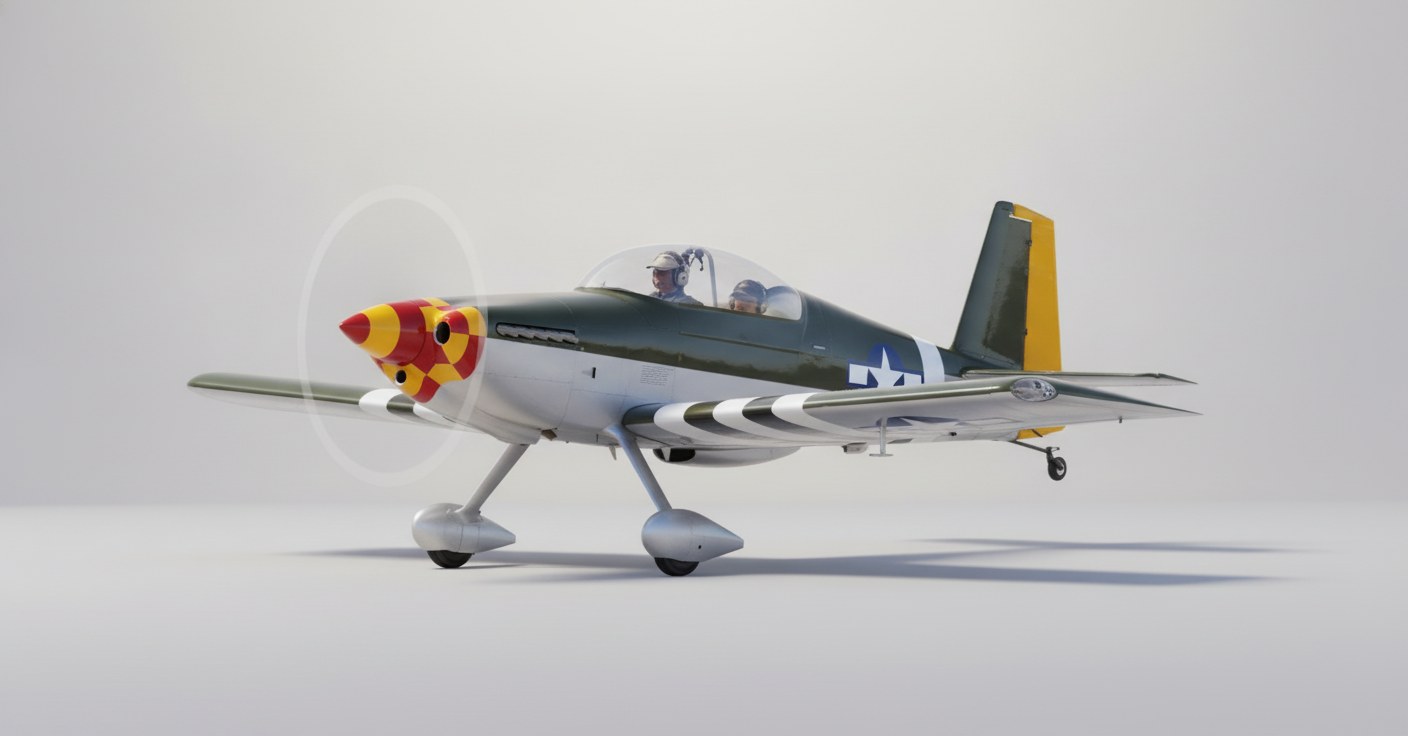
The Mini Mustang, identified by the ICAO type code MNMS, is a civilian landplane designed as a scaled-down approximation of the North American P-51 Mustang. Unlike the original WWII fighter, the Mini Mustang is not a type-certificated production aircraft but is instead categorized as an experimental or homebuilt aircraft. This distinction is critical for flight planning and air traffic control databases, where the MNMS code is used specifically to differentiate these smaller replicas from full-scale P-51 variants, which utilize codes such as P51 or P51D.
Because the Mini Mustang is a homebuilt design, it does not have a traditional production history. There is no documented factory of origin, nor is there a record of a centralized manufacturing company. Instead, individual examples were constructed by private builders in various locations, likely using kits or plans. Consequently, there are no verifiable start or end dates for production, and the total number of aircraft built remains unpublished, although the quantity is considered small due to the nature of amateur construction.
Technically, the Mini Mustang is a post-war design that captures the aesthetic of the P-51 without any direct connection to North American Aviation. No specific designer, design team, or first-flight date has been recorded in authoritative aviation registries or museum catalogs. While many such replica warbirds utilize piston engines—often sourced from automotive V-8 conversions or light-aircraft manufacturers like Lycoming and Continental—there is no specific engine model or power rating officially tied to the MNMS designation in available reference data.
In terms of service, the Mini Mustang has no military history, combat record, or official government designation. Its role is exclusively recreational, operated by private owners for personal flight or display at airshows. There is no evidence of the aircraft being used for commercial cargo, scheduled airline service, or air-taxi operations. Today, the Mini Mustang persists as a testament to the enduring civilian enthusiasm for WWII aviation, representing a broader culture of warbird replication rather than a specific technical innovation.