
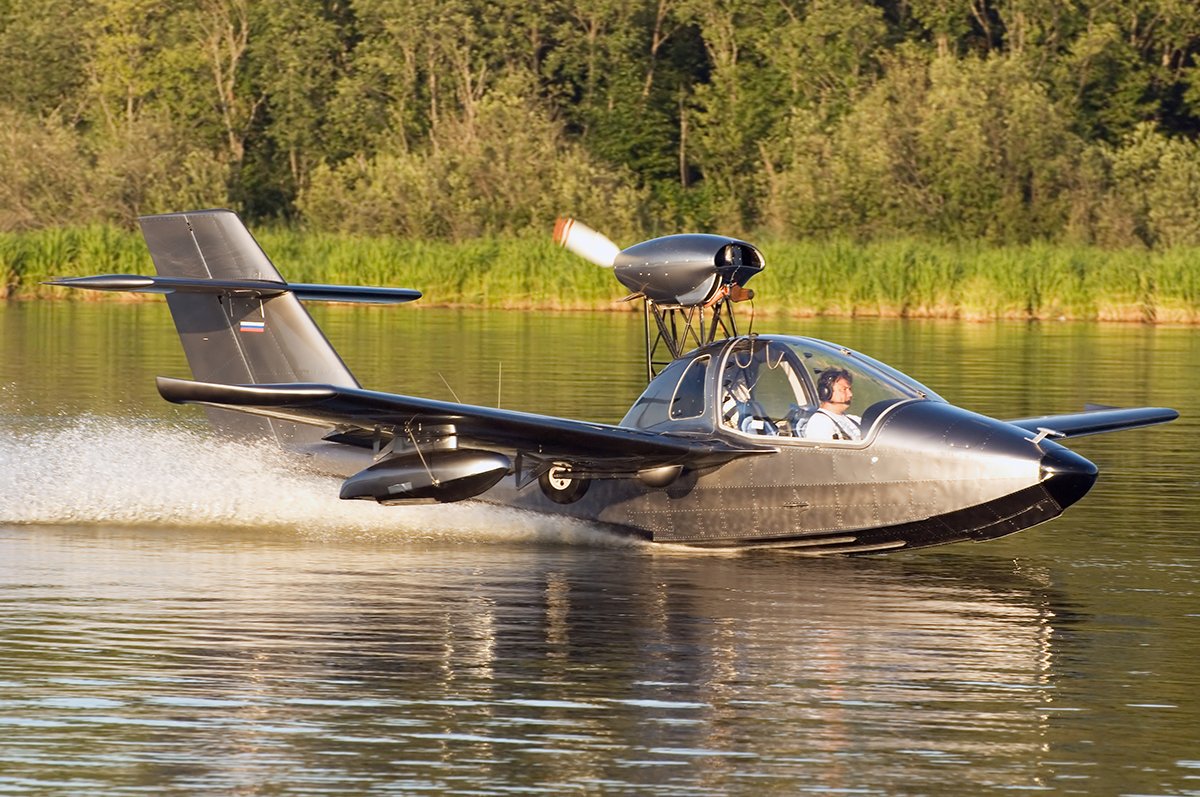
Breaking New Ground in Light Sport Aviation
The Mermaid emerged at a pivotal moment in general aviation history, capitalizing on the Federal Aviation Administration's new Light Sport Aircraft category introduced in 2004. Czech Aircraft Works recognized an opportunity to create the first amphibious LSA, filling a gap that had existed for decades as no new single-engine amphibian had received certification in years.
By late 2005, the aircraft had generated remarkable market interest with over 100 units sold and more than 200 orders placed by early 2006. The company scheduled 30 deliveries for 2006 alone, demonstrating strong demand for an affordable amphibious aircraft that met LSA requirements.
The Czech Aircraft Works Legacy
Czech Aircraft Works brought considerable expertise to the Mermaid project, having previously manufactured over 600 all-metal aircraft and hundreds of aluminum floats. The company had earned the prestigious Schneider Cup three times for seaplane technology, establishing its credentials in amphibious aviation. Operating from facilities in Borsice and Uherské Hradište, CZAW employed 130 workers and achieved production rates of 150 aircraft annually by 2008.
The company had built its reputation producing Zenair-licensed aircraft including the CH 701SP STOL and CH 601 Zodiac until that licensing agreement ended in December 2006. CZAW distinguished itself by importing American materials including aluminum sheet, chrome-moly tubing, and military-specification hardware to ensure construction met United States standards.
In 2009, Czech Sport Aircraft formally succeeded CZAW but discontinued the Mermaid by December 2012, shifting focus to the SportCruiser and PS-28 Cruiser models. The principals later formed Aeromarine-LSA, though neither successor company continues Mermaid production today.
Innovative Amphibious Design
The Mermaid's design team created a composite hull incorporating five watertight compartments with EDO-style pump-out systems for enhanced safety during water operations. The aircraft featured aluminum mid-wings with a constant chord design, removable stabilizing floats, and a cruciform empennage configuration that optimized both water and land performance.
Key innovations included a retractable water rudder system and the pusher propeller arrangement that kept the engine clear of water spray. The wing design incorporated 5 degrees of dihedral and 3 degrees of incidence, with flaps capable of deflecting to 20 and 40 degrees. Optional equipment included a ballistic recovery parachute system and landing lights for night operations.
The spacious cabin measured 44 inches wide, providing comfortable accommodations for pilot and passenger that exceeded most light aircraft of similar weight. This roominess became a significant selling point for the aircraft in the recreational market.
Engine Options and Performance
Standard powerplant was the Austrian-built Rotax 912 ULS, a 73.5-kilowatt flat-four engine producing approximately 100 horsepower. This reliable engine, which had accumulated over 40,000 units produced by the 2020s, consumed less than 5 gallons per hour and drove a three-blade Warp Drive carbon fiber propeller, later upgraded to four blades.
Optional engines included the turbocharged Rotax 914 producing 113 horsepower and the Australian Jabiru 3300, a six-cylinder engine delivering 120 horsepower. The Jabiru option, trialed in early 2006, provided higher performance for operators prioritizing speed over fuel economy.
With the standard Rotax installation, the Mermaid achieved a range of 432 nautical miles with 4 hours 30 minutes endurance. Takeoff runs measured 450 feet on land and 755 feet on water, while landing distances averaged 500 feet. The aircraft's gross weight reached 1,235 pounds with an empty weight of 838 pounds, providing useful loads exceeding 230 pounds.
Market Impact and Certification Achievement
The Mermaid made aviation history in 2006 by becoming the first amphibious aircraft certified under LSA regulations, receiving standard certification in February and retractable gear exemption approval on April 4. This breakthrough opened amphibious flying to a broader audience of sport pilots who could operate the aircraft with simplified medical and training requirements.
Offered at $85,000 to $91,000 for complete aircraft or $45,500 for kits excluding engines, the Mermaid provided accessible entry into amphibious aviation. Kit builders could complete assembly in approximately 400 hours, making it attractive to amateur builders seeking hands-on experience.
The aircraft debuted publicly at Sun 'n' Fun in Lakeland, Florida, from April 13-19, 2004, displaying as N599MM. Subsequently, it appeared at EAA AirVenture Oshkosh in July 2005, generating significant interest from the experimental aircraft community.
Legacy and Current Status
While production ceased in 2012, the Mermaid established important precedents for Light Sport Aircraft amphibians. It demonstrated that European manufacturers could successfully design aircraft meeting American certification standards while incorporating innovative composite construction techniques with traditional aluminum structures.
The aircraft proved that modern engines like the Rotax 912 series could provide reliable, economical operation in amphibious applications. Its certification paved the way for subsequent LSA amphibians and influenced regulatory approaches to light amphibious aircraft.
Today, an unknown number of Mermaids remain active, though at least one documented loss occurred when N853CZ was involved in a control loss and stall accident attributed to pilot error. The type's legacy continues through the regulatory framework it helped establish for Light Sport Aircraft amphibians.