
Production and Manufacturer History
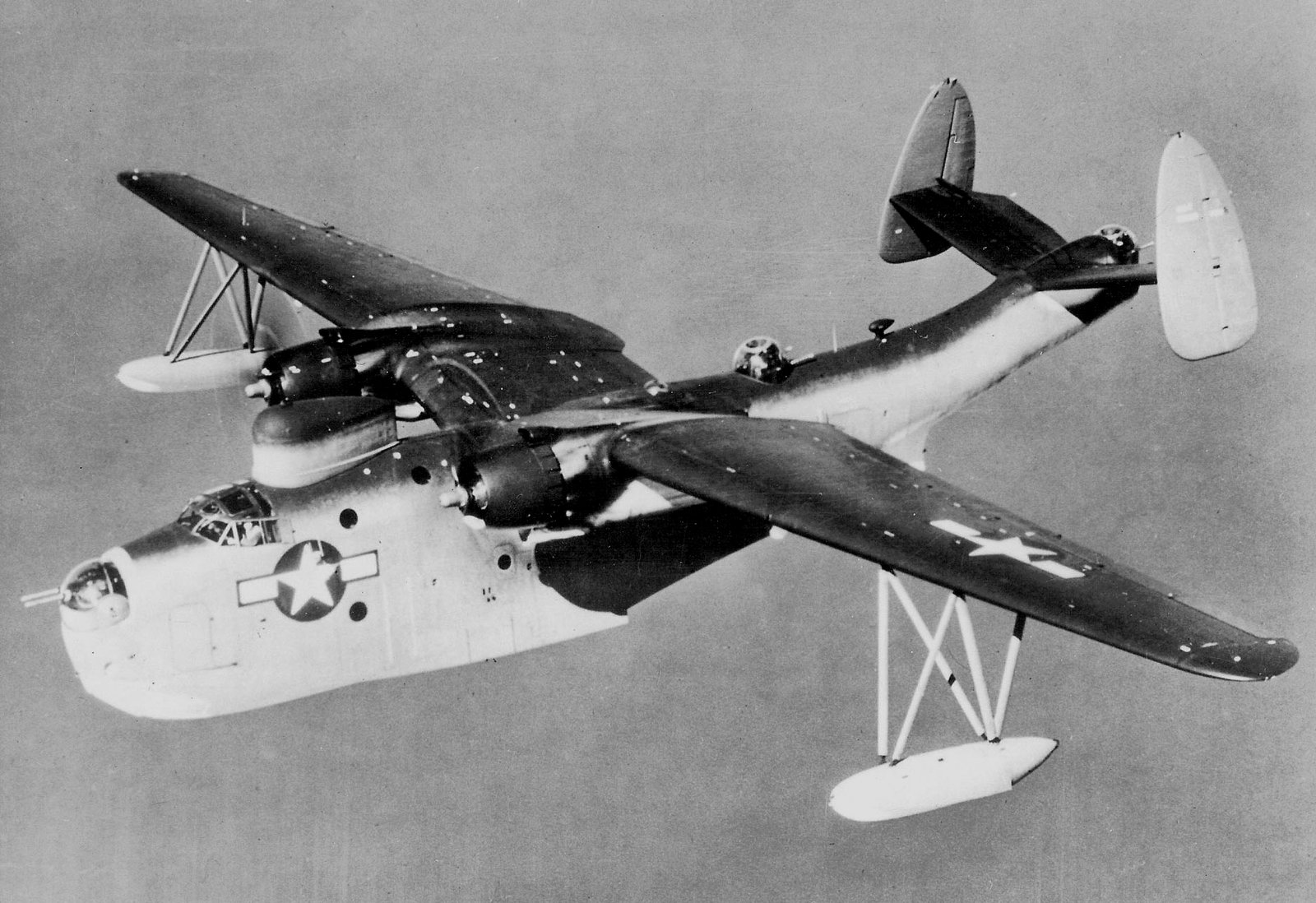
Designed by the Glenn L. Martin Company, the PBM Mariner (company Model 162) was developed as a competitor to the Consolidated PBY. The prototype, designated XPBM-1, first flew on February 18, 1939. Production began shortly thereafter, with the first PBM-1 aircraft delivered to the U.S. Navy in October 1940. A total of 1,366 units were produced between 1940 and 1947, though some sources suggest production activity extended into 1949. Manufacturing was centralized at Martin's production complex in Middle River, Maryland.
The Glenn L. Martin Company, founded in 1912, evolved into a major military contractor before merging with American-Marietta in 1961 to form Martin Marietta Corporation. In 1995, this entity merged with the Lockheed Corporation to become the modern Lockheed Martin Corporation.
Design and Technical Specifications
The PBM Mariner was a twin-engine, gull-wing flying boat, recognized as the largest aircraft of its type at the time of its introduction. It featured improved seaworthiness and rugged construction, along with a higher bomb load and greater range than the PBY Catalina. For defense, the aircraft was equipped with multiple powered gun turrets located in the nose, tail, and dorsal positions, with some variants including waist positions. The PBM-5, the most numerous variant with 667 units built, introduced more powerful engines, while the PBM-5A variant added retractable tricycle landing gear for amphibious operations.
Power was provided by two Pratt & Whitney R-1830 Twin Wasp air-cooled radial piston engines, typically producing between 1,200 and 1,350 horsepower each. The aircraft was operated by a crew of approximately seven to nine personnel, including a pilot, co-pilot, navigator, and radio operator.
Service History
The PBM entered operational service with Patrol Squadron VP-55 in September 1940, initially conducting neutrality patrols in the western Atlantic. During World War II, it operated extensively in the Atlantic and Pacific theaters, performing anti-submarine warfare (ASW), long-range reconnaissance, and air-sea rescue. In the Pacific, PBMs operated from bases on Okinawa, Iwo Jima, and Saipan. The U.S. Coast Guard also utilized the type, acquiring 27 PBM-3s in 1943 and later integrating PBM-5s for long-range search-and-rescue operations.
Beyond the United States, the Royal Air Force operated 54 Mariners, while the Royal Australian Air Force used them primarily for transport. The Dutch Navy deployed the aircraft in the East Indies, and the navies of Argentina and Uruguay operated them post-war. The final military Mariner, an Uruguayan naval aircraft, was retired in February 1964.
Legacy
The PBM Mariner was the second-most produced military flying boat after the PBY Catalina. Its design served as the basis for the Martin P5M Marlin, the U.S. Navy's final operational flying boat. Today, only one intact example survives: a PBM-5A (BuNo 122071) preserved at the Smithsonian National Air and Space Museum. This survivor served with VP-33 and a Naval Academy program before its retirement in 1953.