
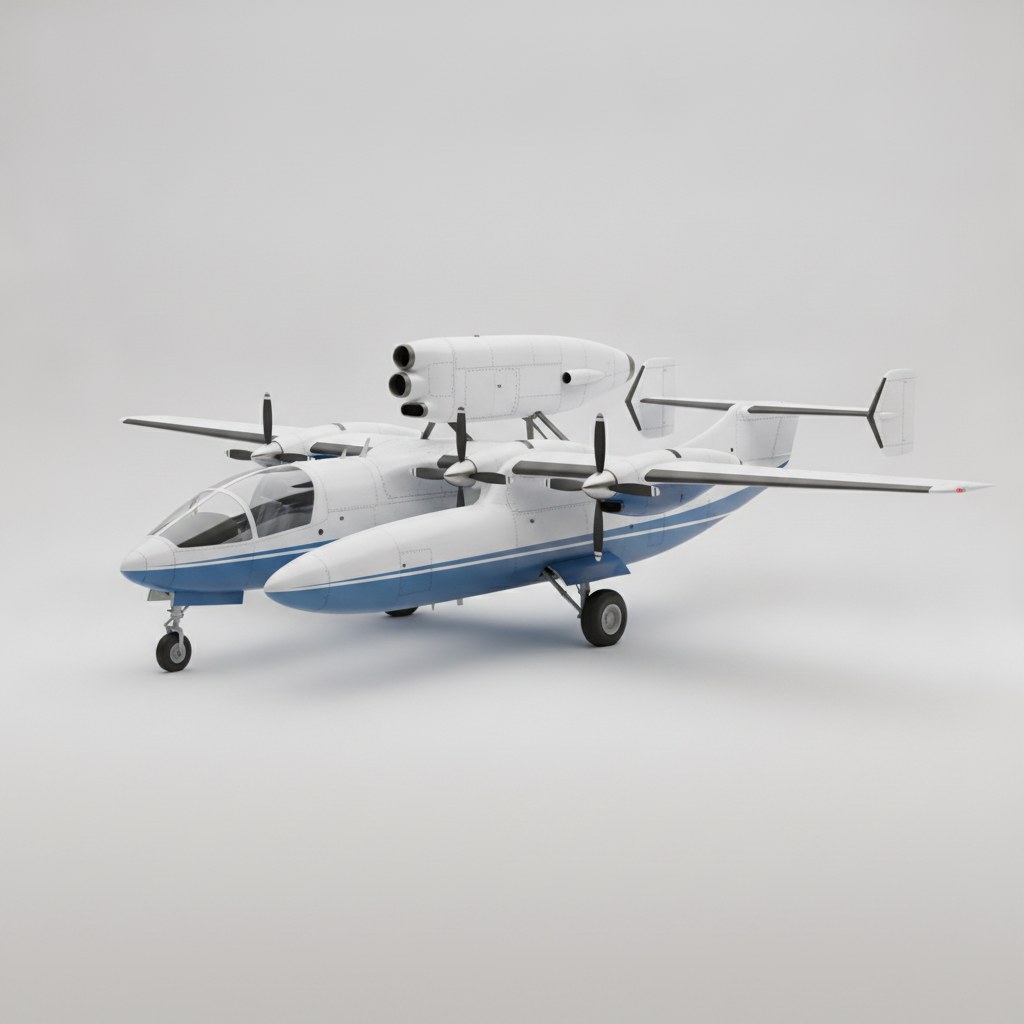
Development and Design Philosophy
The Explorer emerged from the vision of Frank Koinzer, an airline pilot and aviator since age 15, who recognized a gap in the experimental aircraft market for a turbine-powered backcountry performer. Founded in 2018, NF-aircraft GmbH brought together Koinzer's operational experience with the engineering expertise of team members Jirka and Hans, both graduated aircraft and design engineers who spearheaded the exterior and interior design elements.
Koinzer's design requirements reflected real-world backcountry flying demands: jet fuel compatibility for remote operations, exceptional short takeoff and landing performance, reasonable cruise speeds for practical transportation, spacious cabin configuration, and structural integrity meeting FAR Part 23 standards despite its experimental classification. The team established their development center in northern Germany, receiving support from local industry development agencies.
Technical Innovation
The Explorer's all-composite airframe represents a significant engineering achievement, with wings load-tested to 183 percent of design specifications in collaboration with the University of Prague. This testing regime exceeds both FAR Part 23 and CS-23 certification standards, demonstrating the team's commitment to structural integrity in demanding operational environments.
The aircraft incorporates several innovative design features tailored for backcountry operations. High propeller clearance facilitated by taildragger landing gear configuration prevents ground strikes on rough terrain. Integral fuel cells within the wing structure eliminate external fuel lines while providing 820 liters of total capacity across two tanks. The composite structure enables field repairs using standard materials, addressing a critical need for aircraft operating far from maintenance facilities.
Float-ready reinforcements built into the airframe allow for seaplane conversion, expanding operational versatility. The high-lift wing design incorporates substantial Fowler flaps, contributing to the aircraft's impressive short-field performance characteristics.
Powerplant and Performance
Powering the Explorer is the proven Pratt & Whitney Canada PT6A-27 turboprop engine, delivering 680 shaft horsepower through a four-blade MTV16 wood and composite propeller with 98-inch diameter. This powerplant choice reflects the design team's emphasis on reliability and fuel flexibility in remote operations.
Performance specifications demonstrate the aircraft's backcountry credentials. At maximum takeoff weight of 3,307 pounds, the Explorer requires only 1,000 feet for takeoff operations. Stall speed in landing configuration measures 73 miles per hour, contributing to short-field landing capabilities. Maximum payload reaches 3,086 pounds, providing substantial utility for cargo or passenger operations.
Endurance specifications include five hours of flight time plus 45-minute reserves, translating to 800 nautical miles range with reserves. These figures position the Explorer as a practical transportation solution for extended backcountry missions.
Manufacturing Approach
NF-aircraft adopted an experimental kit manufacturing strategy, targeting the homebuilder market with professional support systems. Initial kit availability was projected for mid-2020, supported by a builder assist center in the United States and worldwide sales support infrastructure.
The company maintains its own design department while collaborating with specialized suppliers for critical components. This approach allows for quality control over key systems while leveraging established supplier networks for proven components like the PT6A-27 powerplant.
Market Introduction and Reception
The Explorer made its public debut at EAA AirVenture 2019 in Oshkosh, Wisconsin, where it generated substantial interest from the experimental aircraft community. The positive reception at this premier aviation gathering influenced the company's decision to proceed with kit production plans.
The aircraft targets operators requiring turbine reliability combined with exceptional short-field performance. Potential applications include backcountry passenger transport, cargo operations, surveying missions, and specialized utility roles in remote locations where conventional aircraft face operational limitations.
Current Status and Legacy
As of recent documentation, no confirmed flying examples exist beyond prototype development, with the aircraft remaining in pre-production phases. The Explorer represents an ambitious entry into the turbine experimental aircraft market, combining modern composite construction techniques with proven powerplant technology.
The project addresses a specific niche within general aviation: operators requiring turbine performance and reliability in backcountry environments previously dominated by piston-powered aircraft. Success in this market segment could establish NF-aircraft as a significant player in the specialized utility aircraft sector, particularly among builders seeking turboprop performance in experimental aircraft categories.