
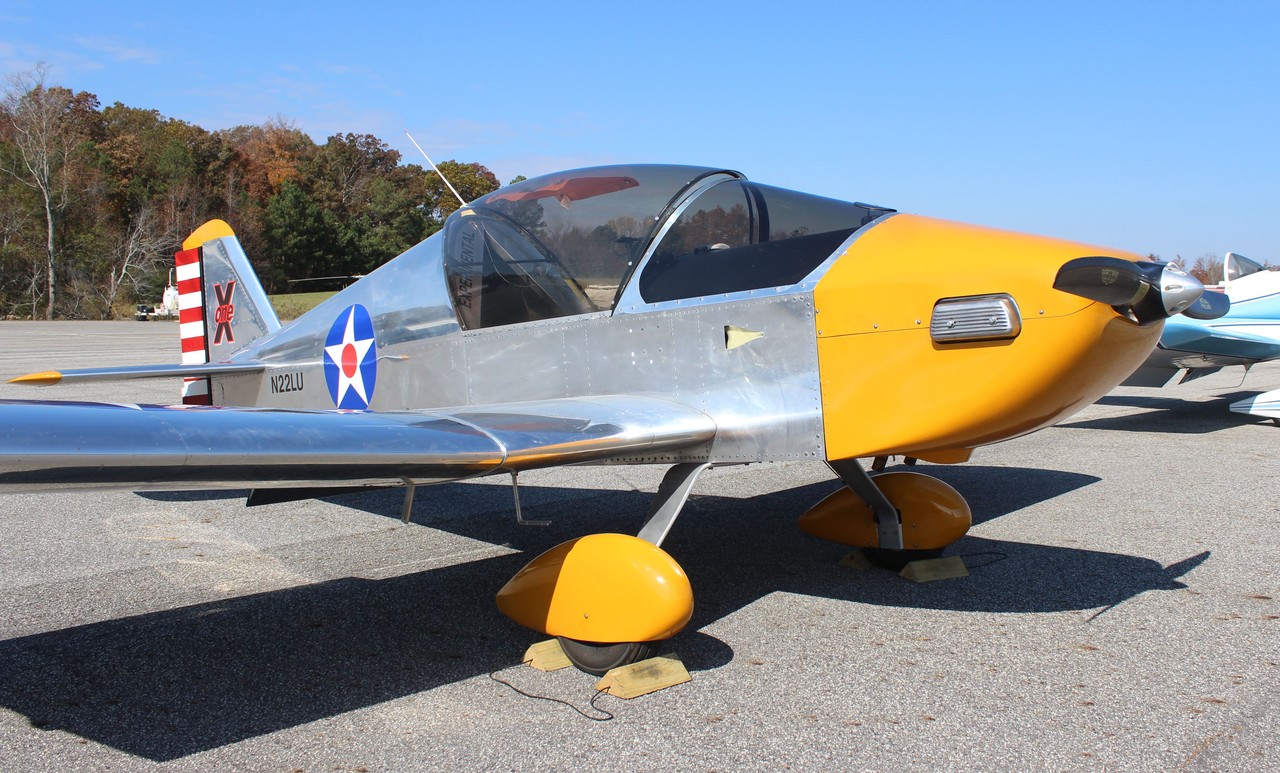
Market Impact and Design Philosophy
The Onex filled a crucial gap in the homebuilt aircraft market by providing aerobatic capability at an unprecedented price point. Within its first year of availability, Sonex Aircraft received 100 kit orders, demonstrating substantial demand for an economical yet high-performance single-seat aircraft. By March 2019, builders had completed 53 aircraft including two prototypes, establishing the Onex as a viable option for budget-conscious aviation enthusiasts seeking aerobatic performance.
Development and Engineering
Jeremy Monnett, CEO of Sonex Aircraft, made the decision in mid-2010 to develop the Onex as an 85-percent scaled-down version of the company's successful two-seat Sonex design. The concept debuted at EAA AirVenture Oshkosh 2009, with the prototype achieving first flight just over a year later on 27 January 2011. Engineering priorities focused on reducing parts count to minimize both cost and weight while maintaining the aerobatic capabilities that distinguished Sonex designs.
The design team incorporated several practical innovations, most notably folding wings that allow storage in a standard residential garage measuring 7 feet high by 8 feet wide. This feature addressed a common obstacle for homebuilders lacking access to airport hangars. The aircraft's 6061 aluminum construction follows proven Sonex manufacturing techniques, while a single 15-gallon molded plastic fuel tank mounted in the fuselage allows pilots to visually monitor fuel levels during flight.
The Monnett Legacy
Sonex Aircraft operates under the leadership of the Monnett family, with founder John Monnett establishing the company's reputation through decades of Volkswagen engine modifications. Beginning in the 1970s, John Monnett pioneered AeroVee modifications that transformed the 2180cc Volkswagen engine into a reliable aircraft powerplant. His original Sonex prototype, designated serial number 1, first flew on 28 February 1998 from Wittman Regional Airport in Oshkosh, Wisconsin, launching the company's successful line of homebuilt aircraft.
The company maintains its headquarters on Wittman Field in Oshkosh, continuing active production of multiple aircraft kits while developing motorglider, jet, and electric propulsion variants. This ongoing innovation reflects the Monnett philosophy of making aviation accessible through practical engineering and competitive pricing.
Powerplant and Performance
The Onex utilizes Sonex's proven AeroVee engine, a modified Volkswagen four-cylinder, four-stroke, air-cooled powerplant producing 80 horsepower. This engine represents decades of refinement since John Monnett's original Volkswagen conversions, providing reliable power while maintaining the aircraft's economic operating profile. During initial flight testing, the prototype demonstrated a climb rate of 1,200 feet per minute, later refined to a certified rate of 700-900 feet per minute at gross weight.
Operational efficiency distinguishes the Onex from comparable aircraft, achieving approximately 42 miles per gallon at altitude with a fuel consumption rate of just 3.5 gallons per hour when properly leaned. The 15-gallon fuel capacity provides a range of 535 miles, making the aircraft suitable for cross-country flights despite its compact dimensions and single-seat configuration.
Flight Characteristics and Certification
The Onex incorporates a NACA 64-415 airfoil optimized for the aircraft's performance envelope, contributing to a cruise speed of 155 mph at 8,000 feet and a stall speed of just 45 mph. The design supports G-loads of +6/-3 at gross weight, enabling aerobatic maneuvers that distinguish it from typical trainer aircraft. The prototype featured 45-degree flaps that proved highly effective during testing, enhancing low-speed handling characteristics.
Weighing 600 pounds empty with a gross weight of 950 pounds, the Onex provides a useful load of 350 pounds including fuel, pilot, and equipment. The FAA's National Kit Evaluation Team approved construction checklists demonstrating compliance with experimental homebuilt regulations requiring builders to complete 51 percent of the aircraft assembly.
Production Success and Builder Community
By January 2012, Sonex had shipped more than 50 Onex kits to builders worldwide, with several nearing completion. The kit's design philosophy emphasizes simplicity and reduced parts count, making it accessible to first-time builders while maintaining the quality standards expected from an established manufacturer. The aircraft qualifies for both experimental homebuilt and light-sport aircraft categories, providing builders with operational flexibility upon completion.
The Onex represents Sonex Aircraft's commitment to affordable aviation, maintaining active production as demand continues from builders seeking proven designs at competitive prices. Its combination of aerobatic capability, garage storage compatibility, and operational economy established a new benchmark for single-seat homebuilt aircraft in the early 2010s.