
Development Genesis
Piaggio Aero Industries launched the P.180 Avanti project in 1979 with ambitious goals: create a new-generation business aircraft that would challenge conventional design thinking. Initially collaborating with Gates Learjet, the Italian manufacturer pursued an unconventional pusher-propeller configuration that promised superior aerodynamic efficiency. When Gates Learjet's financial troubles ended the partnership in January 1986, Piaggio pressed forward independently, achieving first flight just eight months later.
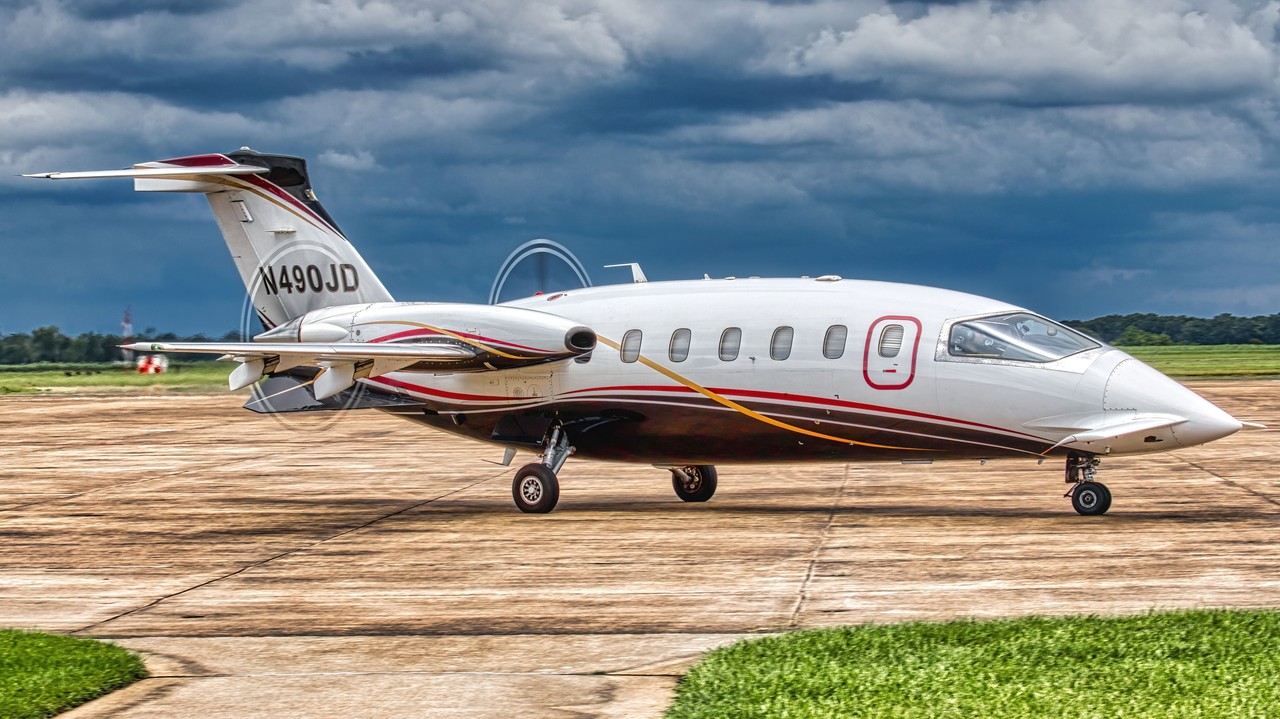
The prototype's maiden flight on September 23, 1986, validated the radical three-surface design featuring a small forward wing, main wing, and tail-mounted elevator. This configuration, combined with twin pusher propellers, created an aircraft unlike anything in the executive transport market. Italian certification followed on March 7, 1990, with American approval granted on October 2, 1990.
Production Challenges and Revival
Early production faced significant obstacles when manufacturing operations split between two continents. Initial fuselages were constructed in Wichita, Kansas, then flown to Italy for final assembly—a logistically complex arrangement that contributed to cost overruns. By 1994, Avanti Aviation Wichita had exhausted its funding, effectively grounding the program.
The project's salvation came in 1998 when a consortium led by Piero Ferrari, vice president of Ferrari automotive company, injected new capital and management expertise. This intervention revitalized production and established the foundation for sustained manufacturing. By 2005, production had delivered 100 aircraft, with the 150th following in May 2008.
Technical Innovation
The Avanti's most striking feature remains its powerplant arrangement: two Pratt & Whitney Canada PT6A-66B turboprops mounted in pusher configuration behind the main wing. Each engine delivers 630 kilowatts (850 shaft horsepower) at ISA+28°C conditions, driving five-blade propellers that operate in clean airflow behind the wing. This arrangement eliminates propeller wash over the fuselage while reducing cabin noise to jet-like levels.
The three-surface aerodynamic design provides exceptional efficiency and control authority. The small forward wing, or canard, generates lift while maintaining pitch stability, allowing the main wing to operate at optimal angles throughout the flight envelope. Maximum takeoff weight reaches 12,100 pounds, with fuel capacity of 2,802 pounds enabling ranges exceeding 1,770 nautical miles in later variants.
Market Evolution
The original Avanti targeted Fortune 500 companies seeking executive transport combining turboprop economics with jet performance. Production ended in fall 2005 with introduction of the improved Avanti II, which achieved remarkable market acceptance. Within six months of receiving European and American certification in 2005, operators had placed orders for 70 Avanti II aircraft.
Piaggio expanded the line with specialized variants addressing specific market needs. The P.180 AMB air ambulance version maximizes medical equipment space, while the P.180 RM serves navigation aid calibration missions. Military applications remained limited to the P.180 M passenger/freight variant for VIP transport duties.
Modern Production
Manufacturing consolidated in Italy with construction of a $150 million factory at Albenga Airport. This facility produced the latest evolution: the Avanti EVO, introduced in 2014-2015. The EVO variant incorporates composite propellers, enhanced avionics, and aerodynamic refinements that reduce operating costs by 40 percent compared to earlier models.
The first Avanti EVO delivery occurred in 2016, representing three decades of continuous development from the original concept. Modern variants maintain the distinctive pusher-propeller configuration while incorporating advanced materials and systems that extend range and improve reliability.
Operational Characteristics
Pilots appreciate the Avanti's jet-like handling characteristics despite its turboprop powerplants. The pressurized cabin maintains sea-level conditions up to 23,000 feet, with passenger accommodations rivaling light jets. Cabin dimensions of 6.1 feet width and 5.8 feet height provide comfortable headroom for passengers up to the nine-seat maximum configuration.
The aircraft's unconventional appearance—often described as futuristic—makes it instantly recognizable on any flight line. Its three-surface design and pusher propellers create a silhouette unlike any other business aircraft, contributing to strong brand recognition in the executive transport market.
Legacy and Impact
With more than 250 aircraft delivered across multiple variants, the P.180 Avanti has established turboprop viability in the executive transport market traditionally dominated by jets. Its success demonstrated that innovative design could overcome market resistance to unconventional configurations when supported by superior performance and efficiency.
The Avanti continues production today, testament to Piaggio's persistence through early financial difficulties and market skepticism. Its distinctive design influence extends beyond direct sales, inspiring other manufacturers to reconsider conventional wisdom about business aircraft configuration and powerplant selection.