
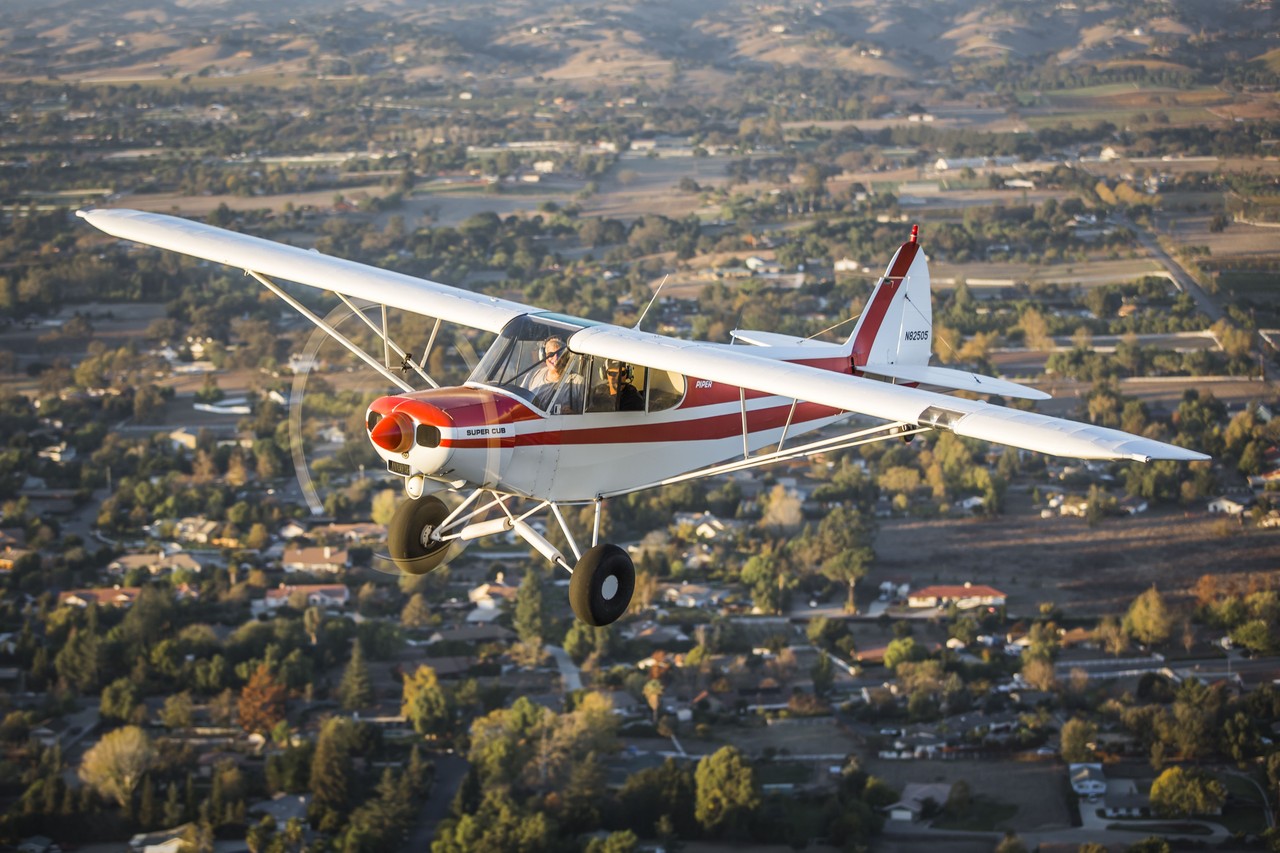
Dominating General Aviation
The PA-18 Super Cub achieved unparalleled success in general aviation, with 10,326 aircraft built during its 45-year production run from 1949 to 1994. Production peaked in 1953 when 1,043 units rolled off the assembly line at Lock Haven, Pennsylvania. The aircraft dominated flight training schools across America and became the preferred mount for bush pilots operating in Alaska, Canada, and remote wilderness areas worldwide.
The Super Cub's exceptional short takeoff and landing capabilities revolutionized backcountry flying. Its ability to operate from unimproved strips, combined with adaptability to floats, skis, and oversized tundra tires, made it invaluable for accessing remote locations impossible for other aircraft to reach.
Military Service
The U.S. military recognized the Super Cub's utility, ordering 1,493 aircraft designated as L-18 and L-21 variants for the Air Force and Army. These military versions served primarily in liaison, observation, and light transport roles. Many were subsequently transferred to allied nations under the Mutual Defense Aid Pact, spreading the Super Cub's influence globally.
The Manufacturer's Journey
Piper Aircraft Corporation developed the PA-18 as the successor to their PA-11 Cub Special, building upon a design lineage dating to 1931 when C.G. Taylor and W.T. Piper created the original Taylor E-2. The company manufactured approximately 8,500 Super Cubs at their Lock Haven facility over 34 years of continuous production.
Financial pressures during the early 1980s aviation recession forced dramatic changes. In 1981, Piper sold Super Cub marketing rights to Wes-Tex, a Texas company that lasted only two years. When the Lock Haven factory closed in 1983, Super Cub production ceased entirely for five years. Piper attempted revival in 1988 at their new Vero Beach, Florida facility, producing just 44 aircraft before filing bankruptcy in 1991. Limited production continued until 1994, adding only 109 more aircraft.
Engine Evolution and Performance
The Super Cub's engine progression reflected the demand for increased capability. Initial 1950 models used the 90-horsepower Continental C-90-8F, but Piper quickly upgraded to more powerful options. The PA-18-105 variant featured a Lycoming engine producing 108 horsepower for cruise and 115 horsepower for takeoff.
The most significant advancement came in 1955 with the introduction of the 150-horsepower Lycoming O-320-A2A, a four-cylinder horizontally opposed engine that became the standard powerplant through production's end in 1994. This engine provided the optimal balance of power, reliability, and fuel efficiency that made the Super Cub legendary among pilots.
Pilot's Perspective
Pilots praised the Super Cub for its forgiving handling characteristics and exceptional short-field performance. The tandem seating configuration provided excellent visibility for both instructor and student, making it ideal for flight training. With a maximum speed of 115 mph and service ceiling exceeding 15,000 feet, the Super Cub offered respectable cross-country capability while maintaining its primary strength in low-speed operations.
The aircraft's conventional gear configuration and tail-wheel design required pilot skill but rewarded proficiency with superior ground handling on rough terrain. Bush pilots particularly valued the Super Cub's ability to carry substantial loads relative to its size while maintaining safe handling margins at slow speeds essential for backcountry operations.
Commercial Applications
Beyond training and bush flying, Super Cubs found extensive use in agricultural aviation. The PA-18A agricultural variant served crop dusting and spraying operations throughout rural America. Other commercial applications included banner towing, glider towing, and pipeline patrol work. The aircraft's rugged construction and simple systems made it economical to operate and maintain in demanding commercial environments.
Production Legacy and Modern Influence
The Super Cub's production numbers tell the story of American general aviation's growth. Peak production in the early 1950s reflected post-war optimism and the GI Bill's flight training benefits. The aircraft maintained steady production through the 1960s and 1970s before succumbing to product liability concerns and market changes that devastated general aviation manufacturing.
Today, the Super Cub commands premium prices in the used aircraft market, with well-maintained examples often selling for more than their original purchase price. This remarkable value retention reflects continued strong demand from pilots seeking authentic backcountry flying experiences.
Museums and Preservation
Several notable Super Cubs reside in prestigious collections, including examples at the National Air and Space Museum in Washington, D.C., and the Shuttleworth Collection in the United Kingdom. These preserved aircraft represent the thousands that opened remote wilderness areas and trained generations of aviators, cementing the PA-18's position as one of aviation's most influential designs.