
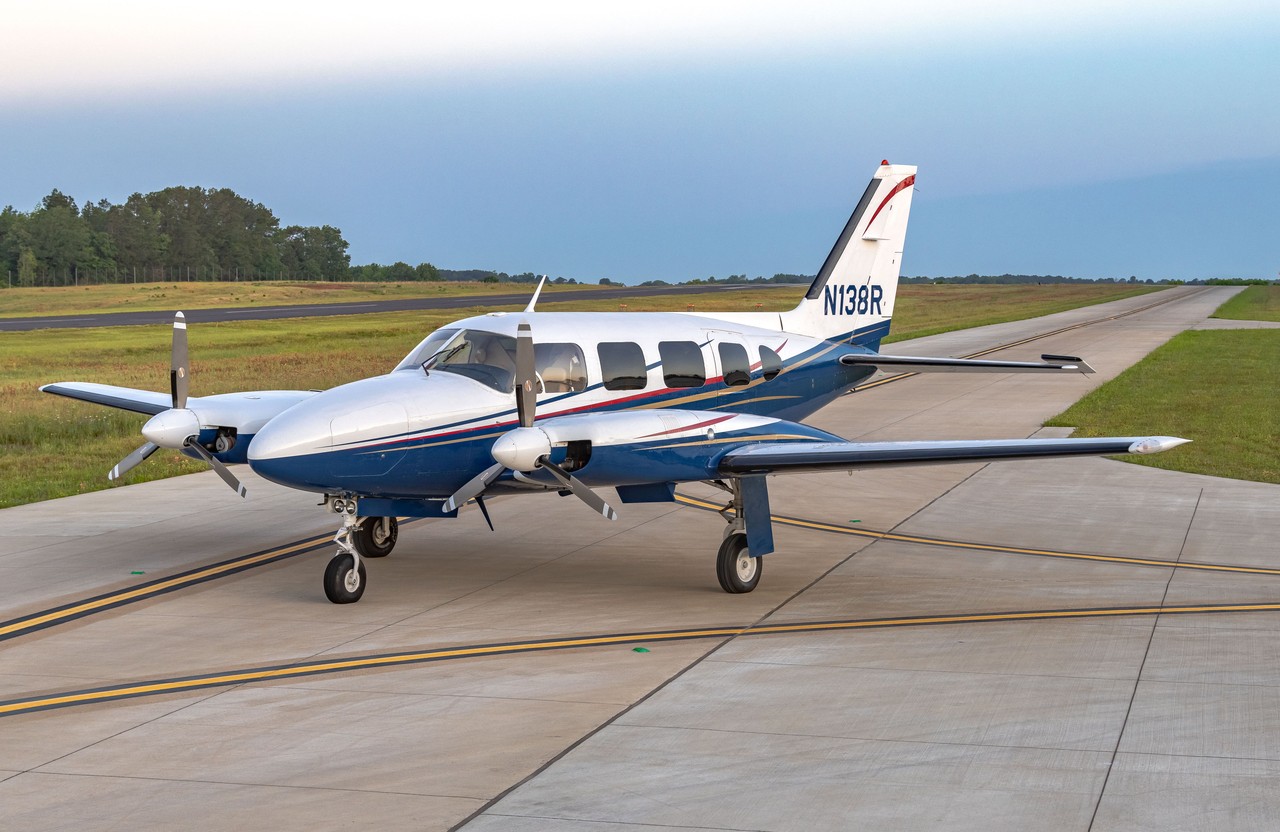
Design Origins and Development
The PA-31-300 emerged from Piper Aircraft's ambition to create a larger twin-engine aircraft building on their successful PA-30 Twin Comanche design. Initially planned for development in California under Bill Lear's guidance, the project shifted direction in 1962 when Piper assigned the design work to Ed Swearingen in San Antonio. Originally designated the "Inca," the aircraft was later renamed the Navajo before its public debut.
The first prototype completed its maiden flight on September 30, 1964, representing Piper's entry into the competitive cabin-class twin-engine market. The Federal Aviation Administration granted type certification in February 1966, with an amended certificate issued later that year to increase the maximum takeoff weight. Production deliveries commenced in 1967, marking the beginning of what would become one of aviation's most abbreviated production runs.
The Manufacturer's Vision
Piper Aircraft Corporation had established itself as a dominant force in general aviation by the 1960s, building on nearly a century of aircraft manufacturing experience. The company's post-World War II expansion capitalized on the general aviation boom, producing successful designs like the PA-23 Apache and PA-25 Pawnee throughout the 1950s. By 1970, Piper was manufacturing over 7,000 Cherokee aircraft annually, demonstrating their production capabilities and market reach.
The Navajo project represented Piper's strategic move into the lucrative cabin-class twin market, competing directly with Cessna's offerings. The design objective called for a six- to eight-seat aircraft that would essentially scale up the proven Twin Comanche formula while providing airline-style passenger comfort in a general aviation package.
Technical Specifications and Performance
The PA-31-300 featured two Lycoming IO-540-M engines, each producing 300 horsepower through normally aspirated induction systems. These six-cylinder engines drove two-bladed propellers and offered a recommended time between overhauls of 2,000 hours, providing operators with slightly better maintenance intervals than competing Continental-powered aircraft from Cessna.
The aircraft's cabin-class design incorporated multiple windows and generous interior space, measuring approximately 32 feet in overall length with accommodation for six to eight passengers depending on configuration. The low-wing configuration and twin-engine layout provided the stability and redundancy expected in corporate and charter operations.
Market Reception and Commercial Failure
Despite Piper's engineering efforts and established market presence, the PA-31-300 encountered immediate competitive challenges that proved insurmountable. The introduction of the turbocharged PA-31-310 variant created an economically devastating comparison for potential buyers. The 310 model delivered 30 knots higher cruise speed, superior single-engine ceiling performance, and shorter takeoff distances for an additional cost of less than $10,000 on a $130,000 total price.
This performance gap rendered the normally aspirated 300 model commercially unviable almost immediately. Charter companies and corporate operators, the primary target market for cabin-class twins, consistently chose the superior performance of the turbocharged variant when the price difference represented less than eight percent of the total purchase cost.
Production History and Legacy
Piper manufactured exactly 14 PA-31-300 aircraft between 1967 and 1969, making it one of the rarest production aircraft in general aviation history. This extremely limited production run occurred because the model was rapidly superseded by the PA-31-310, which became the second most popular variant in the entire Navajo family.
The broader PA-31 Navajo series enjoyed far greater success, with nearly 4,000 aircraft of all variants produced through 1984. The family became highly popular with charter operators and corporate flight departments, establishing a reputation for reliability and passenger comfort on short- to medium-range missions. Many Navajo aircraft found international markets in Europe and the Pacific region, where they served as commuter airliners and corporate transports.
Designer and Engineering Team
Ed Swearingen's design work on the PA-31 reflected his understanding of the general aviation market's evolving needs in the 1960s. The aircraft incorporated several refinements during development, including optimized engine placement on the wings and an increased number of cabin windows to enhance the passenger experience. These improvements transformed the basic Twin Comanche concept into a true cabin-class aircraft suitable for corporate and charter operations.
Current Status
Of the 14 PA-31-300 aircraft produced, few remain in active service today due to the model's age and the availability of more capable variants within the Navajo family. The extreme rarity of the 300 model has made surviving examples of interest to aviation enthusiasts and collectors, though most operators have long since upgraded to turbocharged variants or more modern aircraft. Piper Aircraft Corporation continues operations today, though the company has relocated from its original facilities to Vero Beach, Florida, where it continues manufacturing general aviation aircraft.