
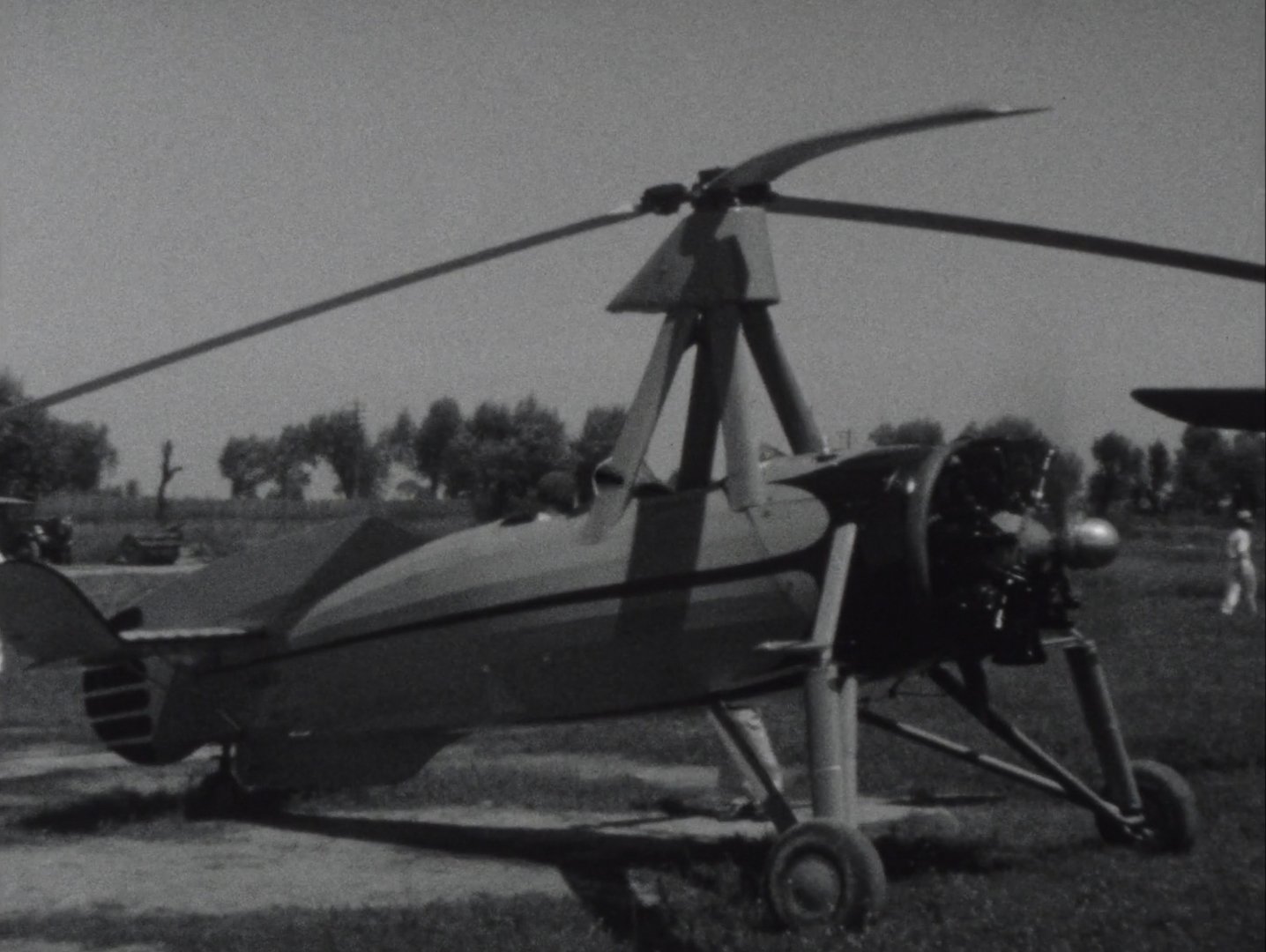
The Pitcairn PA-33/34 were experimental two-seat autogiros developed during the mid-1930s. These aircraft were designed as military versions of Pitcairn's rotary-wing technology, with documentation indicating their development or test use occurred between 1935 and 1937. The aircraft were produced by the Pitcairn Autogiro Company of America, an entity established by Harold F. Pitcairn to manufacture autogiros in the United States using licensed patents from Cierva. Pitcairn's aviation interests were extensive; he founded Pitcairn Aviation, Inc. in 1924, though that specific airline operation was sold to the company that became Eastern Air Lines by 1930, allowing Pitcairn to focus exclusively on autogiro development.
Designed under the leadership of Harold F. Pitcairn, the PA-33/34 followed the general configuration of the era's Pitcairn autogiros, featuring a tractor-engine layout and a free-spinning rotor for lift. While specific technical blueprints for the PA-33/34 are sparse, they were configured as two-place aircraft, likely intended for military observation or training. The only verified technical specifications for the type are its weights: the aircraft had an empty weight of 2,300 lb and a gross weight of 3,300 lb. While many contemporary Pitcairn models utilized air-cooled radial piston engines from manufacturers such as Wright or Kinner, the specific engine model and power rating for the PA-33/34 remain undocumented.
In terms of service, the PA-33/34 remained in the experimental phase. There is no evidence that these aircraft entered mass production or saw combat service during World War II; their use was limited to prewar peacetime trials. Because they were military prototypes, there are no records of the PA-33/34 entering civil or commercial service. The legacy of the PA-33/34 is tied to the broader evolution of rotorcraft; Pitcairn's work in the 1930s provided critical engineering insights that preceded the development of modern helicopters. Today, the original manufacturing company is defunct, and no surviving examples of the PA-33/34 are publicly documented in major museum collections.