
Revolutionary Design Philosophy
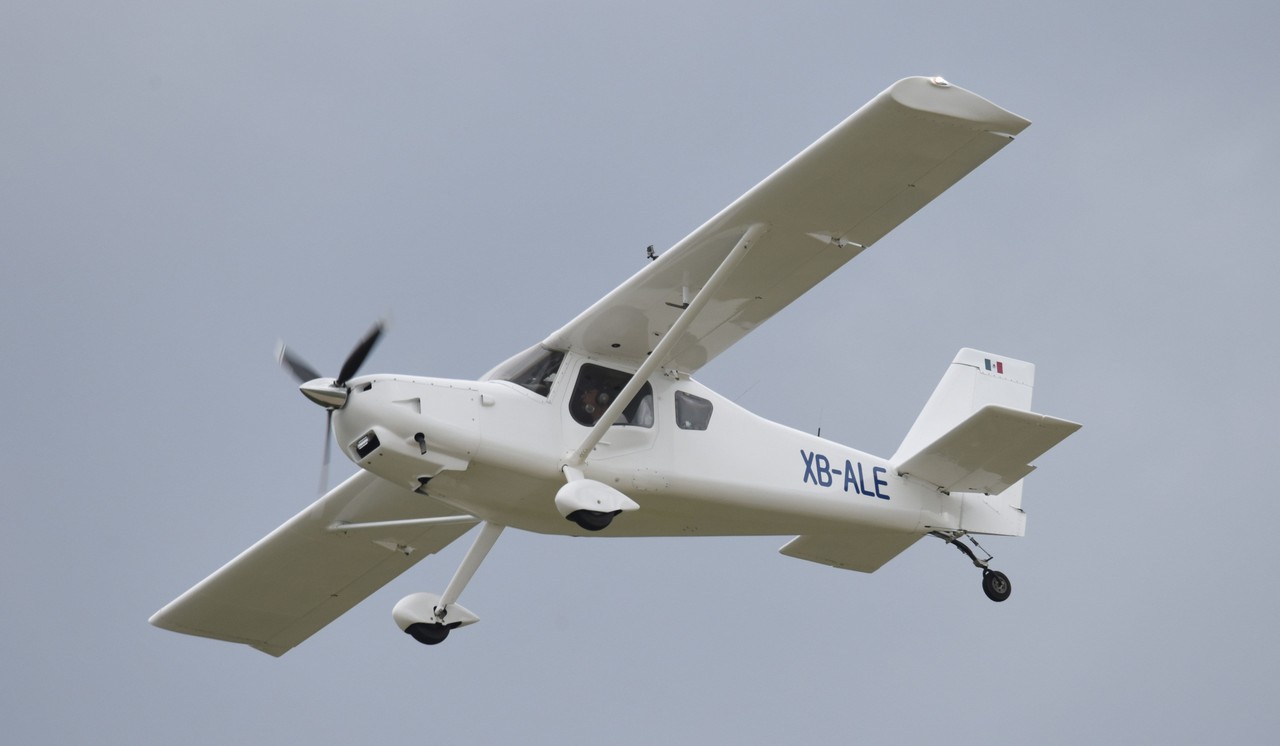
Jean René Lepage conceived the Pelican between 1979 and 1982 while teaching mechanical engineering, deliberately departing from the crude "flying lawn chair" aesthetic that dominated early North American ultralights. His design objective centered on creating an aircraft resembling the classic Aeronca C-2 of 1929 while remaining significantly more affordable than factory-built alternatives. The first prototype took flight in May 1982 as a single-seat configuration, establishing the foundation for what would become one of the most successful ultralight designs of the 1980s and 1990s.
Manufacturing Excellence
Ultravia Aero International, founded in July 1982 in Repentigny, Quebec, began production with the single-seat Le Pelican series from 1983 to 1985. The company relocated operations first to Mascouche, then to Gatineau, while expanding into two-seat variants that continued production until 2006. By mid-2003, Ultravia had manufactured more than 600 Pelicans across all variants, with over 250 Pelican PLs and 60 Pelican Sports completed and flown by December 2002.
The kit-built approach proved highly successful, with standard kits priced at $20,780 for the Pelican PL and $22,025 for the Pelican Sport in 2003. Fast-build versions, featuring 49 percent pre-completion, commanded premiums of approximately $6,400 but reduced assembly time from 1,000 hours to 500 hours.
Technical Innovation
The Pelican's construction utilized vacuum-molded composite fuselage with rigid PVC core, representing advanced manufacturing techniques for ultralight aircraft of its era. Single-strut, single-spar all-metal wings provided structural efficiency while maintaining the high-wing configuration that enhanced stability and ground handling. The design incorporated five-position flaps ranging from 0 to 45 degrees with aileron droop capability, mechanically operated elevator trim tabs, and cantilever landing gear eliminating external bracing.
Powerplant options evolved significantly throughout production. The original Super Pelican employed a 35-horsepower Global two-cylinder horizontally-opposed four-stroke engine displacing 1,039 cubic centimeters. Later variants accommodated Rotax powerplants ranging from the 80-horsepower 912 to the 115-horsepower turbocharged 914, with the most powerful configurations accepting engines up to 150 horsepower.
Performance Characteristics
The Pelican Sport 600 with Rotax 914 turbocharged engine achieved impressive performance figures for an ultralight aircraft. Maximum speed reached 259 km/h with cruising speeds of 233 km/h, while maintaining a remarkably low stalling speed of 71 km/h. Rate of climb measured 459 meters per minute, enabling the aircraft to reach its operational ceiling efficiently. Range extended to 1,126 kilometers with fuel capacity of 91-98 liters, while takeoff distance required only 107 meters and landing distance extended to 152 meters.
Empty weight of 340 kilograms allowed a loaded weight of 635 kilograms, providing useful load capacity competitive with larger aircraft. The design accommodated various landing gear configurations including tricycle and tailwheel arrangements, plus specialized installations for skis, floats, or amphibious floats.
Variant Evolution
The Pelican Club, first flown in 1984, established the production baseline. The Pelican PL introduced in 1991 became the standard ultralight version, while the Pelican Sport debuted in 1998 with redesigned wings featuring higher-lift airfoils and longer span for improved STOL performance. Three Sport subvariants addressed different regulatory environments: Sport 450 for Europe, Sport 500 for Brazil, and Sport 600 for the United States, Canada, Australia, and Mexico.
The ambitious Pelican TuToR represented Ultravia's attempt to transition into certified aircraft markets, conforming to FAR Part 23 requirements and Canadian chapter 523-VLA standards. Certification efforts were underway in 2003 with expected completion in 2004, though Ultravia's 2006 closure ended this development.
Global Distribution
Pelican aircraft achieved international distribution, with significant populations in New Zealand and Australia. New Zealand registrations included ZK-OOO, ZK-FTE, ZK-JGY, ZK-MAL, ZK-PPL, ZK-JHP, and ZK-PLP, while Australian examples operated under Recreational Aviation Australia regulations. This global presence demonstrated the design's adaptability to diverse operating environments and regulatory frameworks.
Legacy and Continuing Influence
When Ultravia ceased operations in 2006, production rights transferred to Kolb and Ballard Sport Aircraft, ensuring continued parts support for the substantial fleet. The Pelican's influence on ultralight design philosophy persisted well beyond its production run, proving that amateur-built aircraft could achieve professional appearance and performance while maintaining accessibility for recreational builders. Its success demonstrated the viability of sophisticated ultralight designs that bridged the gap between traditional ultralights and certified light aircraft.