
Service History
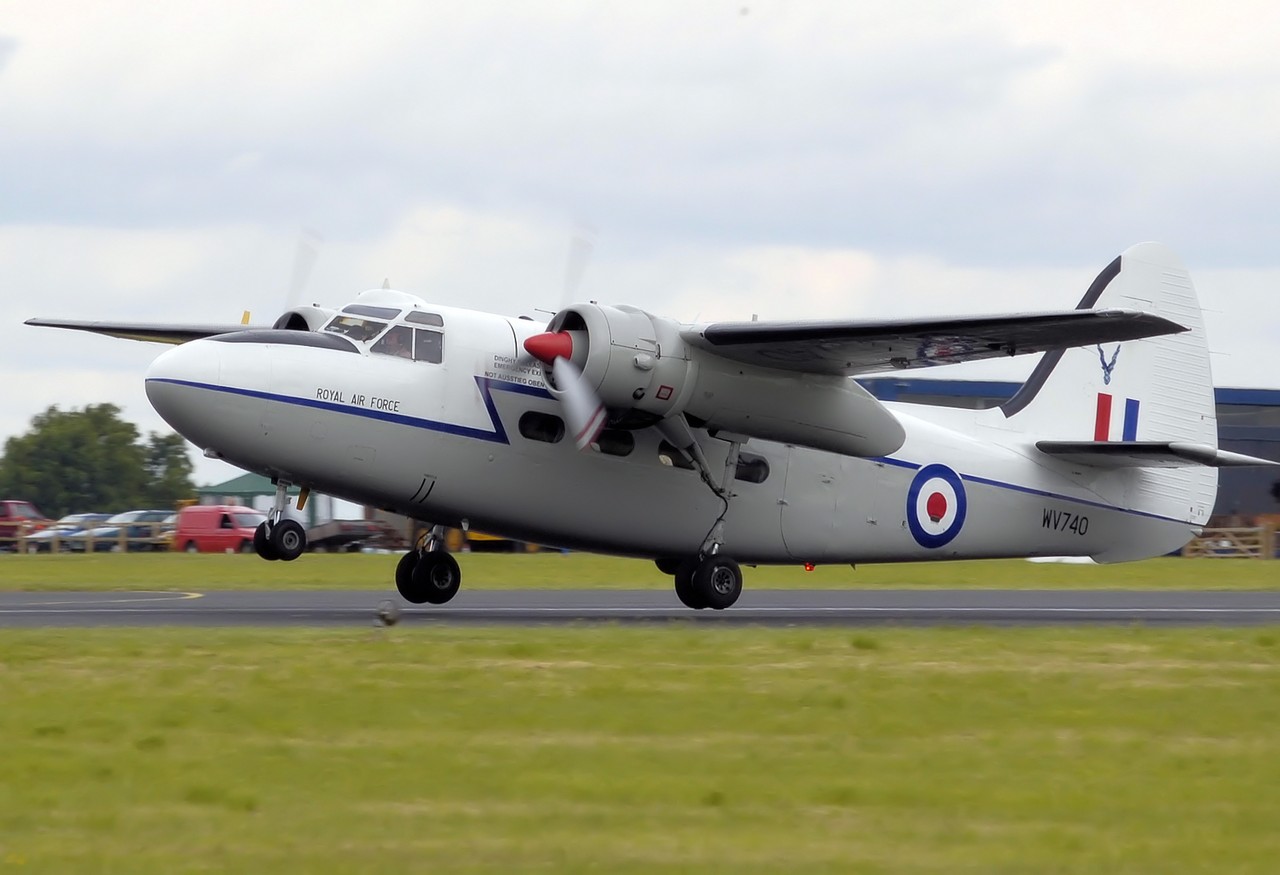
The Pembroke established itself as a reliable workhorse for military air forces across Europe and beyond. The Royal Air Force received 56 aircraft spread across 11 squadrons starting in 1953, with the type designated as the Pembroke C.1 for transport duties. The aircraft's robust design proved so successful that RAF examples remained in service until 1988, making it one of the longest-serving transport aircraft of its era.
International military sales expanded the Pembroke's reach significantly. The German Bundeswehr acquired 33 aircraft beginning in June 1957, distributing 23 to the Luftwaffe, 6 to Marineflieger naval aviation, and 4 to the Army. Additional operators included the air forces of Belgium, Denmark, Finland, Sweden, Sudan, and Zambia, with export variants designated C.51 through C.55.
Intelligence Operations
Beyond routine transport duties, the Pembroke played a crucial role in Cold War intelligence gathering. The specialized reconnaissance variant, designated Pembroke C(PR).1, conducted sensitive missions over East Germany as part of Operation Hallmark from 1956 onwards. These covert flights provided valuable intelligence during the height of Cold War tensions, demonstrating the aircraft's versatility beyond its original transport role.
The Manufacturer
Percival Aircraft Ltd. underwent significant corporate changes during the Pembroke's production run. Originally part of the Hunting Group, the company became Hunting Percival Aircraft in 1954, then Hunting Aircraft in 1957. This corporate evolution reflected the consolidation occurring throughout Britain's aviation industry during the 1950s. The company eventually ceased independent operations, absorbed into the broader Hunting Group structure.
Percival had established its reputation with earlier designs, particularly the Prince (P.50) which first flew on May 13, 1948. The Pembroke represented the company's response to specific RAF requirements for a communications aircraft suitable for operations in the Middle and Far East, leading to the enhanced design that became the P.66.
Engine and Technical Innovation
The twin Alvis Leonides 127 engines provided the Pembroke with 1,080 total horsepower, significantly enhancing performance over single-engine contemporaries. These nine-cylinder radial engines, manufactured by Alvis Cars Ltd., delivered superior climb performance and extended range compared to the Prince predecessor, though with slightly reduced maximum speed.
The design improvements extended beyond powerplant selection. Engineers lengthened the wing by 8 feet 6 inches compared to the Prince, while increasing maximum weight capacity by nearly 3,000 pounds. This combination of increased wing area and weight capacity translated directly into enhanced payload flexibility and operational range.
Production and Development
Manufacturing at Luton produced approximately 128 Pembrokes between 1952 and early 1958. The RAF placed the initial order for 42 aircraft on June 5, 1951, followed by three additional orders that brought total RAF procurement to 57 aircraft. This production run represented successful execution of the original military requirement while generating additional export sales.
A civilian variant marketed as the President attempted to capture commercial market share, though sales remained limited compared to military success. The Royal Navy had achieved better commercial results with the predecessor Prince, acquiring 48 Sea Princes for observer training and communications that served until 1978.
Operational Legacy
The Pembroke's service longevity testified to its fundamental design soundness. While most operators retired their fleets during the mid-1970s, re-sparred RAF aircraft continued flying for another decade. This extended service life reflected both the aircraft's reliability and the RAF's satisfaction with its performance across diverse operational requirements.
Several preserved examples maintain the type's legacy today. The Royal Army Museum in Brussels houses one complete aircraft, while multiple examples survive in the United States at various locations in California, New Jersey, and Missouri. These preserved aircraft represent an important chapter in post-war British aviation development.
Historical Significance
The Pembroke emerged during Britain's transition from wartime to peacetime aviation priorities, serving military requirements while demonstrating the country's continued design capabilities. Its role in Cold War intelligence operations added historical significance beyond routine transport duties, contributing to Western understanding of Soviet bloc military developments during a critical period.
The aircraft's 36-year RAF service span, from 1953 to 1988, encompassed the entire Cold War era, making it a witness to dramatic changes in military aviation technology and operational requirements. Its successful adaptation from basic transport to specialized reconnaissance platform demonstrated the versatility that characterized the best aircraft designs of its generation.