
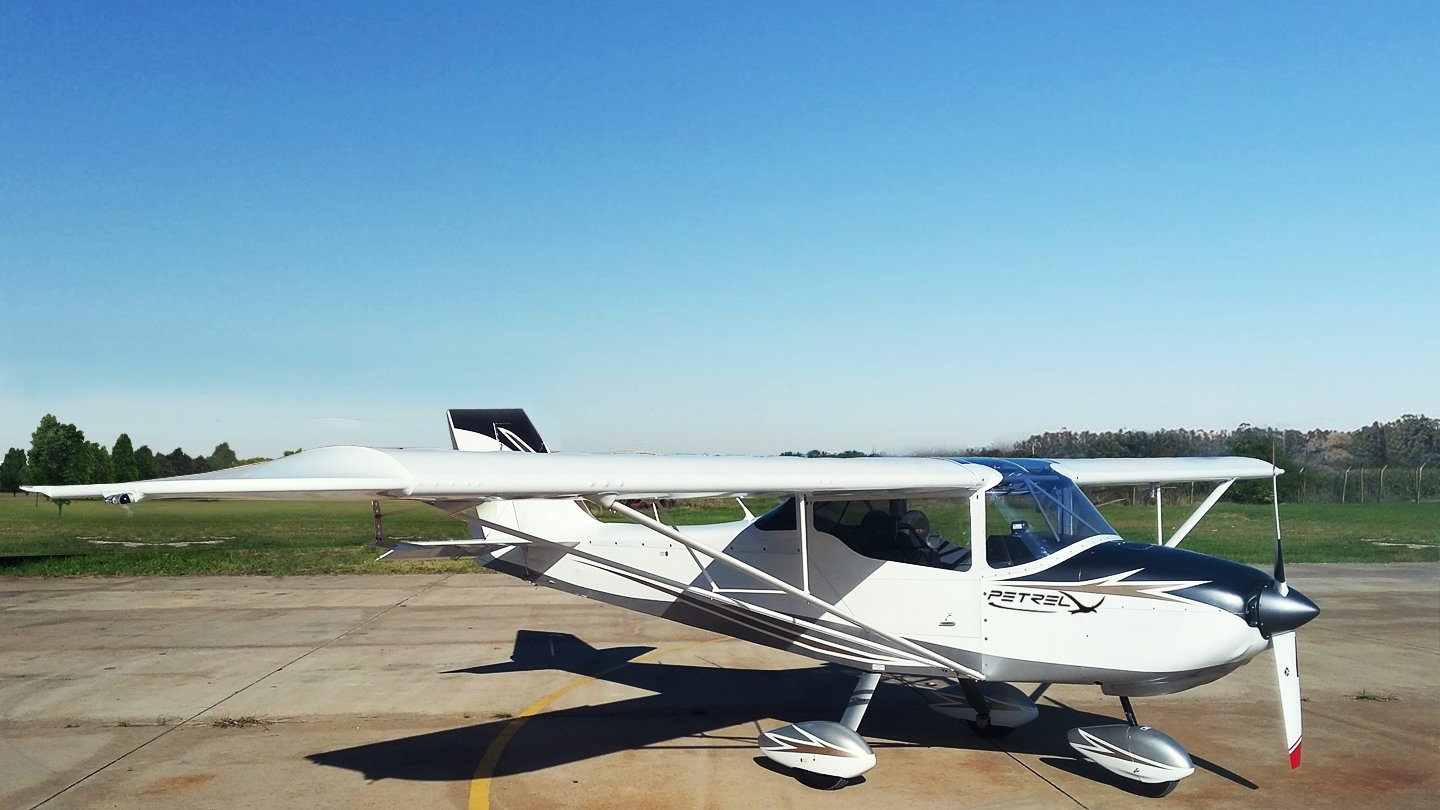
Academic Aviation Pioneer
The AERO ITBA Petrel stands as perhaps the most unusual entry in the International Civil Aviation Organization's aircraft type database—a fully certified amphibious biplane designed and constructed entirely by university students. When the prototype bearing registration LV-FVB first appeared at Argentina's Aeroclub Universitario airfield in March 2009, it marked the culmination of an ambitious academic project that would earn the Instituto Tecnológico de Buenos Aires recognition as an official aircraft manufacturer.
Design Heritage and Student Innovation
The Petrel's design traced its lineage to French aeronautical engineer Claude Tisserand's 1983 Hydroplum, which evolved into the two-seat Hydroplum II by 1986 and later inspired the SMAN Pétrel series. The ITBA students adapted this proven European amphibian configuration, creating their own interpretation of the pusher-engine biplane formula that had found favor among light sport aviation enthusiasts.
The student team employed modern carbon fiber and epoxy construction techniques, departing from traditional aluminum or fabric-covered designs typical of earlier amphibians. This material choice reflected both the university's emphasis on contemporary engineering methods and the practical constraints of an academic workshop environment. The pusher configuration placed the engine behind the cockpit, protecting both propeller and occupants during water operations while providing excellent forward visibility for the crew.
Power and Performance
At the heart of the Petrel beat Austria's most successful light aircraft engine—the Rotax 912i. This fuel-injected, four-stroke powerplant delivered 80 kilowatts (107 horsepower) through its flat-four configuration, representing the pinnacle of Rotax's 912 series that had been in continuous production since 1994. The engine's dual ignition system and proven reliability made it the natural choice for an experimental amphibian, where engine failure over water could prove catastrophic.
With the Rotax 912i's power, the Petrel achieved an estimated cruise speed of 150 kilometers per hour and operational range of approximately 500 kilometers. These performance figures, while modest by commercial aviation standards, placed the aircraft squarely in the recreational flying category alongside other light sport amphibians of the era.
The Manufacturing Institution
Instituto Tecnológico de Buenos Aires, founded in 1959, had established itself as one of Argentina's premier private engineering universities long before its students ventured into aircraft construction. The Petrel project represented an extraordinary expansion of ITBA's traditional academic mission, transforming classroom theory into certified aviation hardware. The university's partnership with Proyecto Petrel SA provided necessary financing while maintaining the project's educational focus.
Unlike established aircraft manufacturers with decades of production experience, AERO ITBA existed solely to build this single prototype. The arrangement demonstrated how modern aviation certification could accommodate innovative approaches to aircraft development, even when emerging from academic institutions rather than traditional aerospace companies.
Operational Reality and Legacy
The completed Petrel operated from Aeroclub Universitario, located near Matanza in Buenos Aires Province. The facility's proximity to ITBA's main campus facilitated ongoing student involvement in the aircraft's testing and refinement phase. However, detailed flight test data and operational history remain undocumented in public records, suggesting the project focused more on educational objectives than commercial development.
By 2009, the light sport aviation market had begun embracing factory-built amphibians like the American Icon A5 and various European designs, making the Petrel's timing both fortuitous and challenging. While the student-built aircraft demonstrated technical competence, it entered a marketplace increasingly dominated by established manufacturers with extensive dealer networks and factory support.
Current Status and Historical Significance
The fate of the single Petrel prototype remains unknown, with no confirmed sightings or operational records after its initial 2009 appearance. Unlike successful university aircraft projects that spawned ongoing development programs, the Petrel appears to have concluded with its prototype phase, fulfilling its primary mission as an educational endeavor rather than launching a production program.
The aircraft's true legacy lies in its demonstration that modern aviation certification processes could accommodate innovative approaches to aircraft development. By earning ICAO type designation PETL, the student-built amphibian joined the ranks of certified aircraft alongside products from Boeing, Airbus, and other aviation giants—a remarkable achievement for any university project.
Today, ITBA continues its engineering education mission without ongoing aircraft manufacturing operations, but the Petrel project established a precedent for academic institutions willing to pursue ambitious aerospace projects. The aircraft stands as testament to the practical application of engineering education and the continuing evolution of light sport aviation in South America.