
Design and Development
On October 31, 1934, the French Ministry of Air issued a specification for a twin-engine "heavy fighter" (chasseur multiplace) intended for night-fighter operations, day attack, and escort leadership. The resulting design, led by engineers Louis Coroller and André Delaruelle, was conceived as a modular family of aircraft that could be adapted into light bombers and reconnaissance platforms. The prototype Potez 630-01 first flew on April 25, 1936. The design requirements called for a cruising speed of 300 km/h, a maximum speed of 450 km/h at 4,000 meters, and an endurance of at least four hours. The aircraft featured a twin-engine, twin-tail layout to optimize crew accommodation and fields of fire.
Production and Manufacturing
While designed by the Potez company, the aircraft was produced by SNCAN (Société Nationale de Constructions Aéronautiques du Nord) following the nationalization of the French aviation industry. Primary production took place at the SNCAN Méaulte plant near Albert in northern France. Series production occurred roughly between 1938 and 1940, with the aircraft entering French service in May 1938. Production rates were high during the early stages of World War II, with an average of 100 Potez 63-series aircraft produced per month from January to June 1940. Production ceased following the French defeat in 1940, although some airframes were completed under German control after the capture of the Méaulte factory.
Technical Specifications
The Potez 630 heavy fighter was powered by two Gnome-Rhône 14M 4/5 14-cylinder air-cooled radial piston engines, each producing 700 hp. Early prototypes utilized 580 hp Hispano-Suiza 14AB engines, and a single prototype of the 63.12 C3 variant used Pratt & Whitney Twin Wasp Junior radials. The aircraft had a wingspan of 16.00 meters, a length of 10.93 meters, and a maximum take-off weight of 4,530 kg. Its maximum speed was 425 km/h with a service ceiling of 8,500 meters. Armament varied by version; up-gunned models featured seven fixed forward 7.5 mm MAC machine guns, three fixed rear MAC guns, and two flexible rear MAC guns, along with the capacity to carry four 50 kg bombs.
Military Service and Legacy
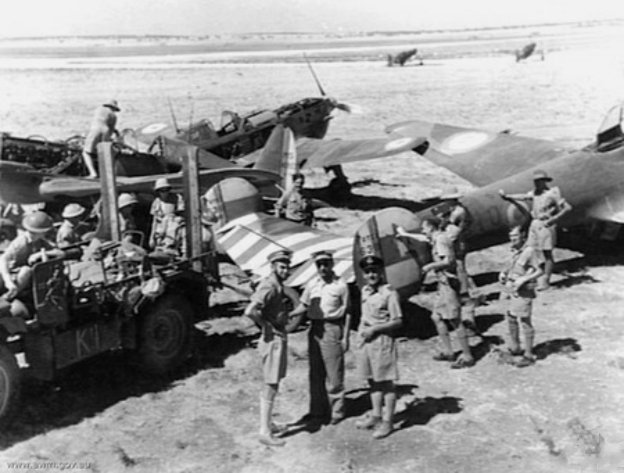
The Armée de l’Air was the primary operator, though Romania and Greece also acquired the aircraft. Romanian units fought Soviet forces in southern Ukraine in mid-1941, while Greek forces used nine examples against Italian invaders in late 1940. In French Indochina, aircraft originally intended for China were used against Thai units during the Franco-Thai War (1940–1941). During the Battle of France in May 1940, the Potez 630 was withdrawn from front-line service on May 22. While the aircraft possessed good flying characteristics, it was underpowered compared to its contemporaries, such as the German Messerschmitt Bf 110, which limited its combat effectiveness. Following the armistice, surviving aircraft were used by Vichy France primarily for liaison and training roles.