
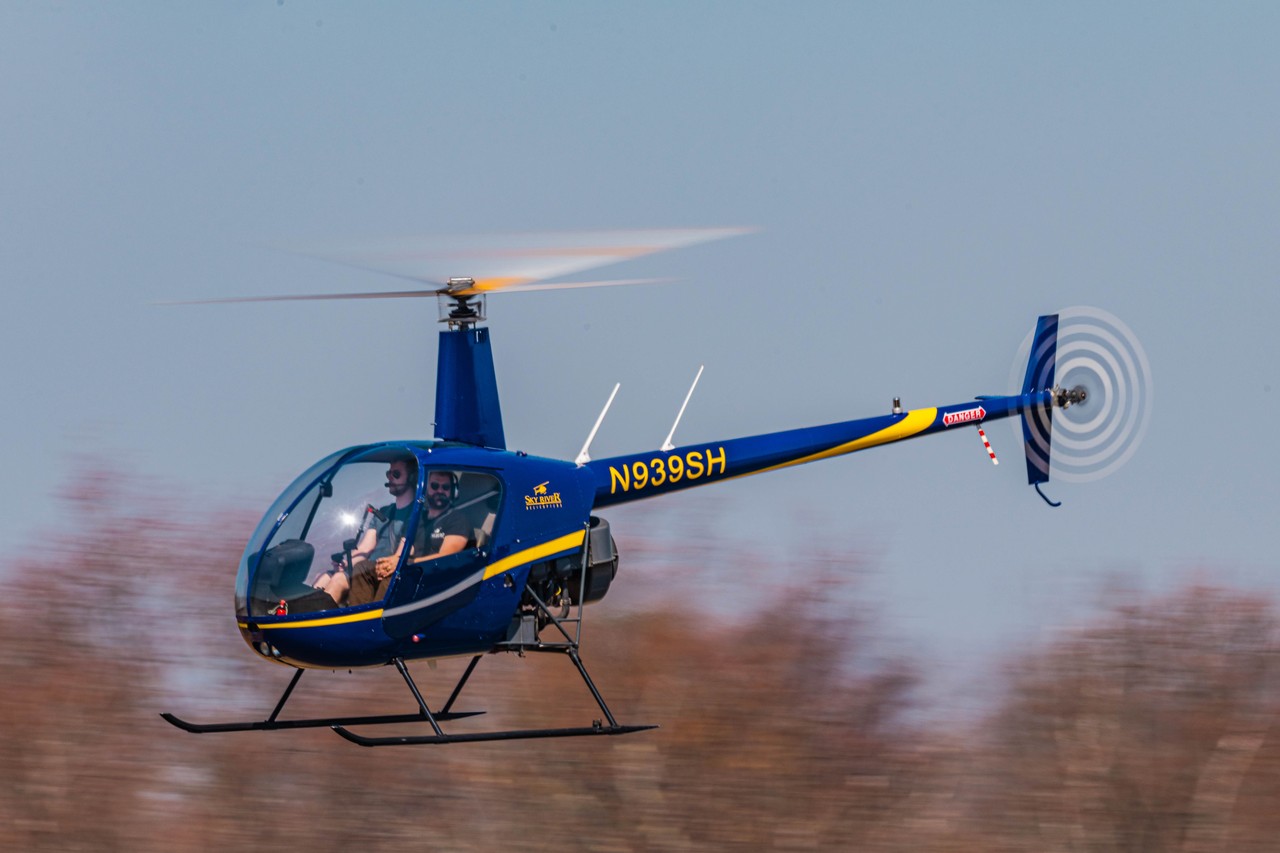
Service History
The R-22 transformed helicopter training from an exclusive military and corporate pursuit into accessible general aviation. Pacific Wing & Rotor Inc. received the first production aircraft in October 1979, offering instruction at just $55 per hour compared to traditional rates exceeding $200. By the mid-1980s, flight schools across America adopted the R-22 as their primary trainer, with the 100th aircraft delivered in January 1981 and the 500th following on July 26, 1985.
The helicopter found widespread use beyond training, particularly in ranch operations and livestock mustering where its low operating costs made aerial work economically viable. Robinson delivered 8 aircraft in 1979, 71 in 1980, and 151 in 1981, establishing production momentum that would sustain the company for decades.
The Manufacturer
Frank Robinson founded Robinson Helicopter Company on June 29, 1973, operating initially from his home at 27886 Longhill Drive in Rancho Palos Verdes, California. By January 1978, the company relocated to a 44,000-square-foot facility at 24747 Crenshaw Boulevard adjacent to Torrance Municipal Airport, where all R-22s would be manufactured under strict noise regulations imposed by the airport lease.
Robinson projected annual production of 500 aircraft by 1977, a forecast that proved conservative as demand exceeded expectations. The company delivered 893 helicopters across all models in 2008 alone. Frank Robinson retired in 2010 at age 80, passing leadership to his son Kurt Robinson. By December 2016, Robinson had sold 12,000 helicopters total, establishing itself as the world's leading civil helicopter manufacturer. Frank Robinson died on November 12, 2022, at age 92, having overseen production of more than 13,000 aircraft.
Engine & Technical Details
The R-22 utilized Lycoming's proven O-320 flat-four piston engine, initially the O-320-A2B producing 150 horsepower. The 1981 R22HP variant incorporated the O-320-A2C generating 160 horsepower, later derated to 124 horsepower for improved reliability. Honeywell's acquisition of Avco Lycoming continued engine support throughout the aircraft's production run.
Frank Robinson's design philosophy emphasized simplicity and cost reduction. The helicopter featured honeycomb-core rotor blades, a teetering semi-rigid rotor system, and aluminum construction to minimize both acquisition and operating expenses. A centrifugal clutch upgrade incorporating a Borg-Warner unit with Robinson's electric actuator improved power transmission reliability.
The prototype, serial number 001 registered N67010, first flew on August 28, 1975, with Frank Robinson at the controls. This maiden flight marked the culmination of two years of development focused on creating a helicopter accessible to private owners and flight schools.
Pilot Perspective
Pilots praised the R-22's forgiving handling characteristics and low operating costs, though some criticized its limited payload capacity and weather sensitivity. The helicopter's 1,369-pound maximum takeoff weight restricted useful load to 516 pounds with full fuel, limiting passenger and baggage capacity.
Cruise performance reached 96 knots at altitude, with a service ceiling of 14,000 feet and initial climb rate of 1,200 feet per minute. Range extended to 310 nautical miles with standard fuel capacity of 28 gallons. The aircraft's compact dimensions—25.26-foot rotor diameter and 28.74-foot overall length—suited confined area operations.
Training advantages included predictable autorotation characteristics and gentle stall behavior, essential qualities for student instruction. The side-by-side seating arrangement facilitated communication between instructor and student, while large cabin windows provided excellent visibility.
Production & Legacy
Robinson manufactured more than 4,800 R-22s by 2016, with the majority remaining airworthy as of 2025. The National Air and Space Museum's Steven F. Udvar-Hazy Center in Chantilly, Virginia, displays an early production example, while the Ronald Reagan Presidential Library featured a new R-22 in its "Cowboys: History & Hollywood" exhibition from October 2025 through April 2026.
The R-22's success stemmed from Frank Robinson's vision of democratizing helicopter aviation. Before 1979, helicopter ownership remained largely restricted to military, corporate, and commercial operators due to acquisition and operating costs. The R-22's $200,000 price point and economical operation opened helicopter flying to thousands of private pilots and small flight schools.
Robinson celebrated the 50th anniversary of the R-22's first flight on August 28, 2025, acknowledging the design's enduring impact on civil aviation. The helicopter's legacy extends beyond mere production numbers—it fundamentally altered the helicopter industry's market structure and training paradigm.