
Market Dominance and Commercial Success
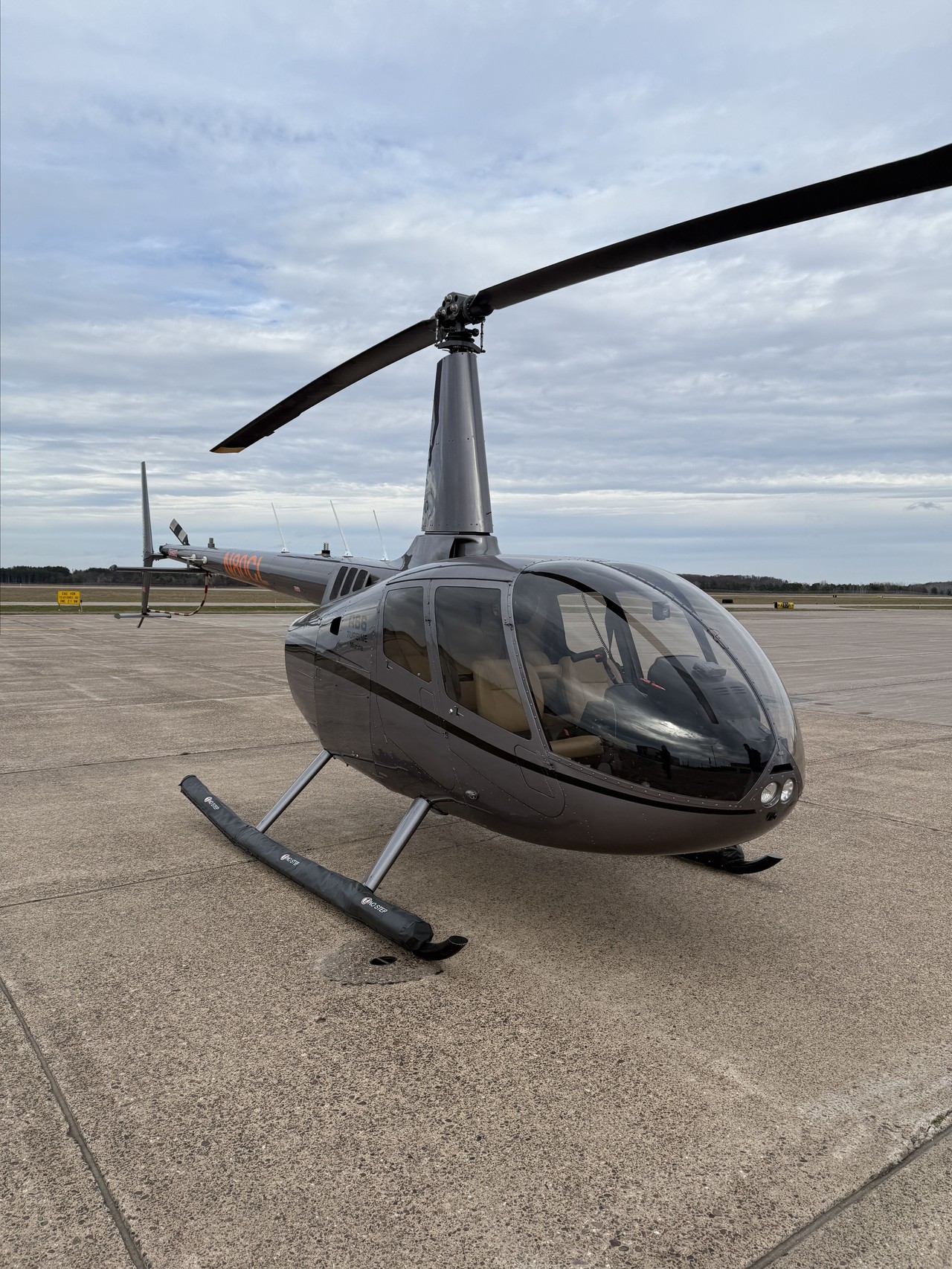
The R-66 achieved remarkable commercial success by disrupting the established turbine helicopter market through aggressive pricing and reliable performance. In 2012 alone, Robinson delivered 191 R-66 units compared to just 40 helicopters from competing manufacturers combined. By 2015, R-66 production numbers had surpassed the total deliveries of the Eurocopter EC120/H120, forcing established manufacturers to reconsider their market strategies. The aircraft's impact was so significant that Bell discontinued JetRanger production in 2008, partly in anticipation of the R-66's market entry.
With over 1,400 units delivered since production began and more than 1.2 million fleet flight hours accumulated by 2020, the R-66 serves primarily in private ownership, charter operations, tourism, flight training, and specialized roles including police patrol and electronic news gathering. Approximately 70 percent of production has been exported internationally, demonstrating the aircraft's global appeal. Robinson achieved notable production milestones including 700 units sold by December 2015, 1,000 delivered by July 29, 2020, and contributed to the company's 12,000th aircraft delivery on January 25, 2017.
Robinson Helicopter Company Legacy
Frank Robinson established Robinson Helicopter Company in the early 1970s with the vision of producing affordable personal helicopters for the general aviation market. The company achieved its first certification success with the R22 in 1979, followed by the larger R44, before completing what industry observers called the "triple crown" with the R-66's introduction. Operating from its Torrance, California facility, Robinson maintains vertically integrated production with more than 85 percent of manufacturing completed in-house, contributing to cost control and quality consistency.
The company has retained its original name and ownership structure throughout its history, with no recorded mergers or acquisitions. Today, Robinson Helicopter Company holds the distinction of being the world's leading manufacturer of light helicopters, with the R-66 representing the culmination of decades of design evolution and manufacturing expertise.
Engineering Innovation and Design Philosophy
Frank Robinson initiated preliminary design work on the R-66 in 2001, with formal engineering development beginning in 2005. The design team aimed to create an economical turbine-powered helicopter that would match or exceed competitors' performance while maintaining significantly lower operating costs. The aircraft derived its basic configuration from the successful piston-powered R44, adapting the proven design to accommodate turbine power and enhanced capabilities.
The R-66 incorporates several technological advances including state-of-the-art composite materials, aluminum rotor blades, and an integrated engine monitoring system. The design philosophy emphasized maturity and reliability from initial certification, avoiding experimental technologies in favor of proven solutions adapted for the specific application.
Powerplant and Technical Specifications
The heart of the R-66's success lies in its Rolls-Royce RR300 turboshaft engine, a derivative of the proven RR250/M250 series featuring a single-stage centrifugal compressor. Derated from the Rolls-Royce M250-C20B core and optimized for 240-300 shaft horsepower output, the RR300 provides significantly more power than the R44's Lycoming O-540 piston engine while offering reduced weight and compact dimensions.
Robinson negotiated a substantial contract with Rolls-Royce for 1,000 engines over ten years at a rate of 100 units annually, ensuring supply security and favorable pricing. The RR300 has demonstrated exceptional reliability in service, accumulating over 1.2 million hours in R-66 operations without recorded engine failures. Enhanced features include upgraded bearings, improved power takeoff seals, and comprehensive engine monitoring capabilities.
Operational Variants and Specialized Applications
Robinson developed several specialized variants to serve specific market segments. The R66 Turbine News (R66 ENG) received certification on July 13, 2017, specifically configured for electronic news gathering operations with provisions for camera equipment and communication systems. A four-seat police variant entered production featuring forward-looking infrared (FLIR) systems, searchlights, and public address equipment for law enforcement applications.
In 2015, Robinson received approval for a cargo hook installation, expanding the aircraft's utility capabilities. The company unveiled the R66 Army Training helicopter in 2025 at the Army Aviation Mission Solutions Summit, designed specifically for U.S. Army rotorcraft training with emphasis on cost-effectiveness and enhanced safety features, though this variant has not yet entered operational military service.
Performance and Legacy
The R-66 offers improved performance compared to its piston-powered R44 predecessor, delivering smoother operation and enhanced speed capabilities. The aircraft's standard configuration accommodates one pilot and four passengers with a dedicated cargo compartment, providing versatility for both personnel transport and utility missions.
The R-66's significance extends beyond mere production numbers to its fundamental impact on the light helicopter market. By proving that turbine helicopters could be manufactured and operated economically, the R-66 democratized access to turbine power for general aviation operators who previously relied on aging piston-powered aircraft or expensive traditional turbine models. This market transformation established new benchmarks for affordability and reliability that continue to influence light helicopter development industry-wide.