
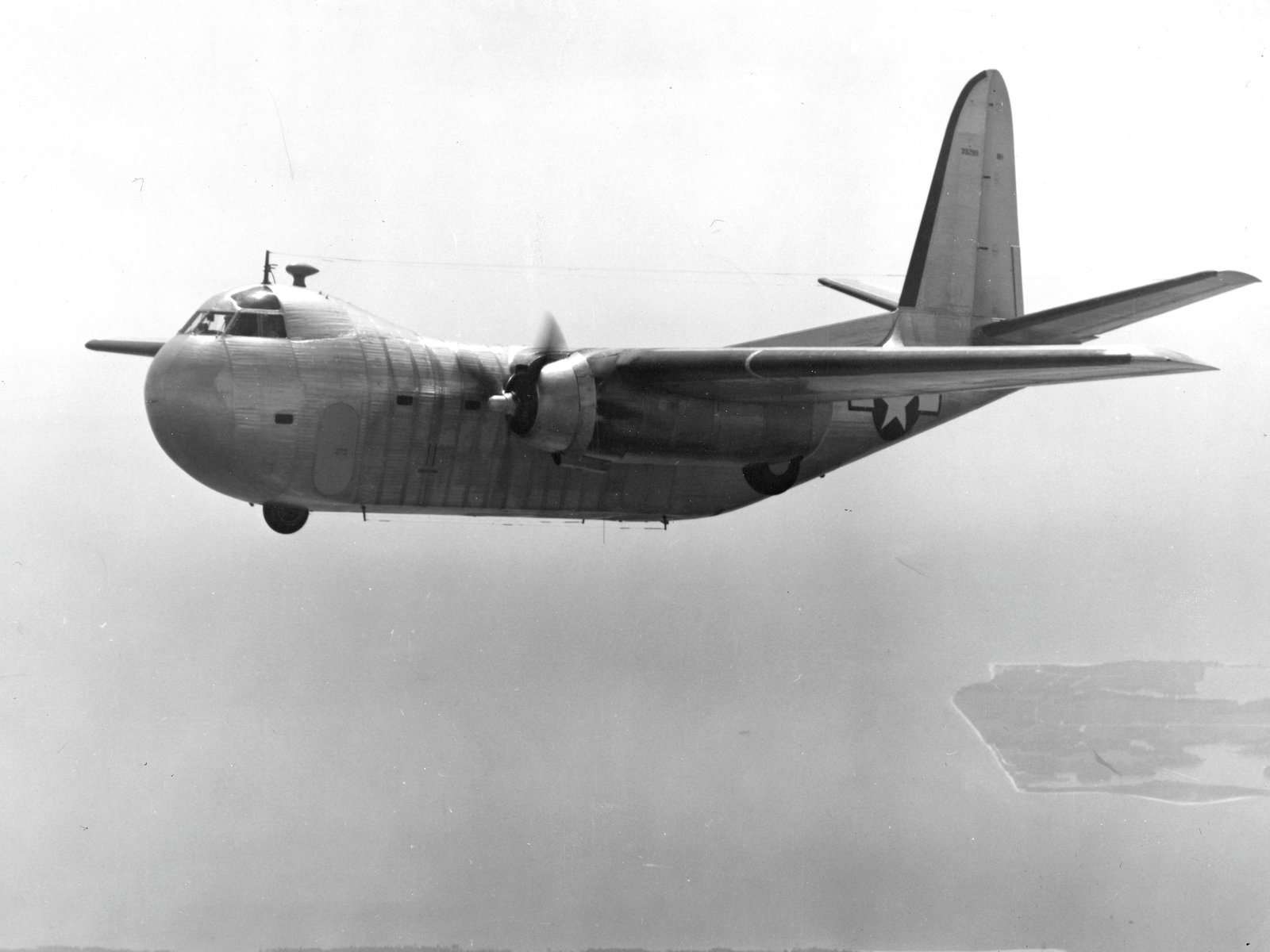
The Budd RB-1 Conestoga was developed during World War II as a solution to anticipated aluminum shortages. Designed for the U.S. Navy by the Budd Company of Philadelphia, Pennsylvania, the aircraft utilized the manufacturer's expertise in stainless-steel railroad car production. By employing a specialized "shotweld" technique, Budd created a primary structure and skin of spot-welded stainless steel rather than the conventional riveted aluminum. The prototype first flew on October 31, 1943, from the Red Lion Factory Airfield, piloted by Guy Miller.
While the U.S. Navy initially ordered 200 RB-1s and the U.S. Army Air Forces ordered 600 (designated as C-93), the anticipated material crisis did not occur. Due to rising costs and production delays, the Army order was canceled and the Navy order was reduced to 25. Ultimately, only 17 aircraft were completed in Philadelphia between 1943 and 1944. The RB-1 was powered by two Pratt & Whitney R-1830-92 "Twin Wasp" 14-cylinder radial engines, which provided between 1,050 and 1,200 hp each, driving three-bladed Hamilton Standard Hydromatic constant-speed propellers.
The Conestoga was conceptually advanced for its era, featuring a high-wing monoplane configuration with retractable tricycle landing gear. To maximize cargo space, the cockpit was elevated above the fuselage, creating a rectangular cargo bay capable of transporting 24 paratroopers, 24 stretchers and 16 seated wounded, or a maximum payload of 10,400 lb. Loading was facilitated by a low floor and a rear loading ramp with large cargo doors, allowing vehicles to be winched directly into the aircraft. Performance figures included a maximum speed of 197 mph and a range extending up to 1,620 miles in economical flight.
Despite its innovation, the RB-1 saw very limited military service. Most aircraft were delivered in 1944 and used briefly as utility transports at Naval Air Stations before being retired in early 1945. Following their disposal, many entered civilian freight service, most notably with the National Skyway Freight Corporation (later Flying Tiger Line) and Aerovías Azteca in Mexico. However, reliability issues, particularly recurrent exhaust system failures, led to their eventual retirement by 1948. Today, only one RB-1 survives (serial 39307). After years of abandonment in Arizona, it was acquired in 1972 and donated to the Pima Air & Space Museum in 1978, where it remains incomplete and awaiting restoration.