
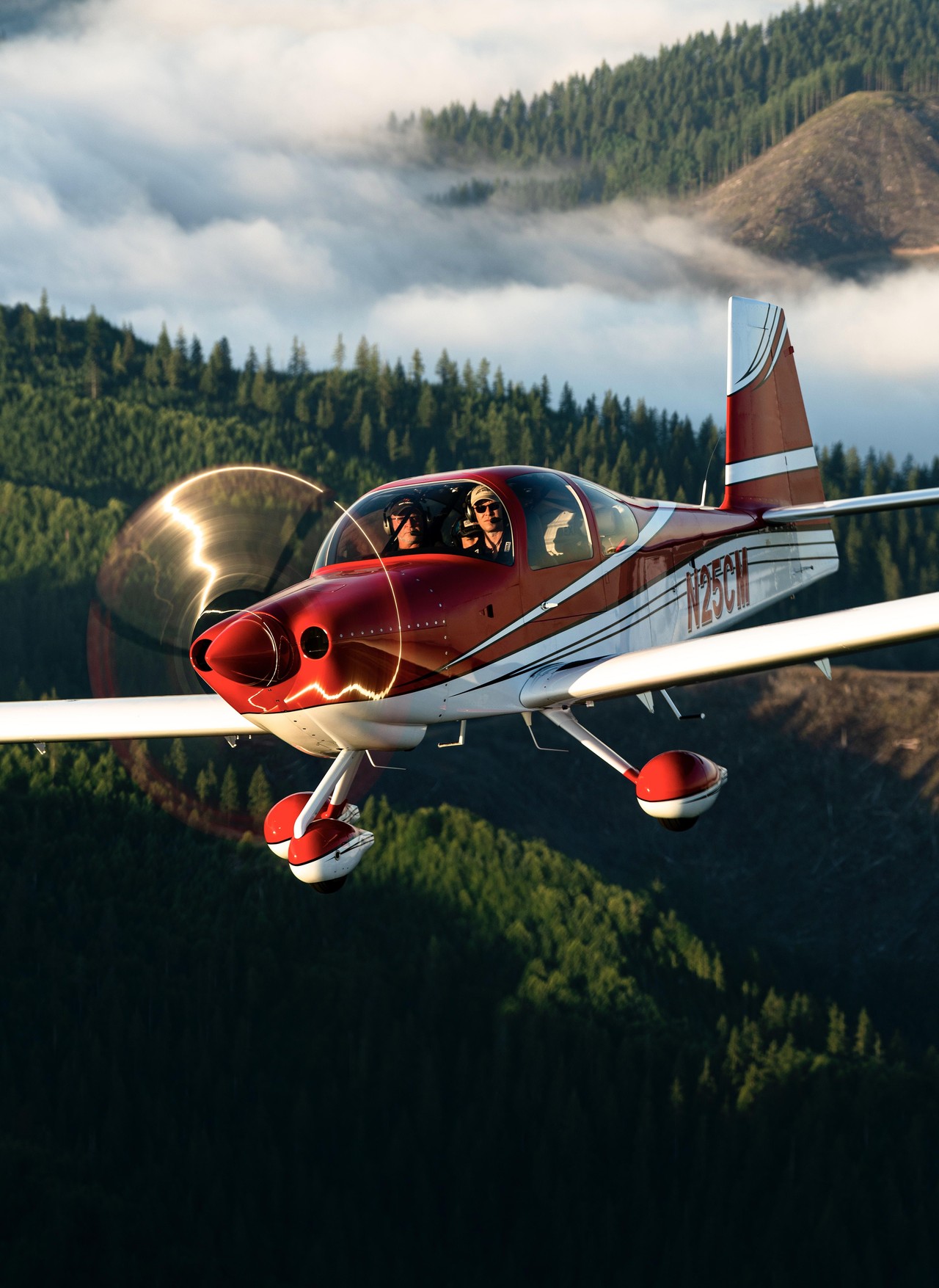
Service History
The RV-10 filled a crucial gap in the homebuilt aircraft market by providing four-seat capability at a fraction of certified aircraft costs. While a completed RV-10 costs approximately $250,000, comparable certified aircraft like the Cirrus SR22 exceed $655,000. This cost advantage has made the RV-10 popular among private owners seeking economical family touring capabilities. The aircraft operates exclusively in the experimental amateur-built category, serving private pilots rather than commercial operators.
The Manufacturer
Van's Aircraft was founded by Richard VanGrunsven in 1972, beginning with plans and parts for the single-seat RV-3. The company has grown to become the world's largest manufacturer of experimental amateur-built kit airplanes, with more than 10,700 aircraft completed, registered, and flown across the entire RV series. Based in Aurora, Oregon, Van's Aircraft continues operations under its original name with no mergers or acquisitions, maintaining its position as the dominant force in the kitplane industry.
VanGrunsven's design philosophy had focused on aerobatic capability and responsive handling through the RV-3 to RV-8 models. The RV-10 represented a deliberate departure from this approach, prioritizing stability, payload capacity, and passenger comfort over aerobatic performance to meet market demand for family aircraft.
Engine & Technical Details
The RV-10 is powered by the Lycoming IO-540, a six-cylinder, air-cooled, fuel-injected engine producing 260 horsepower. Van's initially planned multiple engine options, including the Continental IO-360ES producing 210 horsepower, but discontinued Continental support after builder surveys favored the Lycoming powerplant. The engine drives a Hartzell constant-speed propeller available in two- or three-bladed configurations.
Key innovations distinguish the RV-10 from earlier RV models. Gull-wing doors replace the hinged or sliding canopies used on previous designs, providing easier access to all four seats. Computer-assisted design enabled pre-drilled rivet holes throughout the kit, significantly reducing assembly time compared to earlier models. This technology was pioneered on the RV-7, RV-8, and RV-9 before implementation on the RV-10.
The aircraft features tricycle landing gear exclusively, with no tailwheel or retractable gear options planned. Van's designed the RV-10 with a rectangular wing and pushrod flight controls to emphasize control harmony and pilot familiarity.
Pilot Perspective
Pilots appreciate the RV-10's combination of performance and docile handling characteristics. The aircraft cruises at 197 mph at 75 percent power and 8,000 feet altitude, with a maximum speed of 211 mph. Service ceiling reaches 20,000 feet with an initial climb rate of 1,450 feet per minute. Stall speed is 63 mph, providing reasonable approach speeds for a high-performance aircraft.
The cabin measures 48 inches in width, offering generous space for four occupants. Range extends to 825 miles at 75 percent power from the 60-gallon fuel capacity. These specifications provide genuine cross-country capability comparable to certified aircraft while maintaining the cost advantages of homebuilt construction.
One documented example accumulated 949.7 flight hours in its first ten years of operation, demonstrating the aircraft's utility for regular transportation rather than occasional recreational flying.
Production & Legacy
Van's delivered the first RV-10 kit components to customers in September 2003, just four months after the prototype's maiden flight. Production continues today with 1,010 completed aircraft as of November 2022. The steady production rate reflects consistent demand for four-seat homebuilt aircraft.
A prototype equipped with a PBS TP-100 turboprop engine producing 241 horsepower completed its first flight on June 8, 2014, demonstrating the aircraft's adaptability to alternative powerplants. However, the Lycoming IO-540 remains the standard and most popular engine choice.
The RV-10's significance extends beyond its individual success to Van's Aircraft's market expansion. As the first four-seat RV design, it opened family flying to builders previously limited to two-seat configurations. The aircraft's emphasis on stability and payload over aerobatic capability represented a mature evolution of Van's design philosophy, acknowledging the broader market demand for practical transportation aircraft.
The RV-10 continues Van's tradition of providing high-performance aircraft through kit construction, maintaining the company's position as the leader in experimental amateur-built aviation. Its success validates the market for four-seat homebuilt aircraft and demonstrates that kit planes can provide genuine alternatives to certified aircraft for private owners prioritizing value and performance.