
Service History
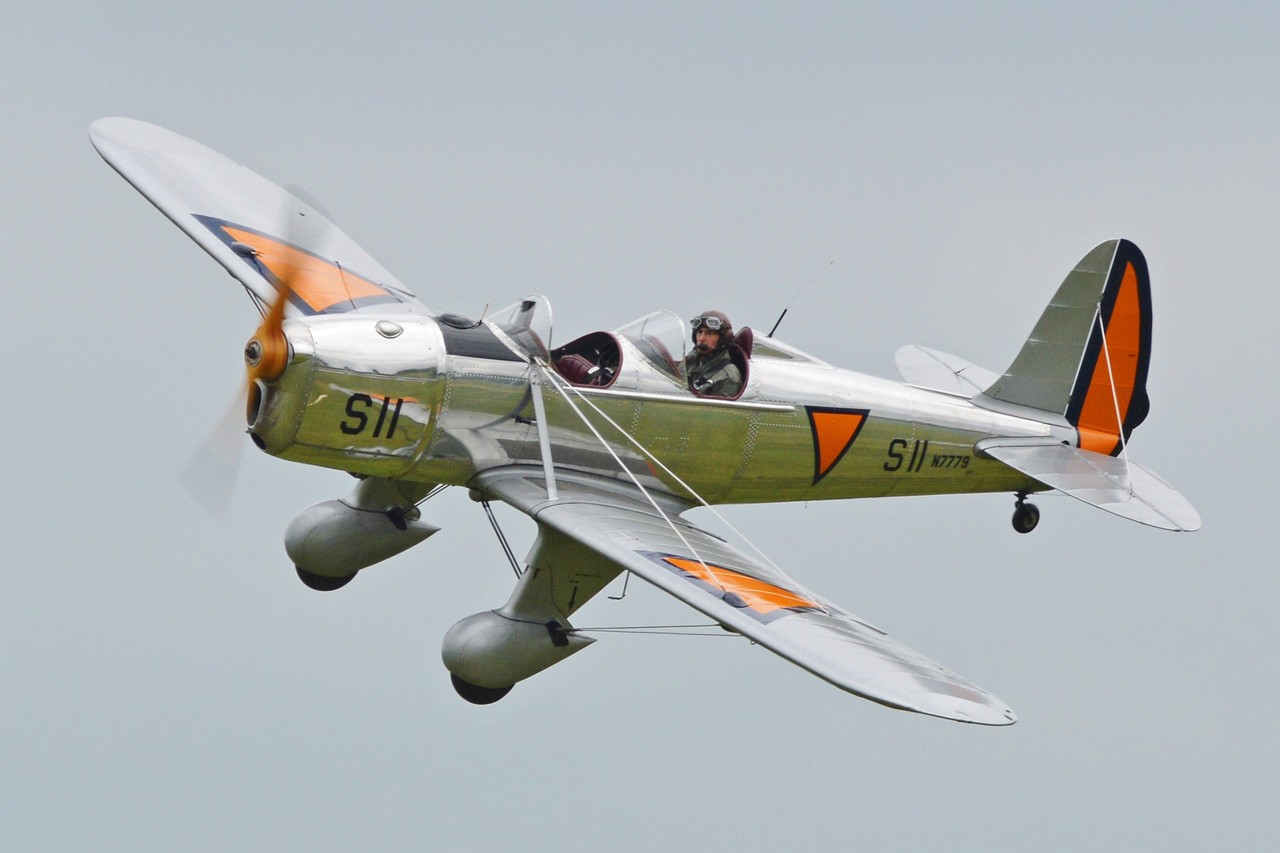
The ST-A dominated the sport training market in the mid-1930s, with Ryan's School of Aeronautics adopting the type immediately upon its introduction in 1934. Flying schools worldwide embraced the aircraft for student training from primary through advanced aerobatic maneuvers. The type's performance capabilities enabled remarkable achievements, including Tex Rankin's victory at the 1937 International Aerobatic Championship in St. Louis, Missouri, and a lightplane altitude record of 19,800 feet over Florida in 1936.
Military Adoption
International military forces quickly recognized the ST-A's potential, leading to the development of the STM variant in 1937. Guatemala purchased six STMs in 1938, equipping them with two wing-mounted Lewis guns for fighter duties with the front cockpit covered. Nationalist China acquired the STM-2P single-seat version armed with one machine gun for combat operations. Additional military operators included air forces in South Africa, Mexico, Honduras, and Bolivia.
The ST-A's military legacy extended into World War II through its derivatives. The United States Army Air Forces ordered trainer variants designated PT-16 and PT-20 in the late 1930s, which evolved into the highly successful PT-22 Recruit program. More than 1,000 ST-3KR aircraft served as primary trainers for American pilots between 1942 and 1943.
The Manufacturer
Ryan Aeronautical Company, founded by T. Claude Ryan in San Diego, California, entered aircraft manufacturing around 1925 in partnership with Frank Mahoney. The company achieved international fame in 1927 when Charles Lindbergh flew their Ryan NYP "Spirit of St. Louis" on the first solo transatlantic flight from New York to Paris. The ST series represented Ryan's first original design, beginning with five prototype ST models in 1933-1934 before the refined ST-A entered production.
During World War II, Ryan reached peak employment of 8,500 workers with annual production exceeding 55 million dollars. Post-war operations contracted to 1,200 employees and 8 million dollars annually. The company continued military contracts through the Korean War and developed innovative aircraft like the Ryan X-13 Vertijet, which achieved first flight in 1955. Teledyne acquired Ryan in 1969, and the company eventually became part of Northrop Grumman through subsequent mergers.
Engine and Technical Innovation
The ST-A's 125-horsepower Menasco C4 inverted four-cylinder air-cooled inline engine represented cutting-edge powerplant technology for its era. The inverted configuration provided superior pilot visibility compared to conventional upright engines, while delivering reliable performance for demanding aerobatic operations. Some aircraft received the more powerful 134-horsepower Menasco D4, while the 31 ST-A Specials featured supercharged 125-horsepower C4S Pirate engines.
Ryan's engineering team created an advanced structure combining a metal monocoque fuselage built from alloy rings and Alclad sheeting with wire-braced fabric-covered wings mounted on welded steel tube frameworks. This hybrid construction provided strength for aerobatic loads while maintaining relatively light weight at 1,023 pounds empty and 1,575 pounds gross.
Performance Characteristics
Pilots praised the ST-A's exceptional handling qualities and performance envelope. The aircraft achieved a maximum speed of 150 mph with a comfortable cruising speed of 127 mph and operational range of 350 miles. Its service ceiling of 17,500 feet and initial climb rate of 1,200 feet per minute made it faster and more agile than contemporary training aircraft.
The tandem open cockpit configuration provided excellent visibility for both instructor and student while maintaining communication capability essential for effective training operations. These characteristics made the ST-A ideal for progression from basic flight instruction through advanced aerobatic techniques.
Production Legacy
Ryan manufactured exactly 97 ST-A variants during the three-year production run, contributing to total ST series production of 315 aircraft before World War II. Including wartime military derivatives, the complete ST family reached 1,568 units by 1943. The aircraft sold for approximately 6,000 dollars new in 1938, representing significant value in the sport aviation market.
Museum Preservation
At least two ST-A aircraft survive in museum collections today. The EAA Aviation Museum in Oshkosh, Wisconsin, preserves N17349, a 1938 Super Sport variant assembled from Guatemalan surplus parts by Lieutenant Colonel Edward F. Ortowski and later restored by Walter Hill before donation in 2003. The San Diego Air & Space Museum maintains another example, honoring the type's California heritage and Ryan's contributions to aviation history.