
Commercial Aviation Pioneer
The S-38's impact on early commercial aviation cannot be overstated. Within eight weeks of releasing performance data, Sikorsky sold the first ten aircraft at $55,000 each, generating crucial capital for the fledgling company. Pan American Airways became the type's most significant operator, acquiring 38 examples and launching the first scheduled international passenger service on May 22, 1929. This inaugural route connected Florida to the Canal Zone, covering 2,064 miles in 56 hours with intermediate stops in Belize and Managua.
Record-Setting Operations
Charles Lindbergh piloted S-38 NC142M (construction number 214-13) on the first airmail flight from Florida to the Canal Zone via Cuba and Nicaragua in 1929, further cementing the aircraft's role in aviation history. Inter-Island Airways in Hawaii began scheduled passenger service on November 11, 1929, connecting Honolulu with Maui, Hilo, and Kauai using two S-38s. The collective fleet accumulated over 25 million miles of commercial operation, pioneering executive travel, airmail routes, and passenger services across previously inaccessible destinations.
Sikorsky Manufacturing Corporation
Igor Ivanovich Sikorsky founded the Sikorsky Manufacturing Corporation in 1923 after emigrating from Russia, establishing operations at College Point, Queens, New York. The S-38 represented his first major commercial success in America, validating his amphibious aircraft concepts. On October 3, 1928, the company reorganized as Sikorsky Aviation Corporation, shortly before United Aircraft and Transport Corporation acquired it on July 30, 1929. This acquisition provided financial stability during the crucial early production period.
Engineering Excellence
Sikorsky developed the S-38 as an evolution of his earlier S-36 amphibian, incorporating lessons learned from that earlier design. The aircraft featured a robust hull constructed from oak and ash with duralumin reinforcements, while the wings utilized fabric-covered duralumin framework. Twin tail booms supported individual fins and rudders, providing excellent directional control during water operations. The sesquiplane configuration combined the structural efficiency of a biplane with improved aerodynamic characteristics.
Powerplant Variations
Different S-38 variants employed various Pratt & Whitney radial engines. The S-38A and early S-38C models used 420-horsepower Wasp C1 engines, while the S-38B received 450-horsepower Wasp C1 or SC1 powerplants. The S-38C2 variant featured more powerful 565-horsepower Hornet engines, and the S-38BT utilized 525-horsepower T1D1 engines. These air-cooled radials provided exceptional reliability and enabled single-engine flight capabilities that surpassed contemporary designs.
Performance Characteristics
The S-38 achieved a maximum speed of 130 miles per hour and cruised at 110-112 miles per hour with a range of 750 miles. Its initial climb rate of 880 feet per minute and service ceiling of 18,000 feet provided operational flexibility across diverse geographic conditions. The aircraft could reach 7,250 feet in ten minutes, demonstrating superior performance compared to other amphibians of the era. Stall speed ranged from 52.5 to 55 miles per hour, allowing operations from confined water bodies.
Limited Military Service
Nine S-38B aircraft (construction numbers 514-2 through 514-10) served with the United States Army Air Corps beginning in 1929, primarily fulfilling transport and training roles during peacetime operations. Additional examples served with the United States Navy for similar purposes. The aircraft's military service remained limited due to its civilian design priorities and the peacetime nature of its operational period.
Modern Replicas and Legacy
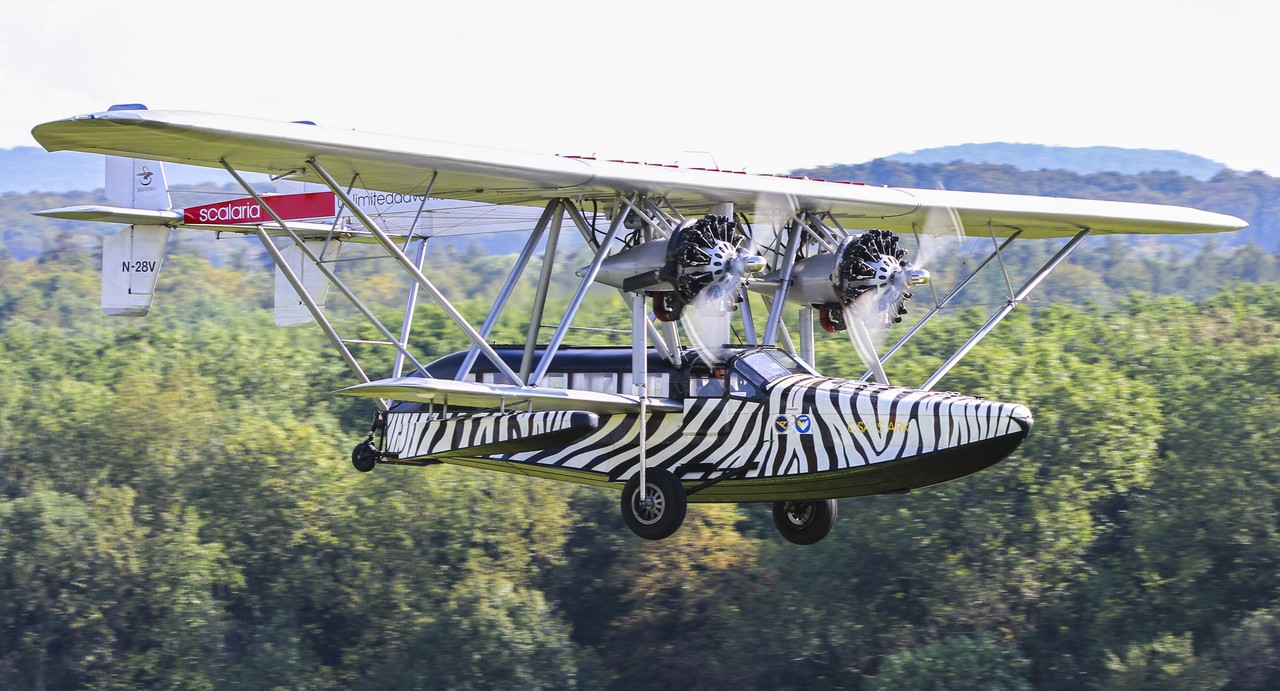
At least two S-38 replicas have been constructed to honor the type's historical significance. Born Again Restorations completed "Carnauba" (registration NC6V) in the late 1990s, powered by Wasp Junior engines and built for Johnson Wax. This replica successfully re-enacted a 1935 Wisconsin-to-Brazil flight in 1998 and now resides at the EAA Museum in Oshkosh, Wisconsin. A second replica was built to commemorate the 1933 African expedition of the original zebra-striped S-38 "Osa's Ark" (NC29V), which covered 96,558 kilometers during its historic journey.
The S-38's influence extended far beyond its production numbers, establishing Sikorsky as a major aircraft manufacturer and proving the viability of amphibious commercial operations worldwide.