
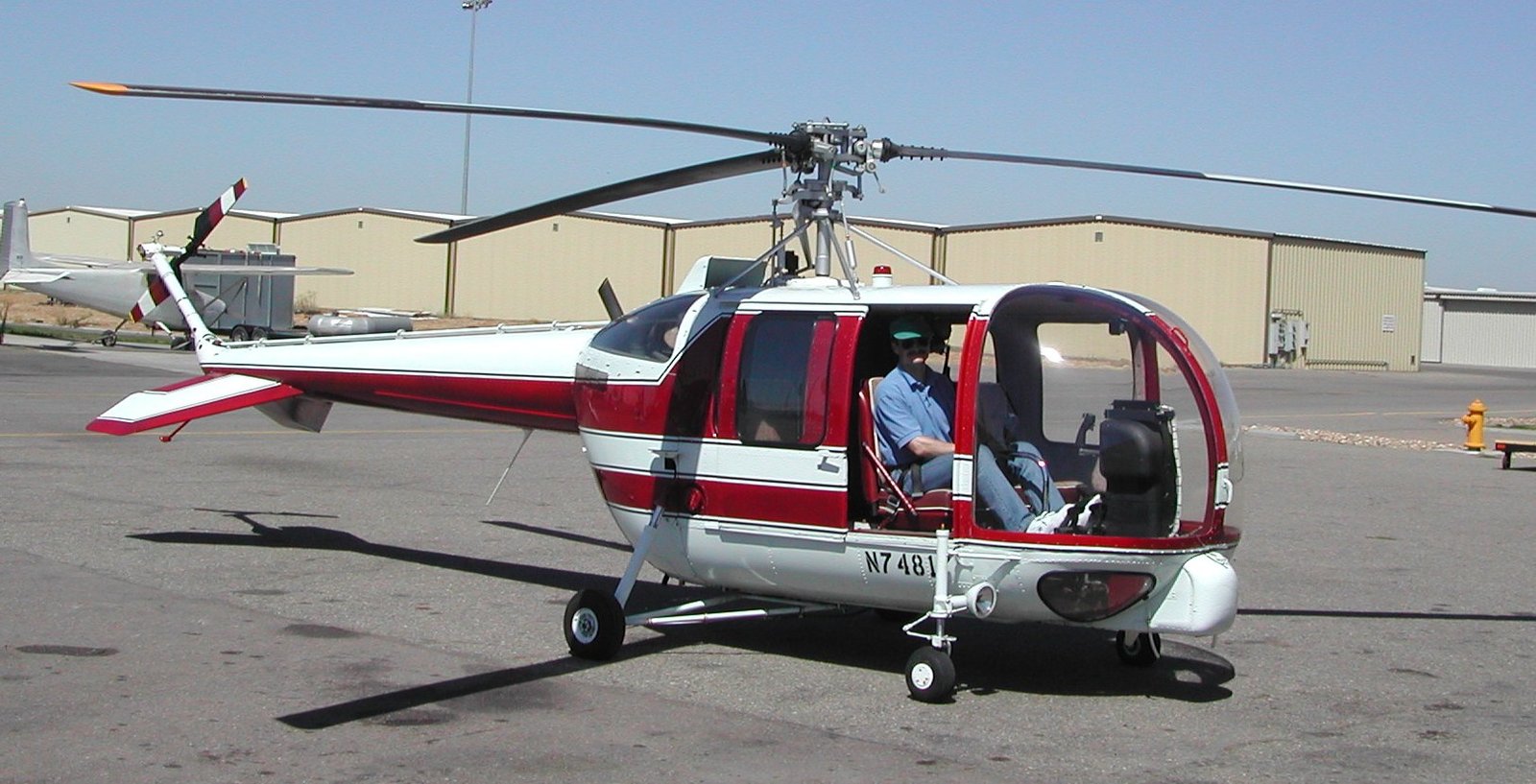
Revolutionary Design Features
The S-52 emerged from Sikorsky Aircraft Corporation's engineering team in 1947 as a technological leap forward in rotorcraft design. Igor Sikorsky's company had accumulated 50,000 helicopter flight hours by this time—representing 80 percent of the world's total helicopter experience. The aircraft introduced two groundbreaking innovations: all-metal main and tail rotor blades, replacing the fabric-covered wooden blades of earlier helicopters, and offset flapping hinges that dramatically improved maneuverability.
Development and Testing
Design authorization was released on February 15, 1946, with a $300,000 budget allocated for the project. Test pilot expertise guided the prototype S-52, registered NC92823, through its maiden flight on February 12, 1947. The aircraft earned its Civil Aeronautics Authority type certificate on February 25, 1948, validating its airworthiness for civilian operations.
The S-52 quickly demonstrated exceptional capabilities, becoming the first helicopter to successfully perform a complete 360-degree loop. The aircraft established multiple world records, including speed records over 100 kilometers, showcasing the potential of advanced helicopter design during an era when rotorcraft were still proving their viability.
Military Adoption and Variants
Military interest in the S-52 intensified with the Korean War's demands for versatile rotorcraft. The U.S. Marine Corps placed substantial orders, recognizing the helicopter's utility for battlefield support operations. The military designated the four-seat S-52-3 variant as the HO5S-1, while the U.S. Army evaluated four aircraft as the YH-18A in 1950.
The U.S. Coast Guard received eight S-52-3 aircraft in September 1952, designated HO5S-1G, but found them inadequate for search and rescue missions. The helicopters proved too slow and short-ranged for maritime operations, leading to their storage beginning in April 1954. This limitation highlighted the specialized requirements of different military branches and influenced future helicopter development.
Technical Evolution
The original prototype utilized a 178-horsepower Franklin 6V4-165-B32F air-cooled flat-six piston engine. Subsequent variants featured the more powerful 245-horsepower Franklin O-425-1 engine, positioned slightly rearward to accommodate the enlarged cabin in four-seat configurations. The S-52's semi-monocoque construction employed aluminum and magnesium extensively, creating a lightweight yet durable airframe.
The aircraft's distinctive pod-and-boom arrangement featured a large bubble-like greenhouse providing excellent visibility for pilots and passengers. The three-blade rotor system, combined with the innovative offset flapping hinges, delivered superior handling characteristics compared to contemporary helicopters. Quadricycle fixed landing gear replaced the earlier tricycle arrangement, improving ground stability.
Sikorsky Aircraft Corporation
Sikorsky Aircraft Corporation, founded by aviation pioneer Igor Sikorsky, had established itself as America's leading helicopter manufacturer by the late 1940s. The company funded the S-52's development using internal resources, building upon the success of earlier models like the R-4 and S-51. This investment in advanced helicopter technology positioned Sikorsky as the dominant force in American rotorcraft manufacturing.
The S-52 represented part of Sikorsky's extensive helicopter family during the Korean War era, which included the S-47, S-48, S-49, S-51, and S-55 models. This diverse product line established Sikorsky's reputation for innovative engineering and reliable performance across multiple military and civilian applications.
Production and Legacy
Production encompassed multiple variants through the early 1950s. Four S-52-1 aircraft were built as two-seat variants with the upgraded Franklin engine, first flying in 1948. The improved S-52-2 featured enlarged cabins for three to four occupants, while eight S-52-3 helicopters served with the Coast Guard. One Army YH-18A was later converted into the XH-39 prototype, demonstrating the design's adaptability.
The S-52's offset flapping hinge innovation became a defining characteristic of all subsequent Sikorsky helicopters, influencing rotorcraft design for decades. This technological advancement contributed significantly to helicopter controllability and maneuverability, establishing engineering principles still used in modern rotorcraft.
Preservation and Historical Significance
A 1952 Sikorsky S-52 is preserved at the Connecticut Air & Space Center, representing this pivotal period in helicopter development. The aircraft stands as a testament to the rapid advancement of rotorcraft technology during the late 1940s and early 1950s, when helicopters transitioned from experimental curiosities to practical military and civilian tools. The S-52's innovations in metallurgy and rotor design helped establish the foundation for the helicopter industry's subsequent growth and development.