
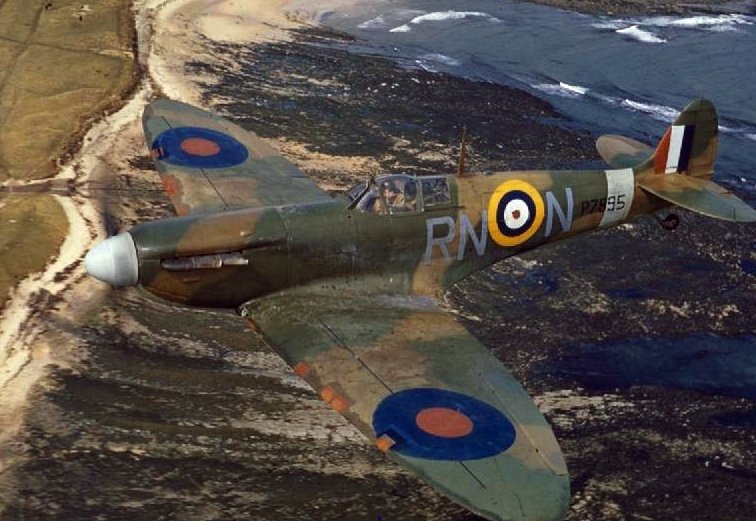
The Modern Spitfire Revival
The Spitfire Mk25 emerged from one man's obsession with Britain's most celebrated fighter aircraft. Mike O'Sullivan, an Australian pilot and homebuilder, launched the design project in 1994 with a singular mission: creating an affordable replica that would allow modern aviators to experience the romance of the legendary Spitfire. His three-year development effort culminated in the prototype's maiden flight on February 8, 1997, marking the beginning of a new chapter in Spitfire history.
Design Philosophy and Construction
O'Sullivan's team engineered the Mk25 as a three-quarter scale interpretation of the Spitfire Mk V, maintaining the fighter's distinctive elliptical wing planform and graceful proportions while adapting the design for contemporary powerplants and construction techniques. The aircraft employs a stressed-skin structure fabricated from 2024 aluminum alloy, combined with fiberglass components for fairings and air scoops. This approach delivers authentic visual appeal while incorporating modern materials and manufacturing methods accessible to homebuilders.
The retractable landing gear system operates electrically, featuring differential braking for ground handling. Fuel capacity reaches 115 liters in later production models, with wet wings providing 75 liters per wing section. These specifications reflect careful attention to both performance requirements and practical construction considerations for amateur builders.
Powerplant Evolution
The engine selection for the Mk25 underwent significant development as the program matured. Initial prototypes utilized Rotax powerplants before transitioning to more substantial alternatives better suited to the aircraft's performance envelope. Early production models incorporated eight-cylinder, 200-horsepower Jabiru engines manufactured in Australia, providing reliable operation with reasonable fuel consumption.
As customer demands evolved, Supermarine Aircraft Factory expanded engine options dramatically. The company developed installations for V6 Isuzu automotive conversions producing 260 to 320 horsepower with supercharging, and V8 General Motors conversions generating 430 horsepower. This range of powerplants allowed builders to select performance levels matching their experience and operational requirements.
From Australia to Texas
Supermarine Aircraft Factory initially operated from Australia under O'Sullivan's leadership, leveraging local expertise in both aviation and automotive engine conversions. The company's reputation grew steadily as completed aircraft demonstrated the design's capabilities and build quality. Production later relocated to Cisco, Texas, where kit manufacturing continued serving an international customer base.
The Texas operation maintained the original design philosophy while refining manufacturing processes and expanding component availability. This transition reflected the global appeal of the Spitfire replica concept and the practical advantages of North American production for serving customers worldwide.
International Operations
By early 2018, the Mk25 and its variants had achieved truly international distribution, with aircraft registered across multiple continents. New Zealand alone recorded five examples on its civil register, including one imported from the United Kingdom. Aircraft G-CENI became ZK-EFY after importation, demonstrating the global movement of these replicas among enthusiast communities.
Australian registrations include aircraft certified through both the Civil Aircraft Register and Recreational Aviation Australia, reflecting the design's acceptance across different regulatory frameworks. This widespread adoption validates the engineering approach and construction quality that O'Sullivan's team established.
Design Evolution
The Mk25 served as foundation for subsequent developments, including the Mk26 and Mk26B variants that addressed operational experience and customer feedback. The Mk26B represented a significant advancement, scaling up to 90 percent of original Spitfire dimensions while incorporating lessons learned from earlier models. This evolution demonstrates the continuing vitality of the replica Spitfire concept.
The first Mk26B received its Permit to Fly during summer 2016 after extensive testing that commenced in October 2014. This careful development process reflects the manufacturer's commitment to safety and performance standards matching contemporary expectations for amateur-built aircraft.
Legacy and Impact
With over 92 replica Spitfires sold worldwide across all variants, the Supermarine Aircraft Factory program represents one of the most successful warbird replica efforts in modern aviation. The Mk25 pioneered this achievement, proving that careful engineering and reasonable pricing could create sustainable demand for high-quality fighter replicas.
The program's success stems from capturing the original Spitfire's aesthetic appeal while delivering practical flying characteristics suited to contemporary pilots. Unlike static museum displays or expensive original aircraft, these replicas provide accessible pathways for experiencing aviation's golden age firsthand. O'Sullivan's vision of sharing "the nostalgia of this aviation icon" has achieved remarkable success, ensuring that future generations can experience the thrill of Spitfire flight.