
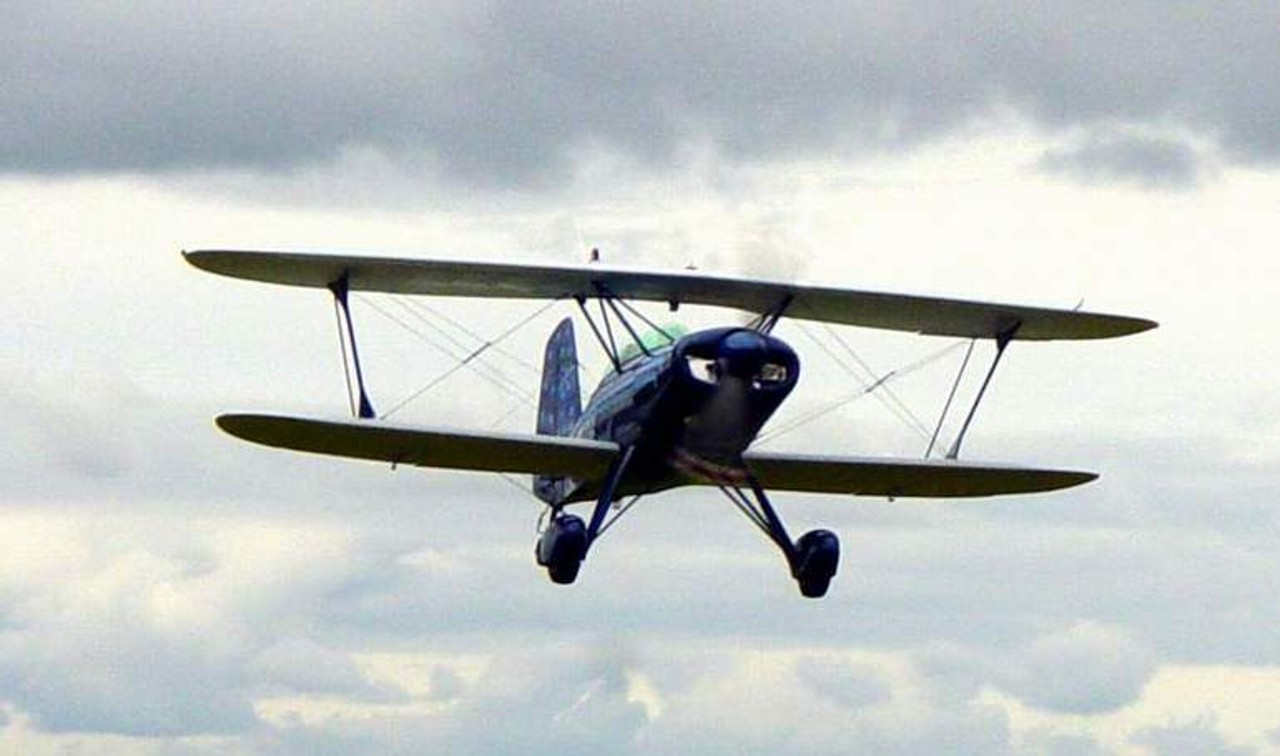
Design Philosophy and Development
The Super Starduster emerged from the collaborative efforts of Louis A. Stolp and George M. Adams, who recognized the growing demand for high-performance aerobatic aircraft in the homebuilt community. Unlike the original SA-100 Starduster, which was designed primarily for sport flying rather than aggressive aerobatics, the SA-101 was engineered from the outset as part of what the designers called "a new series of special aerobatic aircraft for unlimited aerobatic competition."
The design philosophy centered on extracting maximum performance from the proven Starduster configuration while maintaining the buildability that made homebuilt aircraft accessible to amateur constructors. The engineers incorporated the longer wing panels from the successful SA-300 Starduster Too, featuring a symmetric M6 airfoil section with zero dihedral—a configuration optimized for precise aerobatic maneuvers rather than inherent stability.
Technical Specifications and Performance
Powering the SA-101 was the robust Lycoming IO-360-A1A engine, a four-cylinder horizontally opposed powerplant producing 180 horsepower. This represented a significant 44 percent increase over the original SA-100's 125-horsepower Lycoming O-290-D-1, translating directly into enhanced vertical performance and energy retention during complex aerobatic sequences.
The increased power enabled the Super Starduster to achieve maximum speeds exceeding 170 mph, making it competitive with factory-built aerobatic aircraft of its era. The symmetric airfoil selection proved crucial for aerobatic performance, providing identical lift characteristics whether the aircraft was flying upright or inverted—a fundamental requirement for unlimited competition aerobatics.
Manufacturing and Corporate History
STOLP Aircraft, originally known as Stolp-Adams with the "SA" designation honoring both founding partners, underwent several ownership transitions during its operational years. The company experienced its first major change in 1972 when Jim and Hanako Osborne acquired the enterprise, followed by another transition in 1981 when William Clouse assumed control.
These ownership changes occurred during a period when the original SA-100 Starduster plans were discontinued in 1972, suggesting the Super Starduster represented an attempt to maintain market presence with a more specialized, performance-oriented design. Aircraft Spruce & Specialty Co. eventually became involved in supplying plans and components, helping to sustain the Starduster lineage.
Production Reality and Market Reception
The SA-101 Super Starduster's production numbers reveal the challenging economics of specialized homebuilt aircraft. While FAA records indicate one SA-101 achieved registration, the comprehensive Starduster register documents three SA-101 aircraft either completed or under construction—representing one of the smallest production runs in the entire Starduster family.
This limited production likely reflected several factors: the specialized nature of unlimited aerobatic competition, the increased complexity and cost associated with the larger engine and enhanced structure, and the relatively small market for single-seat aerobatic aircraft among homebuilders who often prioritized versatility over specialization.
Legacy and Current Status
The Super Starduster's legacy extends beyond its minimal production numbers, representing the natural evolution of one of general aviation's most successful homebuilt designs. The SA-101 demonstrated that amateur builders could construct aircraft capable of competing at the highest levels of aerobatic competition, challenging the dominance of factory-built specialized aerobatic aircraft.
Today, the extreme rarity of the Super Starduster makes each surviving example significant to aviation historians and enthusiasts. The three-aircraft production run ensures that encountering an SA-101 remains an exceptional experience, even within the specialized community of vintage aerobatic aircraft.
The technical innovations incorporated into the Super Starduster—particularly the integration of the SA-300's wing design with increased power—influenced subsequent homebuilt aerobatic designs. The symmetric airfoil selection and structural enhancements required for unlimited competition became standard considerations for serious aerobatic homebuilts that followed.
Engineering Achievement
Despite its limited numbers, the SA-101 Super Starduster represented a significant engineering achievement in the homebuilt aircraft sector. The successful integration of 180 horsepower into the Starduster airframe required careful attention to structural loads, center of gravity limits, and control authority—challenges that the Stolp-Adams team resolved while maintaining the construction simplicity that defined the Starduster series.
The aircraft's ability to exceed 170 mph while retaining the docile ground handling characteristics of its predecessors demonstrated sophisticated engineering judgment, balancing performance enhancement with practical operation requirements that would be encountered by amateur pilots.