
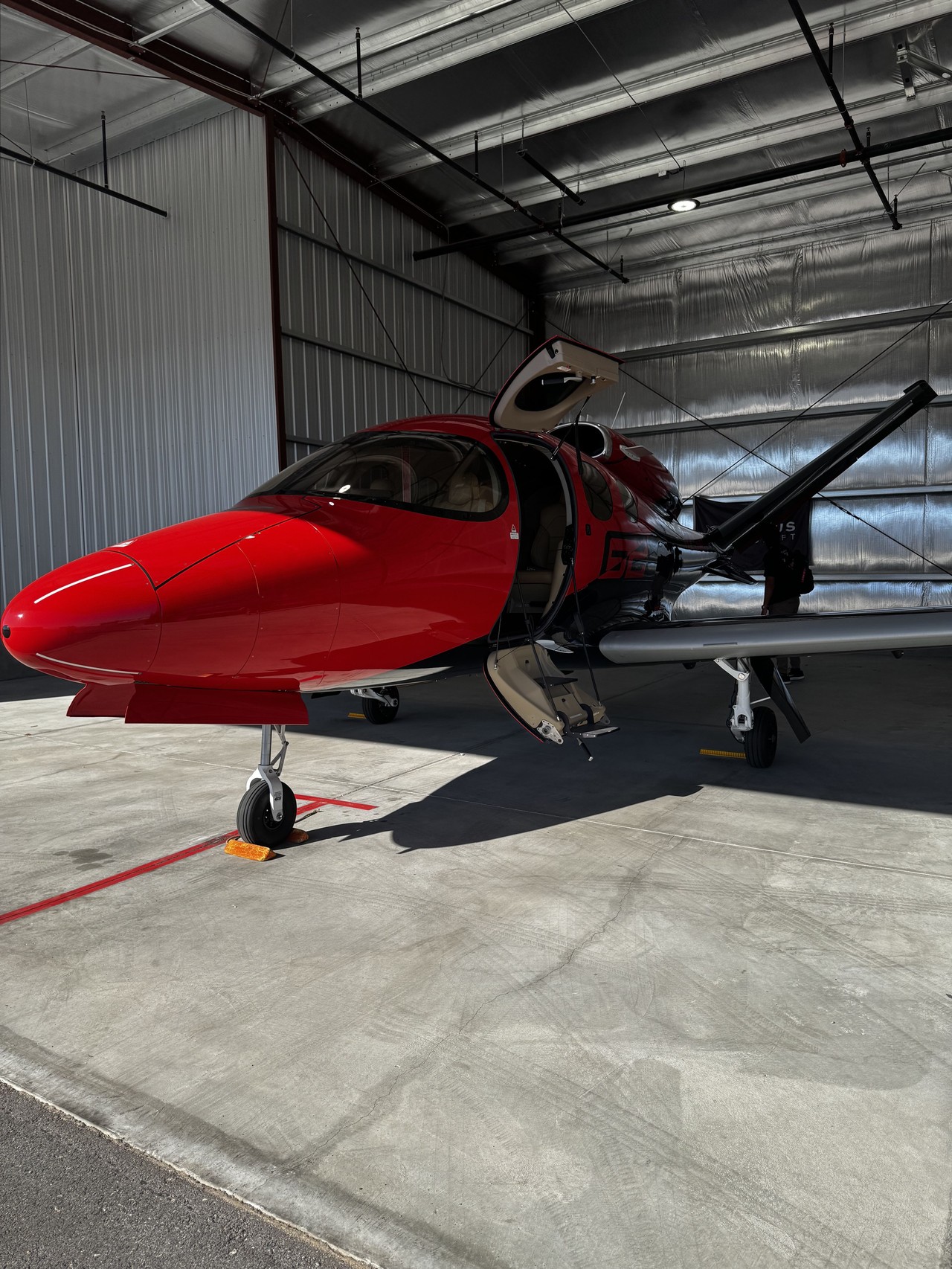
Breaking the Single-Engine Jet Barrier
The SF-50 Vision Jet emerged from an ambitious goal set by Cirrus Aircraft founders Alan and Dale Klapmeier to create an affordable "personal jet" that would democratize jet ownership. Originally projected to cost just $1 million, the aircraft aimed to be the slowest, lowest-flying, and least expensive jet in its category, making jet travel accessible to a broader range of pilots and operators.
Development began with the prototype unveiling on June 26, 2008, followed by the maiden flight on July 3, 2008. However, the program faced significant challenges during the 2007-2009 Global Financial Crisis, which strained Cirrus financially and threatened the project's continuation. The program was revived after China Aviation Industry General Aircraft (CAIGA), a subsidiary of the Aviation Industry Corporation of China, acquired Cirrus in 2011, providing the necessary funding to complete development.
Technical Innovation and Certification
The SF-50 incorporated several groundbreaking design elements that distinguished it from conventional jets. Its V-tail configuration, carbon fiber construction, and pointed nose with enlarged belly section represented significant departures from traditional business jet design. Most notably, the aircraft became the first jet to feature the Cirrus Airframe Parachute System (CAPS) as standard equipment, extending the whole-aircraft parachute concept that had already saved 87 lives across the Cirrus fleet of piston aircraft.
The certification process involved three conforming prototypes, with the first flying on March 24, 2014, the second in November 2014, and the third on December 20, 2014. The Williams FJ33-5A turbofan engine received FAA approval on June 6, 2016, followed by the first production aircraft's flight on May 5, 2016. The SF-50 achieved FAA type certification on October 28, 2016, marking a historic milestone as the first certified single-engine civilian jet.
Market Success and Production
Deliveries commenced on December 19, 2016, with the aircraft quickly establishing itself in the very light jet market. By July 2016, Cirrus had accumulated over 600 orders, building on a foundation of 550 pre-orders from 2014. The production ramp-up at the dedicated $10 million factory in Duluth, Minnesota—supported by $6 million from the City of Duluth and $4 million from Minnesota state—proved successful.
Production numbers tell the story of the SF-50's market acceptance: 88 aircraft delivered by the end of 2018, including 63 in that year alone, followed by over 80 deliveries in 2019. By December 2022, total deliveries reached 418 units, with the aircraft becoming the world's best-selling business jet annually since 2018. Cirrus maintained production plans for 100 units annually as of 2020, with order backlogs remaining strong at 540 by the end of 2018.
Global Market Penetration
Initially, the SF-50 found its strongest market in the United States, with 85% of deliveries going to U.S. customers as of October 2019. However, international acceptance grew steadily, with the U.S. share adjusting to 75% by 2020 as European sales expanded to capture 15% of the market. This global expansion reflected the aircraft's appeal beyond its original target market.
Operational Characteristics
The SF-50 accommodates one pilot plus four to six passengers in a cabin designed with panoramic windows that enhance the flying experience. The aircraft serves primarily private owners and business users seeking regional business jet capabilities without the complexity and operating costs associated with twin-engine jets. Its role as a "personal jet" has transformed how individuals and small businesses approach jet ownership.
Manufacturing Legacy
Cirrus Aircraft, originally founded in 1984 by brothers Alan and Dale Klapmeier as Cirrus Design Corporation, built its reputation on innovative general aviation aircraft. The company initially produced the VK-30 kit plane before developing successful piston singles like the SR20 (first flight 1994) and SR22. Under CAIGA ownership since 2011, Cirrus continues operating as Cirrus Aircraft, maintaining U.S. production while serving global markets.
Dale Klapmeier served as CEO through the SF-50's development and initial production success before announcing his departure in the first half of 2019. The aircraft represents the culmination of Cirrus's evolution from a startup kit plane manufacturer to a major player in both piston and jet aircraft markets.
Current Status and Impact
With over 418 aircraft delivered by 2022 and production continuing, the SF-50 Vision Jet has established a new category in personal aviation. The aircraft's significance extends beyond mere production numbers—it proved that single-engine jets could meet certification standards while providing practical utility for personal and business transportation. Later innovations like the Safe Return Emergency Autoland system further enhanced the aircraft's safety profile, building on Cirrus's reputation for pilot-protective technologies.