
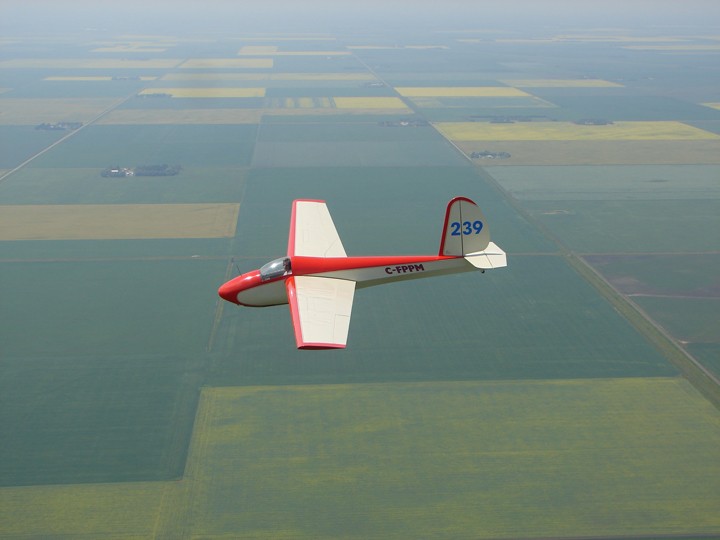
Design Revolution
The SGS 1-26 emerged from a clear vision by Ernest "Ernie" Schweizer to democratize soaring flight. Following disappointing sales of earlier models—only two expensive SGS 1-21s at $3,500 each and 25 SGS 1-23s—Schweizer recognized that affordability was key to expanding the sport. The 1-26 kit concept targeted homebuilders who could complete assembly in under a year for just $1,465 basic or $2,150 complete, dramatically undercutting existing sailplane prices.
Paul Schweizer piloted the prototype's maiden flight on January 16, 1954, launching what would become the longest production run of any American sailplane. The design prioritized ruggedness over pure performance, featuring a robust structure capable of withstanding small-field operations and trailer transport that could be completed in under 30 minutes.
Production Success
Schweizer Aircraft Corporation manufactured exactly 700 SGS 1-26s between 1954 and 1979 at their Elmira, New York facility, including 200 kit versions across six variants. The 1-26A introduced kit construction, while the 1-26B featured all-metal wings and optional swept tail surfaces that added 25 pounds but improved handling. The final evolution, the 1-26E, incorporated a complete all-metal monocoque fuselage and wings, with 210 of these advanced variants built among the 700 total.
The last aircraft, SGS 1-26E serial number 700, rolled out in 1979 and was later donated to the National Soaring Museum in Elmira by C. Robert von Hellens, where it remains on display as a testament to the type's enduring legacy.
The Schweizer Legacy
The Schweizer brothers—Ernest, Paul, and William—founded their company after building their first glider in 1930, formally incorporating Schweizer Aircraft Corporation in 1939. Their post-World War II focus on training sailplanes proved prescient, as the 1-26's success demonstrated the market demand for affordable soaring aircraft. By December 1999, Schweizer had produced over 2,160 sailplanes total before transitioning away from glider manufacturing to focus on aerospace contracting work.
The company's engineering philosophy emphasized practical utility over pure performance, creating aircraft that ordinary pilots could fly safely while still providing genuine soaring capability. This approach distinguished Schweizer from European manufacturers who typically prioritized maximum performance at higher costs.
Performance and Handling
The SGS 1-26E delivered respectable performance figures: a maximum speed of 182 kilometers per hour (113 mph), minimum sink rate of 29 feet per minute at 40 mph, and a best glide ratio of 23:1 at 44 mph. With an empty weight of 348-445 pounds depending on variant and maximum gross weight of 575-700 pounds, the aircraft accommodated pilots up to 225 pounds.
Pilots praised the 1-26 for its forgiving handling characteristics and structural durability. The 40-foot wingspan and 160 square feet of wing area provided adequate lift generation for thermal soaring, while the aircraft's robust construction tolerated the inevitable hard landings that novice glider pilots occasionally delivered.
Competitive Impact
The 1-26 sparked the one-design soaring movement in America, with standardized aircraft enabling fair competition based purely on pilot skill rather than equipment advantages. The 1-26 Association formed to organize championships, creating a competitive framework that attracted hundreds of participants annually. This one-design concept proved so successful that it influenced sailplane competition worldwide.
Notable achievements included Jim Hard's remarkable 413-mile cross-country flight from Minnesota to Indiana in 1990, demonstrating that even modest-performance sailplanes could accomplish significant soaring feats in skilled hands. Such flights inspired countless pilots and proved the 1-26's genuine cross-country capability.
Military and Training Use
The United States Air Force Academy adopted SGS 1-26s for their soaring club operations beginning in the 1960s, using the type to introduce future military pilots to unpowered flight principles. This institutional endorsement validated the aircraft's training suitability and contributed to its reputation for safety and reliability.
While never seeing combat service, the 1-26's role in training military aviators provided valuable experience in energy management, weather awareness, and precise aircraft control—skills directly applicable to powered military aircraft operations.
Current Status
More than 100 SGS 1-26s remain airworthy today, testament to the type's robust construction and continued enthusiasm among owners. The 1-26 Association maintains active competition schedules, ensuring the aircraft's sporting legacy continues decades after production ceased. Many examples serve as primary trainers at soaring clubs nationwide, introducing new generations to the sport their designers helped democratize.
The SGS 1-26's influence extended far beyond its production numbers, fundamentally changing American soaring from an elite pursuit to an accessible recreational activity that thousands could afford to enjoy.