
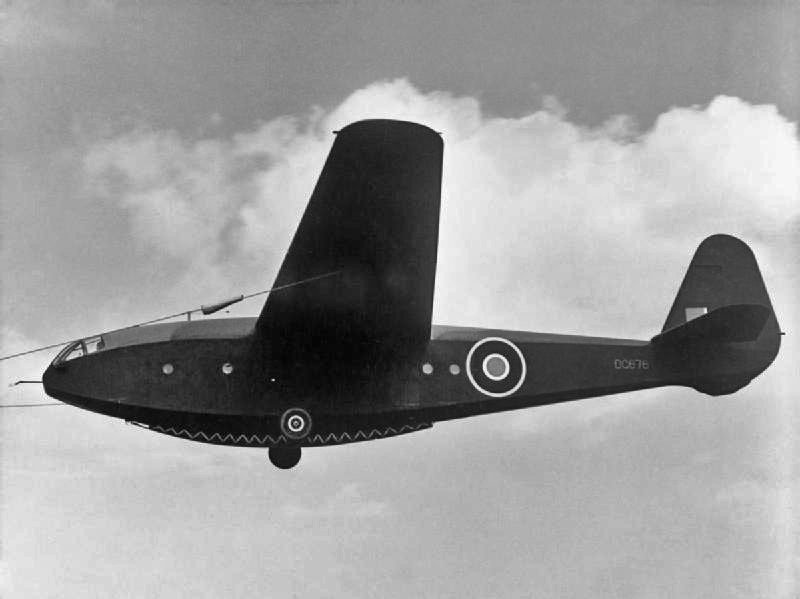
The Slingsby T.18 Hengist was a specialized troop-carrying assault glider developed in the United Kingdom during the Second World War. Designed to transport up to 15 occupants, including pilots and soldiers, the aircraft was intended to deliver troops into combat zones via airborne operations. While the Hengist reached flying status, it never entered mass production or operational service, as it was quickly eclipsed by larger, more capable designs such as the General Aircraft Hamilcar and the Airspeed Horsa.
The aircraft was produced by Slingsby Sailplanes Ltd (later known as Slingsby Aircraft or Slingsby Aviation), a company founded in 1931 by Frederick Nicholas Slingsby. F. N. Slingsby had previously established the Scarborough Gliding Club in 1930 and had spent the 1930s building wooden gliders for various British clubs. During the war, civil gliding was banned in Britain, which shifted the company's focus toward military contracts. In addition to the Hengist project, Slingsby manufactured components for other aircraft and later produced a significant number of training gliders for the Air Training Corps (ATC).
Technically, the Hengist was an unpowered glider and therefore lacked any propulsion engine. Its most distinctive design feature was the implementation of a rubber landing bag. This inflatable cushioning structure was located under the fuselage to absorb the impact of landing, serving as an alternative to conventional landing gear. This experimental approach to shock absorption was a unique characteristic among British wartime gliders.
Despite its innovative landing system, the Hengist remained a niche project. There is no evidence that the aircraft saw combat or was deployed in any formal military campaign. Following the war, the aircraft did not transition into civil or commercial use, unlike many of Slingsby's smaller glider models. Today, the company continues to operate as Slingsby Advanced Composites / Slingsby Aviation, focusing on high-performance composite structures and powered aircraft, such as the T-67 Firefly trainer. No known examples of the Hengist survive in museums or private collections, leaving period photographs as the primary visual record of the type.