
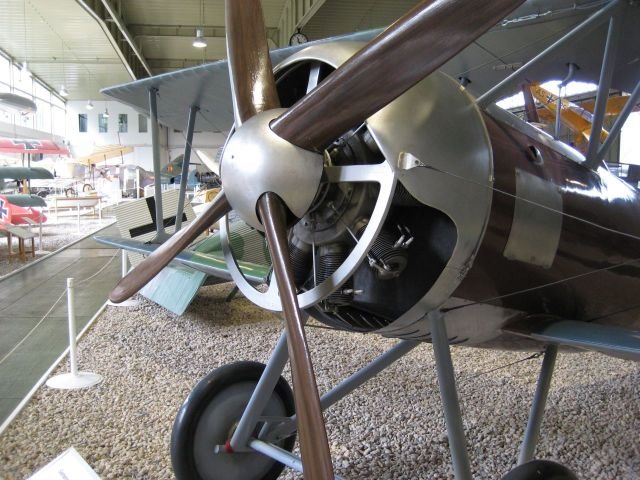
The Siemens-Schuckert D.I was a fighter aircraft developed in Germany during the First World War. The aircraft was manufactured by Siemens-Schuckert Werke GmbH, representing the company's early foray into the production of combat aircraft for the German air service. While the broader lineage of Siemens-Schuckert fighters would eventually become known for exceptional altitude capabilities and climb performance, these specific traits are associated with later models such as the D.III and D.IV, rather than the D.I.
Production of the D.I began in November 1916. The aircraft was intended for service with the Luftstreitkräfte, the official air arm of the German Empire. On 25 November 1916, a formal order for 150 aircraft was placed to equip the air service. However, the production program was not completed as originally planned. On 21 March 1917, the order was cancelled, which significantly limited the number of airframes that reached completion. According to available records, only 95 aircraft were produced before the program ended.
Technical details regarding the D.I remain sparse in the historical record. Specific data concerning the aircraft's designer, the date of its first flight, and its exact engine specifications—including the manufacturer and horsepower—are not confirmed in the available documentation. Similarly, the specific manufacturing plant or city where the D.I was assembled is not identified in the source material.
In terms of operational history, the D.I served as a fighter for the Luftstreitkräfte, though detailed unit histories or accounts of specific pilots who flew the type are not documented. There is no record of the aircraft being utilized in any civil or commercial capacity. Today, the legacy of the Siemens-Schuckert D.I is defined by its role as a developmental precursor to later fighter types. There are no confirmed surviving examples of the D.I in existence, nor are there any known museum exhibits of the aircraft.