
Design Philosophy and Innovation
Fabio Russo conceived the FR-01 as a revolutionary approach to aerobatic aviation, targeting pilots who desired serious acrobatic capability without the prohibitive costs typically associated with high-performance aerobatic aircraft. The design philosophy centered on creating a machine that could comply with Fédération Aéronautique Internationale microlight regulations while delivering genuine aerobatic performance comparable to much larger and more expensive aircraft.
The aircraft's engineering reflected this ambitious goal through its impressive power-to-weight ratio. With an empty weight of just 628 pounds and 130 horsepower available, the FR-01 achieved a power loading that enabled spirited aerobatic sequences including sustained inverted flight, thanks to its specialized inverted fuel and oil systems.
Manufacturing and Production History
Dallair Aeronautica launched production in 2011 at their Naples facility, operated by Pasquale d'Alessandro. This factory had established credentials in aviation manufacturing, having previously produced airframes for major agricultural aircraft builders, providing the industrial expertise necessary for the FR-01's specialized construction requirements.
The manufacturing process combined traditional and modern techniques. The fuselage utilized welded 4130 steel tubing construction covered with carbon fiber panels, while the wings employed conventional all-aluminum construction. This hybrid approach balanced structural strength requirements for aerobatic loads with weight considerations crucial for the light-sport category.
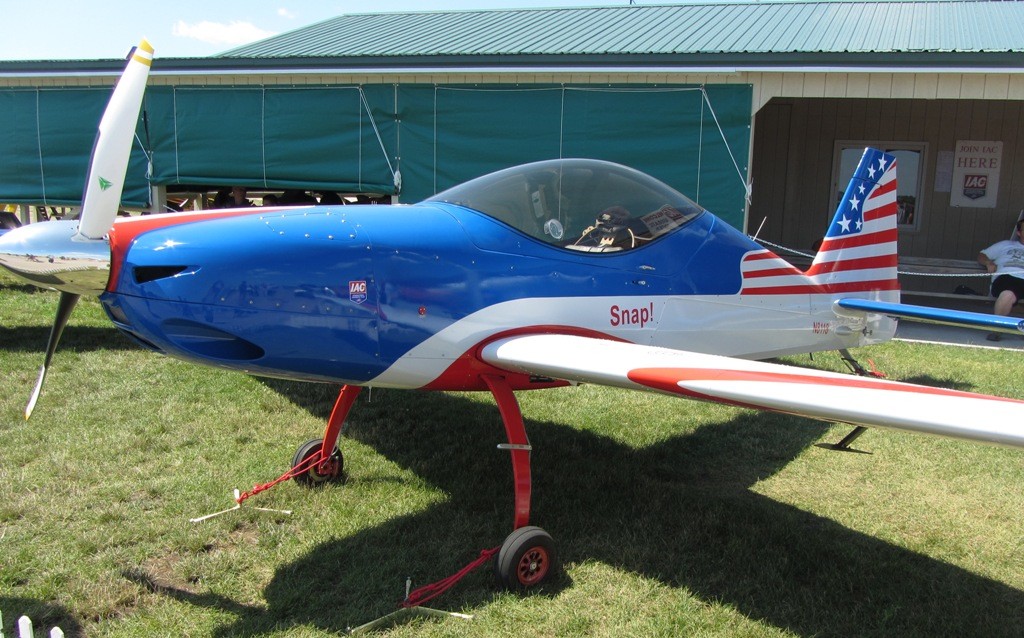
Production continued at Dallair until 2013, when Tecnam of Casoria assumed manufacturing responsibilities. Tecnam, a more established manufacturer in the light aircraft sector, introduced their version as the Tecnam Snap at the AERO Friedrichshafen show in 2013, ensuring the design's continued availability in the marketplace.
Engine and Performance Specifications
The heart of the FR-01's performance lay in its powerplant: a Rotax 912 four-cylinder engine modified by EPA Power to produce 130 horsepower instead of the standard 100 horsepower output. This modification involved either the 912ULS or 912iS variants, both manufactured by the Austrian company Rotax, representing a 30 percent power increase over stock configuration.
This enhanced powerplant enabled impressive performance figures for the light-sport category. Maximum speed reached 180 mph with a stall speed of just 58 mph, providing a wide flight envelope suitable for both aerobatic sequences and conventional flight operations. The aircraft's service ceiling and 40-liter fuel capacity supported extended aerobatic training sessions.
The structural engineering matched the engine's capabilities with certification for +6g positive and -3g negative load factors. These specifications placed the FR-01 in legitimate aerobatic aircraft territory, far exceeding typical light-sport aircraft limitations and enabling pilots to perform serious competition-level maneuvers.
Certification and Market Positioning
The FR-01's certification strategy targeted multiple markets simultaneously. In European markets, the aircraft complied with microlight regulations, while American certification pathways included Experimental-Exhibition, Special Light-Sport Aircraft (S-LSA), or Experimental LSA categories. This flexibility provided potential customers with various regulatory options depending on their intended use and local requirements.
Despite these certification pathways, market penetration in the United States proved challenging. As of March 2017, no FR-01 examples appeared on the Federal Aviation Administration's registry, and the design had not achieved approval on the FAA's special light-sport aircraft list. This regulatory situation likely limited the aircraft's commercial success in what represented a significant potential market.
Technical Features and Flying Characteristics
The FR-01's configuration incorporated several features specifically designed for aerobatic flight. The bubble canopy provided excellent visibility during aerobatic maneuvers, while the conventional landing gear arrangement with tailwheel configuration offered ground handling characteristics familiar to aerobatic pilots. Ailerons equipped with spades enhanced roll response, critical for crisp aerobatic performance.
The aircraft's compact dimensions contributed to its aerobatic agility. With a wingspan of 23.6 feet and wing area of 89.3 square feet, the FR-01 possessed the responsiveness essential for precision aerobatics while maintaining manageable ground handling characteristics.
Legacy and Continued Development
While Dallair Aeronautica's production run proved relatively brief, the FR-01 concept demonstrated the viability of high-performance aerobatics in the light-sport category. Tecnam's continuation of the design as the Tecnam Snap validated Russo's original engineering approach and ensured the concept's survival beyond the original manufacturer.
The FR-01 represented an important milestone in democratizing aerobatic flight, proving that serious aerobatic capability could be achieved within light-sport aircraft regulations and cost structures. This pioneering approach influenced subsequent developments in the light aerobatic aircraft sector, establishing a template for combining performance with affordability that continues to influence contemporary designs.