
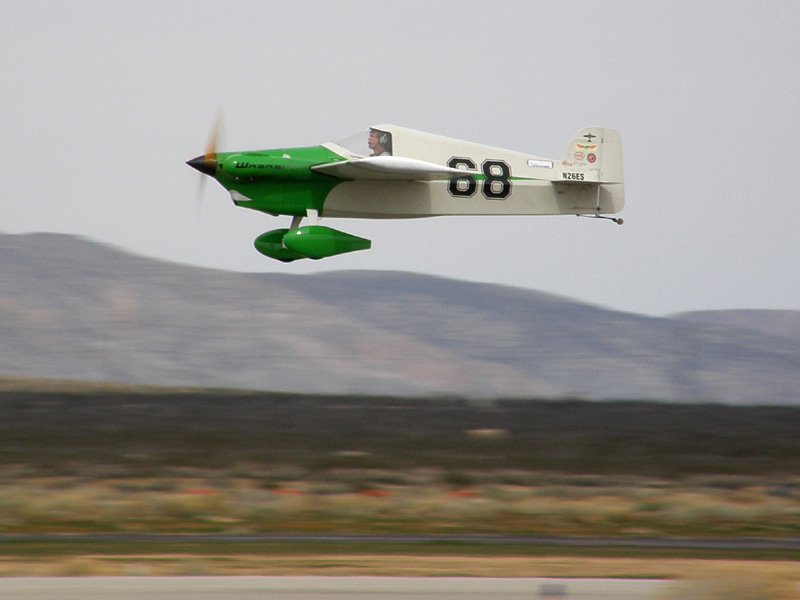
Racing Heritage and Championship Success
The SR-1 Snoshoo has established itself as the dominant force in contemporary Formula 1 air racing, with Justin Meader's aircraft "Limitless" claiming the reigning F1 championship. This success validates the design's modern interpretation of classic racing fundamentals, proving that the combination of proven aerodynamic principles with contemporary materials can produce championship-winning performance. Despite the design existing for decades, no first-generation SR-1 actually competed in racing until 2018, making its rapid rise to championship status even more remarkable.
Design Evolution and Development
Ray Cote, Ken Stockbarger, and Paul White conceived the SR-1 as an improved successor to the famous Shoestring racer that had dominated Formula 1 racing from 1949 through the 1980s. The name "Snoshoo" cleverly references its heritage, standing for "iS NO SHOestring," while incorporating modern aerodynamic thinking into the proven basics of its predecessor. Cote's team completed the initial prototype's spar, ribs, and fuselage weldment before selling the project to A.J. Smith and Alan Van Meter in 1982, who refined the design and established the production system.
The design philosophy deliberately retained welded 4130 steel tubing for the fuselage structure rather than adopting full composite construction. This decision prioritized crashworthiness, repairability, and cost-effectiveness over marginal weight savings, recognizing that within Formula 1's restrictive dimensions, the weight difference between steel and composite construction remains minimal while steel offers superior practical advantages for amateur builders and racers.
Construction and Technical Innovation
The SR-1 employs a hybrid construction approach that combines traditional materials with modern techniques. The fuselage uses conventional welded steel tubing from the firewall aft, while the engine compartment features a molded epoxy and carbon-fiber cowling that extends from the spinner to the cockpit. This arrangement provides optimal protection for the pilot compartment while minimizing weight in the nose section.
Wing and tail surfaces utilize all-wood construction featuring aircraft-quality Sitka spruce for laminated spars and band-sawed ribs with plywood webs. The skin consists of aircraft-quality mahogany plywood, creating surfaces that are both lightweight and repairable. The original wing design incorporated an 8-percent airfoil at the root tapering to 6 percent at the tip, optimized for high-speed flight on racing straightaways.
Manufacturing and Availability
Van Meter/Smith Racing currently supports the SR-1 design through plans and component sales, operating as a plans-built rather than kit-manufactured aircraft. This approach allows individual builders to construct their aircraft over time while ensuring design consistency and support availability. The company has evolved the original design into the SR-1.1 variant, which features an entirely new wing design and complete fuselage shell while retaining the proven fuselage structure and tail group.
The manufacturing approach recognizes the realities of amateur construction, with fuselage skins now available from female molds to improve build quality and reduce construction time. This support system has enabled multiple successful builds while maintaining the aircraft's accessibility to amateur constructors.
Performance and Specifications
Powered by a Continental O-200 engine producing 100 horsepower, the SR-1 achieves impressive performance figures that reflect its racing optimization. With an empty weight of just 530 pounds and a racing gross weight of 746 pounds, the aircraft achieves a power loading of 7.5 pounds per horsepower and wing loading of 11.3 pounds per square foot. These figures translate into a climb rate exceeding 2,500 feet per minute and cruise speeds of 220 mph at 7,500 feet.
In racing configuration with optimized engines, the SR-1 can exceed 280 mph in level flight, with a never-exceed speed of 350 mph and roll rates of 180 degrees per second. The 66-square-foot wing provides a stall speed of 65 mph, giving pilots reasonable approach speeds despite the aircraft's high-performance capabilities.
Modern Applications and Electric Racing
In 2018, the SR-1 design gained additional recognition when Airbus selected it as the platform for an all-electric racing variant developed for the Air Race E competition. This adaptation marked the first time a first-generation SR-1 actually competed in racing, ironically occurring through an electric conversion rather than conventional powerplant racing. The selection validated the design's aerodynamic efficiency and structural integrity for high-performance applications beyond traditional piston-powered racing.
Legacy and Continuing Development
The SR-1 Snoshoo represents successful evolution of classic racing aircraft design principles into the modern era. By combining the proven aerodynamic fundamentals of the original Shoestring with contemporary materials and construction techniques, the design has achieved both racing success and practical buildability for amateur constructors. The current championship success of SR-1 variants demonstrates that thoughtful design evolution can create competitive modern racing aircraft without abandoning the fundamental principles that made their predecessors successful.