
Design Philosophy and Development
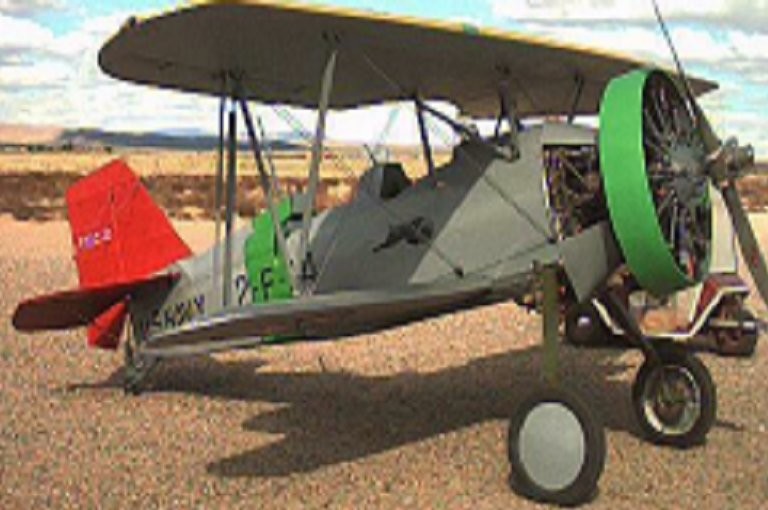
The Sauser P-6E emerged from the homebuilt aircraft movement's fascination with recreating the golden age of American military aviation. Donald Sauser, a former United States Marine Corps pilot, sought to capture the essence of the Curtiss P-6 Hawk, the last fabric-covered biplane fighter operated by the U.S. Army Air Corps. His 82 percent scale reproduction maintained the distinctive proportions and flying characteristics of the original while adapting the design for amateur construction using readily available materials and powerplants.
Construction and Technical Details
Sauser's design philosophy emphasized authentic appearance while accommodating practical homebuilding constraints. The aircraft features a welded steel tube fuselage framework combined with wooden structural components, with all flying surfaces covered in doped aircraft fabric following traditional techniques. The strut-braced biplane configuration incorporates a single-seat open cockpit equipped with a period-appropriate windscreen, while fixed conventional landing gear with decorative wheel pants maintains the classic aesthetic of 1930s military aircraft.
The wing configuration spans 25.83 feet with a total area of 170.0 square feet, providing adequate lift characteristics for the reduced scale airframe. The single-engine tractor configuration accommodates various powerplant options, though documented examples primarily utilized automotive conversions rather than traditional aircraft engines.
Powerplant Adaptation
The most significant departure from the original Curtiss design involved powerplant selection. While the authentic P-6E Hawk employed a Curtiss V-1570-23 Conqueror liquid-cooled inline engine producing 700 horsepower, Sauser's replica utilized a Chevrolet V-8 automotive engine. This practical substitution provided adequate performance while remaining within the technical and financial capabilities of homebuilders, though it required careful integration to maintain the aircraft's visual authenticity.
Donald Sauser personally constructed and flight-tested at least one example, designated P-6E 32-240, demonstrating the design's viability and establishing performance parameters for subsequent builders.
Limited Production History
The Sauser Aircraft Company offered construction plans to amateur builders, resulting in a total production of four completed aircraft. However, the limited market for such specialized replicas and the complexity of biplane construction restricted broader adoption within the homebuilt community. Plans are no longer available following the cessation of Sauser Aircraft Company operations, making existing examples increasingly rare.
Registration records reveal the diverse approaches builders took when certifying their aircraft with the Federal Aviation Administration. Completed examples appear under various type designations including Sauser QC, Johnson F11C-2PJ, Wooldridge Saco P6-E Hawk, and Roof Curtis Hawk P6E, reflecting individual builder modifications and certification strategies.
Museum Preservation
Following Donald Sauser's death, his personal aircraft found permanent preservation at March Field Air Museum in Riverside, California. In 2002, Sauser's widow donated the P-6E 32-240 to the museum, where it appears in the distinctive "Snow Owl" livery associated with Captain Ross G. Hoyt's original P-6E Hawk. This 7/8 scale replica serves as both a tribute to Sauser's craftsmanship and an educational tool demonstrating 1930s fighter aircraft design principles.
The museum example provides visitors with an accessible view of construction techniques and design details that characterized the transition period between wood-and-fabric biplanes and all-metal monoplane fighters that followed.
Historical Context and Legacy
The Sauser P-6E project reflected broader trends within the experimental aircraft community during the 1970s and 1980s, when warbird replicas gained popularity among builders seeking alternatives to conventional homebuilt designs. The original Curtiss P-6 Hawk represented the culmination of American biplane fighter development, with only 46 P-6E models ordered due to Great Depression budget constraints. These aircraft served from 1932 to 1937 without seeing combat, making them symbols of pre-war military aviation rather than combat veterans.
Sauser's replica preserves the visual and flying characteristics of this forgotten chapter in American aviation history, offering modern pilots and enthusiasts direct connection to the techniques and sensations experienced by Army Air Corps pilots of the 1930s. The project's limited scale reflects both the specialized nature of biplane construction and the narrow market for such faithful historical reproductions within the homebuilt aircraft community.