
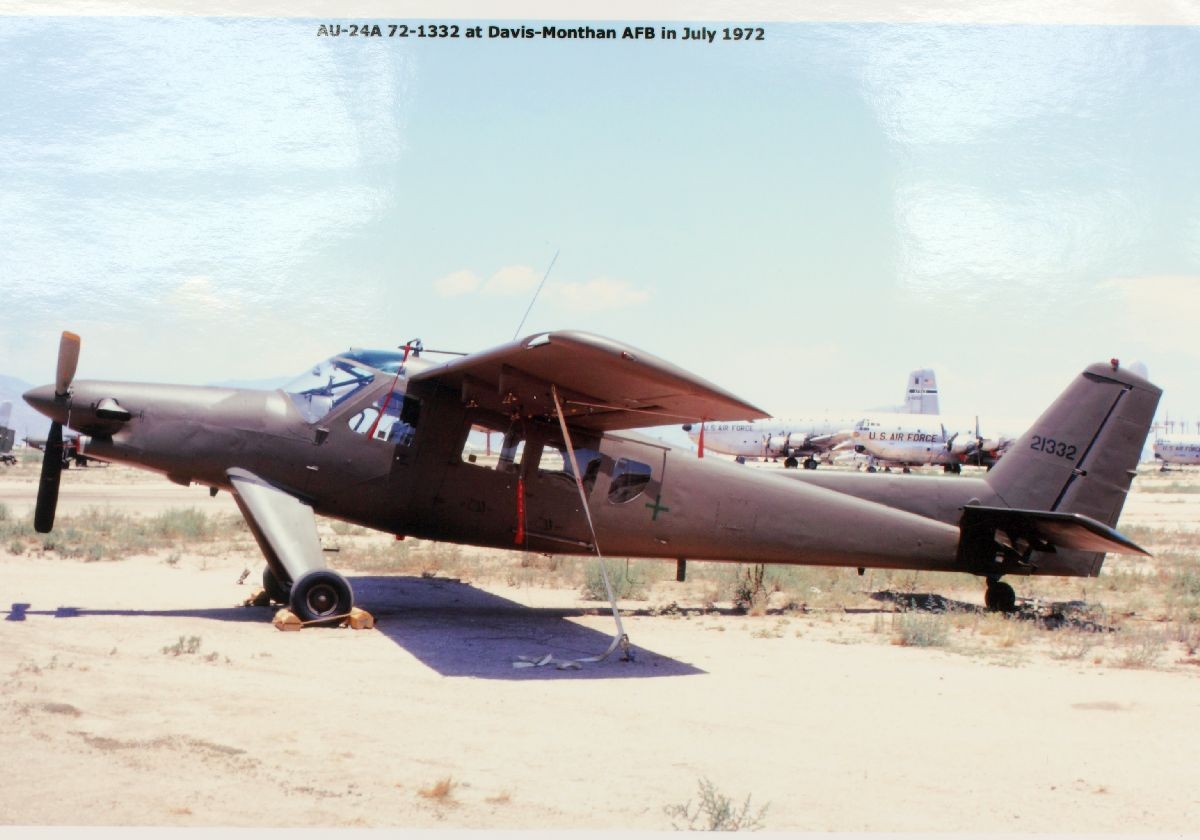
Development and Design Innovation
The Stallion emerged from Helio Aircraft Company's 1963 vision to create a turboprop variant of their successful Courier design, but engineers soon realized the project demanded an entirely new aircraft. Drawing components from the Helio H-500 Twin, the design team crafted a significantly larger platform optimized for both civilian transport and military applications. The prototype HST-550 took to the skies on June 5, 1964, showcasing the company's commitment to short takeoff and landing performance that had made Helio's reputation.
The production H-550A received FAA certification in August 1969, but Helio discovered their sophisticated aircraft carried a price tag that civilian markets found prohibitive. This economic reality would prove prophetic, as the ambitious Stallion program ultimately contributed to the company's financial collapse.
Military Adoption and the Credible Chase Programme
The United States Air Force recognized the Stallion's potential for counter-insurgency operations, purchasing 18 aircraft as the AU-24A variant for the Credible Chase programme beginning in May 1971. Military planners sought a light gunship capable of operating from primitive airstrips to support South Vietnamese forces against insurgent activities.
The AU-24A transformation involved mounting a General Electric M197 three-barrel 20mm rotary cannon in the left cargo door, complemented by five underwing and fuselage hardpoints for additional ordnance or fuel tanks. This armament package could deliver substantial firepower while maintaining the aircraft's inherent short-field performance characteristics.
Combat Evaluation and Operational Reality
During the Pave Coin combat evaluation conducted between June and July 1971, the AU-24A faced direct comparison with the competing Fairchild AU-23A. Despite the Stallion's impressive technical capabilities, including a climb rate of 2,200 feet per minute and cruise speed of 180 knots, military evaluators deemed the aircraft unsuitable for its intended role.
The fundamental problem lay in operational vulnerability rather than mechanical deficiency. The AU-24A's relatively low operating speeds and altitudes exposed it to concentrated enemy anti-aircraft fire, creating unacceptable risks for combat missions. This tactical limitation prompted the Air Force to abandon plans for supplying the type to South Vietnamese forces.
Khmer Air Force Service
Rather than scrapping the program entirely, the Pentagon redirected the Stallion fleet to Cambodia. Between January and November 1972, the Air Force transferred 14 or 15 aircraft to the Khmer Air Force, where they would serve throughout the Cambodian Civil War period.
Operating from often-improvised airstrips, Khmer pilots found the Stallion's short-field capabilities invaluable for reaching remote combat zones. Despite chronic maintenance challenges and spare parts shortages, the aircraft provided effective close air support through the 1970s and continued flying into the 1990s before final retirement.
Technical Excellence and Engineering Achievement
The AU-24A's powerplant represented state-of-the-art turboprop technology with the Pratt & Whitney PT6A-27 developing 680 shaft horsepower. This engine drove a massive 101-inch diameter, three-blade reversible-pitch propeller that enabled the aircraft's remarkable short-field performance characteristics.
In transport configuration, the Stallion accommodated 10 passengers while maintaining its ability to operate from strips as short as 800 feet. The aircraft's robust construction allowed operations at 7.3 g's at gross weight during military testing, demonstrating structural integrity that exceeded typical transport aircraft standards.
The Helio Aircraft Company Legacy
Helio Aircraft Company had built its reputation on innovative short takeoff and landing designs since the 1940s, with the Courier series establishing the firm as a leader in specialized aviation markets. The company's commitment to serving remote regions and specialized operators had created a loyal customer base, but the Stallion program's financial demands proved insurmountable.
The ambitious project, combined with General Electric's involvement in the cannon system development, created cost overruns that ultimately bankrupted both the Stallion program and Helio Aircraft Company itself. Production of all Helio designs ceased in 1974 when the company sold its type certificates and tooling to other manufacturers.
Revival and Modern Interest
Following decades of dormancy through various ownership changes, Helio Aircraft LLC acquired production rights in 2004 and announced intentions to resume manufacturing both Stallion and Courier variants. This modern company assembled a team of aviation professionals who had collaborated since the late 1990s, bringing contemporary manufacturing techniques to classic designs.
Rarity and Preservation
With total production limited to approximately 20 aircraft including prototypes, the AU-24 Stallion ranks among aviation's rarest military types. At least one example remains airworthy today, representing the sole flying survivor of this unique counter-insurgency design.
The Stallion's brief but intense operational history with the Khmer Air Force demonstrates how specialized aircraft can find success in unexpected theaters, even after rejection by their intended operators. This operational legacy, combined with the type's role in Helio's corporate history, ensures the AU-24's place in aviation history despite its limited production numbers.