
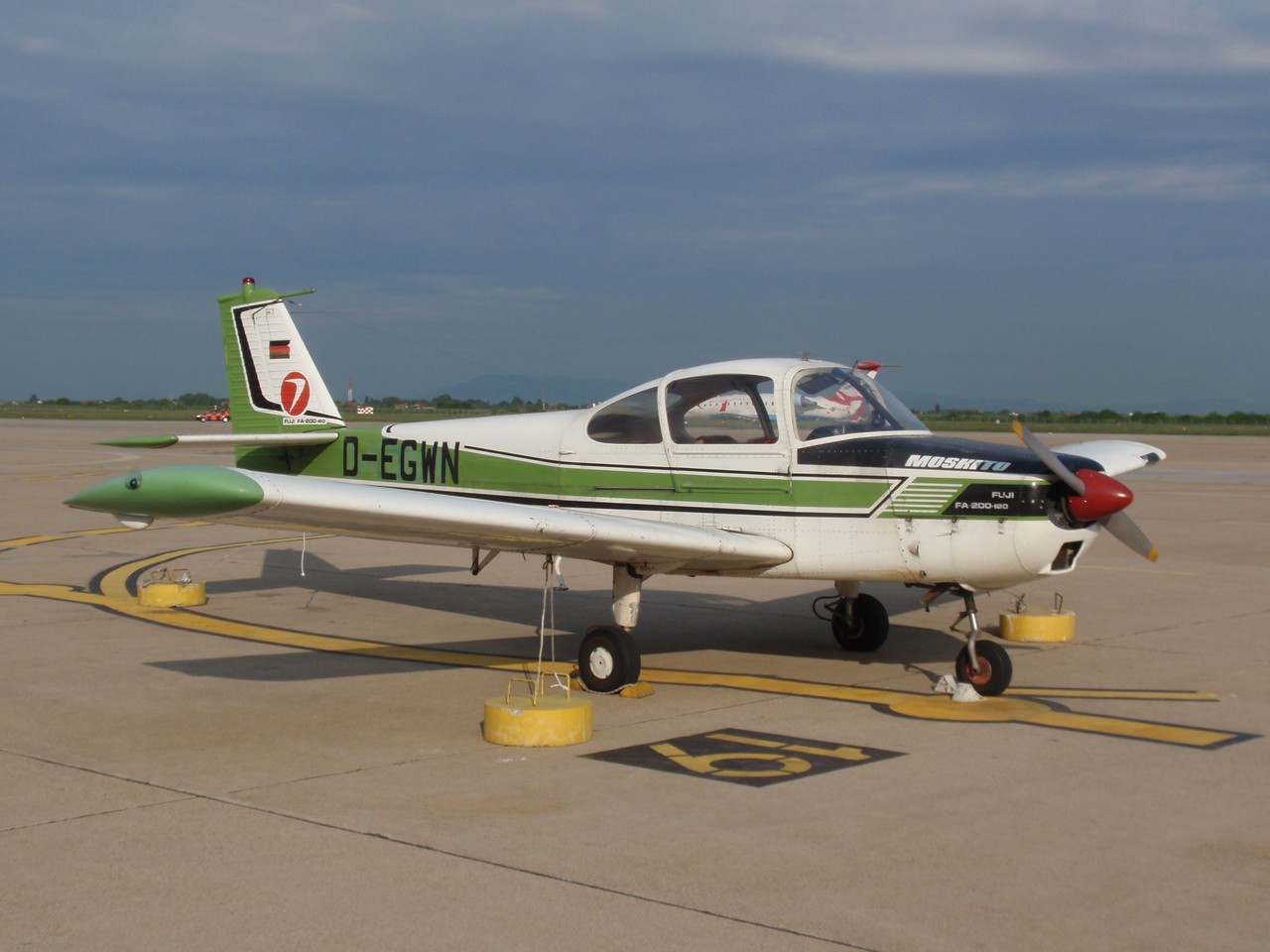
Design and Development
The FA-200 project represented Fuji Heavy Industries' ambitious entry into the postwar general aviation market. Design work commenced in 1964, building upon the company's experience manufacturing 161 Beechcraft Mentors under license for Asian military forces since 1953. The prototype's successful maiden flight on August 12, 1965, demonstrated Japan's renewed capability to design competitive light aircraft.
Fuji's engineers created an all-metal construction featuring conventional low-wing configuration optimized for training, touring, and aerobatic flight. The aircraft achieved Japanese Civil Aviation Bureau Normal category certification on March 1, 1966, followed by Utility certification on July 6, 1966, and crucially, Aerobatic approval on July 29, 1967. United States FAA certification in all three categories followed on September 26, 1967, opening international markets.
The Manufacturer
Fuji Heavy Industries emerged from the ashes of the legendary Nakajima Aircraft Company, which had produced over 30,000 military aircraft before Japan's aviation industry ceased operations in 1945. Formed in July 1953 through the merger of six companies, Fuji chose the "Subaru" name representing the Pleiades star cluster, symbolizing the unified conglomerate.
The company's aviation division operated from the Utsunomiya factory, where workers had previously assembled Beechcraft trainers. This experience with American manufacturing standards and quality control systems proved invaluable when developing the FA-200 for international certification and export.
Engine and Performance
Fuji offered the FA-200 in three distinct variants, all powered by proven American engines. The FA-200-160 featured a 160-horsepower Avco Lycoming O-320-D2A flat-four engine, delivering a maximum speed of 138 mph at sea level and an economic cruising speed of 102 mph at 5,000 feet. With a service ceiling of 11,400 feet and maximum range of 755 miles, the aircraft provided respectable performance for its class.
The more powerful FA-200-180, certificated in Japan on February 28, 1968, employed a 180-horsepower Lycoming IO-360-B1B engine driving a constant-speed propeller. A third variant, the FA-200-180 AO, utilized the same engine with a fixed-pitch propeller, receiving Japanese certification on September 27, 1973, and US approval on February 1, 1974.
International Service
The FA-200 achieved notable success in export markets, particularly Australia, where approximately 20 aircraft joined the national register. The Royal Aero Club of South Australia and Canberra Aero Club became prominent operators, with the first production aircraft registered as VH-FJB on May 10, 1968.
The type's fully aerobatic capability with two occupants aboard distinguished it from many competitors in the four-seat market. This performance attracted flight training organizations seeking aircraft capable of advanced instruction, while the spacious cabin appealed to touring pilots.
Production History
Manufacturing commenced in March 1968, with the first production aircraft flying on December 4, 1968. Fuji maintained steady production through the 1970s, completing 294 aircraft by 1980 when the company temporarily suspended the line to concentrate resources on developing the twin-engine Fuji 300 in partnership with Rockwell.
Production resumed in early 1981, initially delivering aircraft from accumulated incomplete airframes. The final FA-200 rolled off the Utsunomiya production line in 1986, bringing total production to 275 aircraft over an 18-year manufacturing run.
Special Variants
Beyond standard production models, Fuji developed the specialized FA-203S for Japan's National Aerospace Laboratory. This unique variant incorporated leading-edge slats and full-span trailing-edge flaperons for short takeoff and landing research, demonstrating the basic design's adaptability for advanced aerodynamic investigation.
Legacy
The FA-200 Aero Subaru established Japan as a credible competitor in the global general aviation market, proving Japanese manufacturers could develop aircraft meeting international certification standards. More than 300 Subarus ultimately entered service worldwide, representing a significant achievement for a nation rebuilding its aviation industry from wartime devastation.
The aircraft's success validated Fuji's engineering approach and manufacturing quality, laying groundwork for future Japanese aviation projects. Today, surviving FA-200s continue operating in private hands, testament to the type's durability and enduring appeal among pilots seeking distinctive four-seat aircraft with aerobatic capability.